dsh-eval-regression
Run the following command in DeepSeek Harness:
dsh plugin install aryswisnu/dsh-eval-regression
Paste the following prompt into your AI chat to install this plugin:
Run dsh plugin install aryswisnu/dsh-eval-regression in your terminal to register the plugin in the current DeepSeek Harness profile; source code: https://github.com/aryswisnu/dsh-eval-regression
About this plugin
Every iteration of agent code can quietly degrade answers that still look acceptable on the surface. dsh-eval-regression gives DeepSeek Harness a lightweight, deterministic regression gate: maintain a small corpus of expected fragments, and get repeatable pass/fail evidence on every replay or smoke test with no subjective judgment required.
The core tool, evaluate_golden_output, compares a candidate output against two sets of fragments: required fragments catch omissions, and forbidden fragments block known bad claims or unsafe fallbacks. It never calls a model and never persists data; it simply produces a deterministic score from 0 to 1. The plugin also ships a small CLI that reads a JSON test suite, prints a report to stdout, and exits with code 0 for all pass, 1 for any failure, or 2 for invalid input, making it straightforward to block a CI pipeline on a failed expectation.
If you are building a CI baseline for response quality in an agent or LLM application, or you want to treat your evaluation corpus as ordinary, versioned source code, this plugin is a low-effort first gate. It is deliberately narrow and does not replace model-quality review, factual grounding checks, or snapshot replay; it is best used as the first cheap, deterministic checkpoint in a broader evaluation harness.
Use Cases
- Gate CI merges on agent response regression by failing the job on any missed expectation
- Run cheap, repeatable pass/fail checks on replayed transcripts using a maintained fragment corpus
- Catch known bad claims or unsafe fallbacks in release smoke tests via forbidden fragment rules
Best For
- Developers building CI quality baselines for LLM agent applications
- Teams that want to version-control evaluation corpora as ordinary source code
- Engineers who need a cheap, deterministic gate in their eval harness without heavy dependencies
Related Plugins
A service-oriented sidebar framework for DSH, offering a full workbench with file explorer, embedded browser, real terminal, Git panel, and extensible plugin services.
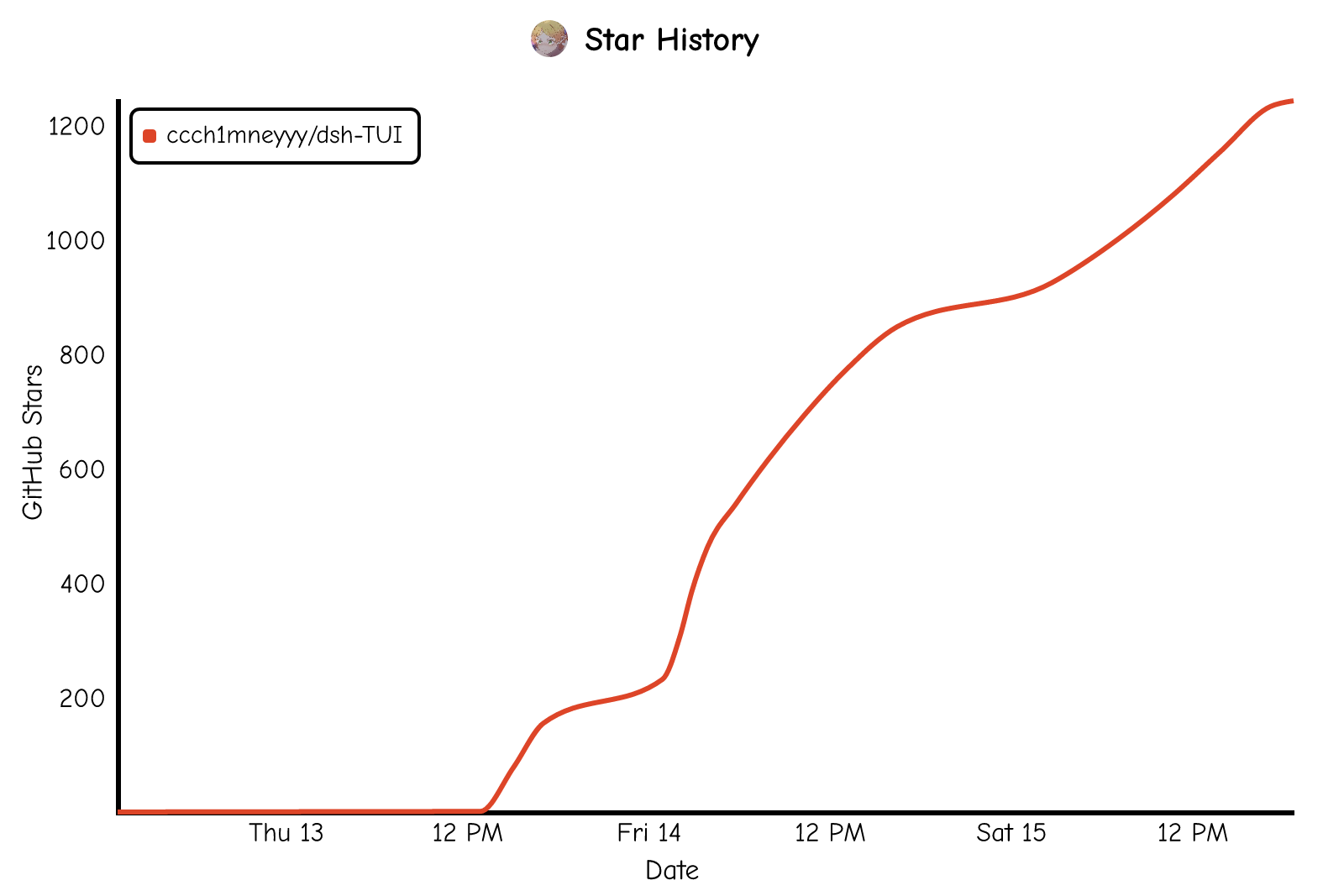
A beautiful, practical Claude Code-style TUI plugin with pixel whale top bar, flowing glow title, real-time status line, streaming thought expansion, time rewind, context progress bar and TPS gauge — zero core changes.
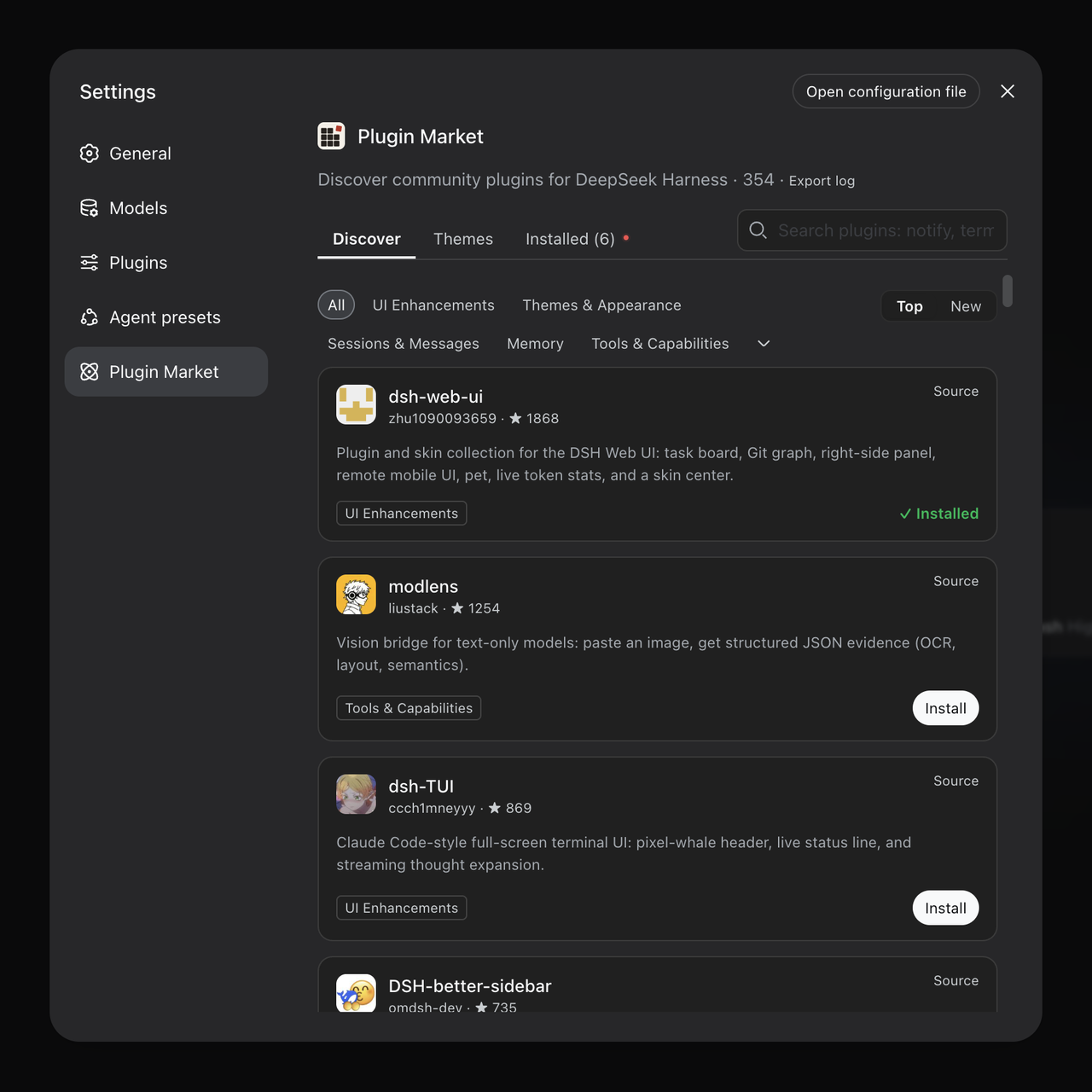
The plugin market for DeepSeek Harness: browse/search/one-click install community plugins and themes, with updates, backup/restore, hot disable, diagnostics, and AI fix.

A persistent whale widget on the DSH web UI that shows DeepSeek balance, today's usage, and per-turn cost, with drag-and-snap and sound effects.