dsh-response-meta
Run the following command in DeepSeek Harness:
dsh plugin install Unintendedz/dsh-response-meta
Paste the following prompt into your AI chat to install this plugin:
Run dsh plugin install Unintendedz/dsh-response-meta in your terminal, then restart the DSH Web service to load the plugin; the source is available at https://github.com/Unintendedz/dsh-response-meta .
About this plugin
In DSH Web, every model reply carries runtime signals—model name, reasoning extent, tokens per second, time to first token, total runtime—that are buried in a hover-only native timing group, and manually interrupted replies have no usage record at all. Checking how a single call actually performed means repeated hovering, or simply not having the data.
dsh-response-meta renders a persistent runtime summary on a dedicated second row of every assistant reply, covering both completed and interrupted responses. The model name is read from the turn's request/header session event and inherited for subsequent header-less turns; reasoning extent prefers provider-reported reasoning tokens with a fallback to reasoning text length; tokens per second is computed over decode time from first token to message completion, matching DSH's native timing semantics. Interrupted replies, which usually lack a usage record, still show the model and streamed reasoning extent, and any real usage rescued by a finalization race is retained. Missing fields are omitted individually; when all are unavailable nothing is rendered; narrow screens wrap without truncation or horizontal overflow.
Well suited for heavy DSH Web users who switch between models often, care about TTFT and reasoning depth, or frequently interrupt generation mid-stream—key per-reply metrics become visible at a glance with zero extra configuration.
Use Cases
- Instantly inspect actual runtime, reasoning depth, and tokens/s for every call.
- After interrupting generation, confirm which model was used and how much reasoning was streamed.
- Compare TTFT and throughput across models at a glance.
Best For
- DSH Web power users who switch between models and care about TTFT.
- Developers who frequently interrupt generation and need visibility into the stop state.
- Prompt engineers who want quantified per-call performance for tuning.
Related Plugins
A service-oriented sidebar framework for DSH, offering a full workbench with file explorer, embedded browser, real terminal, Git panel, and extensible plugin services.
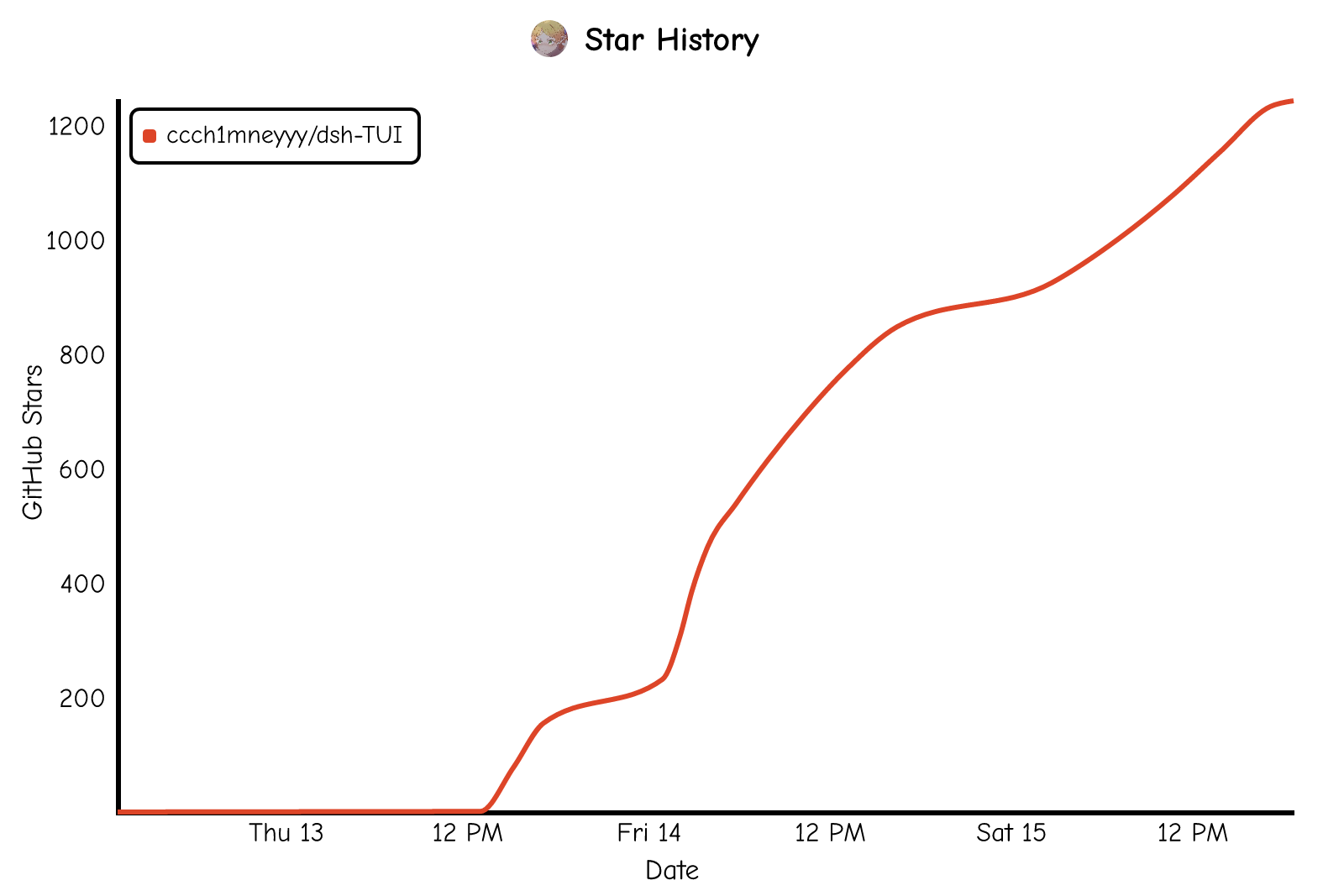
A beautiful, practical Claude Code-style TUI plugin with pixel whale top bar, flowing glow title, real-time status line, streaming thought expansion, time rewind, context progress bar and TPS gauge — zero core changes.
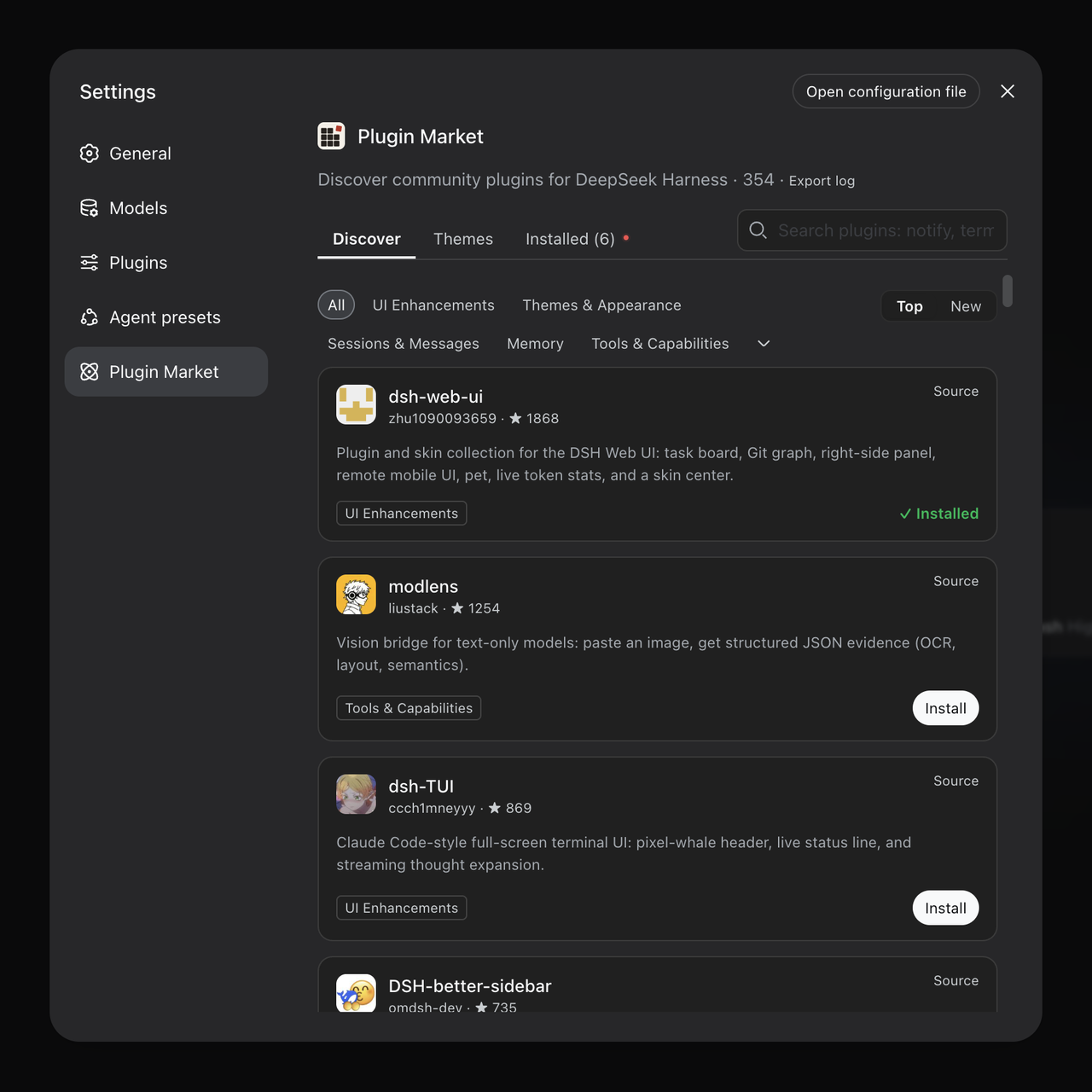
The plugin market for DeepSeek Harness: browse/search/one-click install community plugins and themes, with updates, backup/restore, hot disable, diagnostics, and AI fix.

A persistent whale widget on the DSH web UI that shows DeepSeek balance, today's usage, and per-turn cost, with drag-and-snap and sound effects.