dsh-instance-manager
Run the following command in DeepSeek Harness:
dsh plugin install xswt442-cmd/dsh-instance-manager
Paste the following prompt into your AI chat to install this plugin:
To install this plugin in DeepSeek Harness, run dsh plugin install xswt442-cmd/dsh-instance-manager; the source code is available at https://github.com/xswt442-cmd/dsh-instance-manager .
About this plugin
Managing several DSH instances typically means juggling terminal windows to check processes, scroll through logs, and switch between sessions. dsh-instance-manager consolidates all of that into the Mini Utility Dock at the bottom-left of the DSH Web UI, so you can inspect, start, stop, and diagnose instances without ever leaving your browser.
The plugin lists every instance with its port, PID, uptime, session count, memory usage, and version status, while rendering live stdout/stderr logs, memory trends, and active-session summaries right in the panel. You can gracefully stop a single instance, the current one, or all local instances in one action. Through authenticated peer links you can also read-only inspect remote instances, logs, and sessions. Five Agent tools—instance_list, instance_start, instance_stop, instance_logs, and instance_sessions—are exposed so automation pipelines can drive the instance lifecycle uniformly.
If you run multiple DSH instances at once, flip between local and remote machines to read logs or sessions, or want to fold instance start and stop into an Agent workflow, this plugin collapses those repetitive terminal tasks into a single visual panel and cuts down on context switching.
Use Cases
- Running multiple DSH instances and needing a quick view of ports, memory, sessions, and logs
- Driving instance start, stop, and session inspection from an Agent automation pipeline
- Read-only inspection of instance health and sessions on a trusted remote machine
Best For
- Developers managing multiple DSH instances at the same time
- Teams integrating instance lifecycle and session reads into Agent workflows
- Ops staff who need cross-machine visibility into DSH instance status and logs
Related Plugins
A service-oriented sidebar framework for DSH, offering a full workbench with file explorer, embedded browser, real terminal, Git panel, and extensible plugin services.
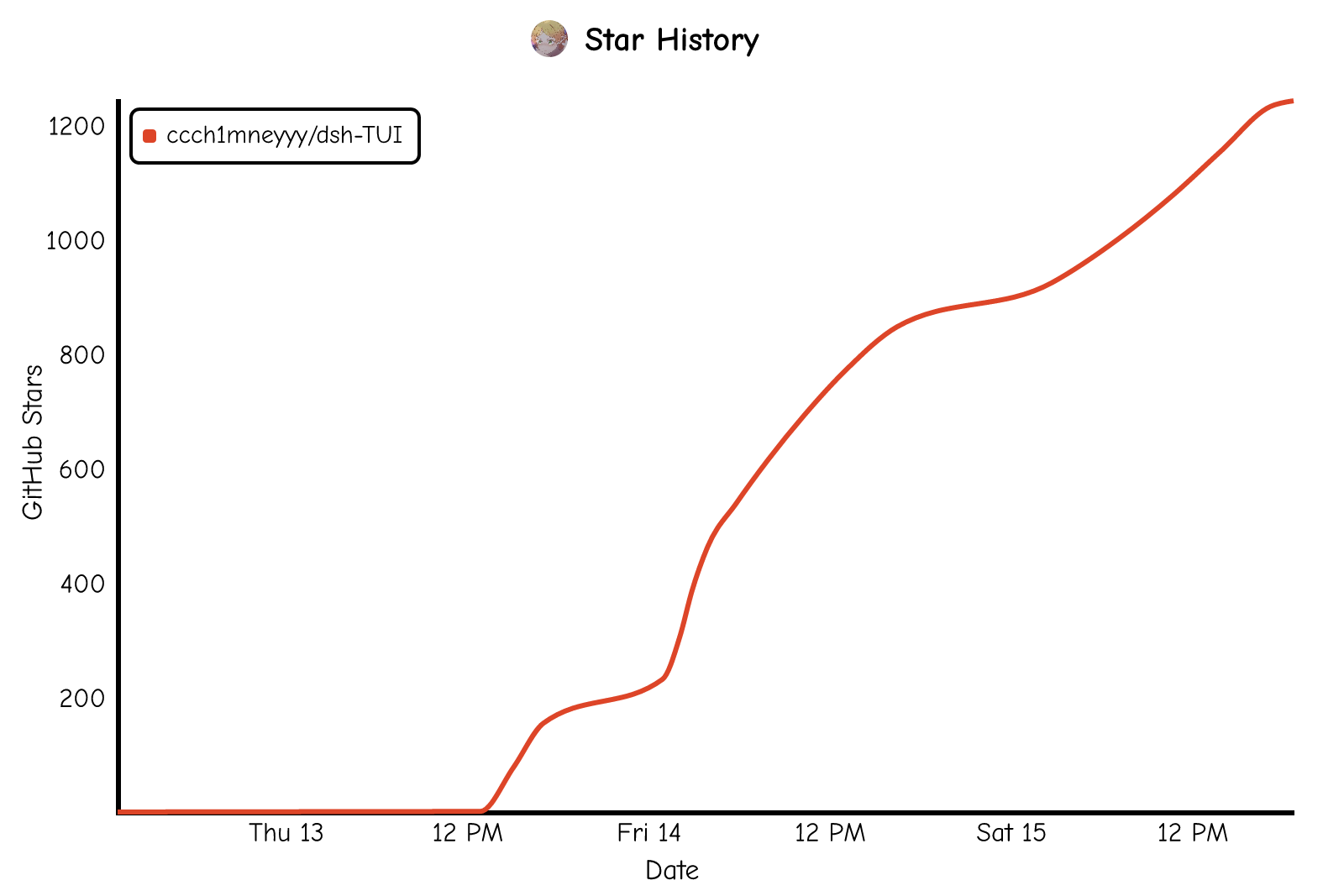
A beautiful, practical Claude Code-style TUI plugin with pixel whale top bar, flowing glow title, real-time status line, streaming thought expansion, time rewind, context progress bar and TPS gauge — zero core changes.
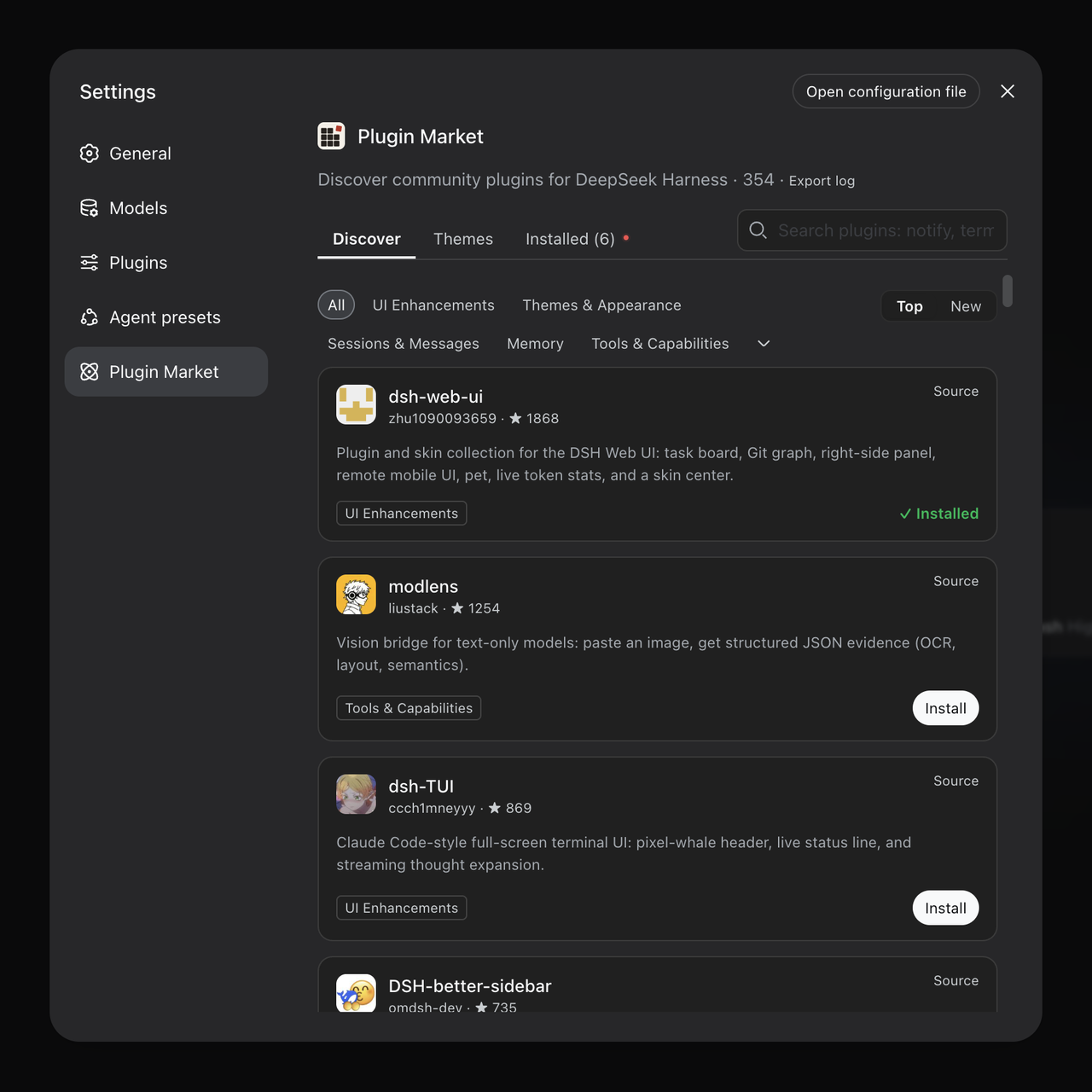
The plugin market for DeepSeek Harness: browse/search/one-click install community plugins and themes, with updates, backup/restore, hot disable, diagnostics, and AI fix.

A persistent whale widget on the DSH web UI that shows DeepSeek balance, today's usage, and per-turn cost, with drag-and-snap and sound effects.