dsh-hebrew-rtl
Run the following command in DeepSeek Harness:
dsh plugin install kfirsch/dsh-hebrew-rtl
Paste the following prompt into your AI chat to install this plugin:
Run dsh plugin install kfirsch/dsh-hebrew-rtl inside DeepSeek Harness to install this plugin; the full source is hosted at https://github.com/kfirsch/dsh-hebrew-rtl.
About this plugin
The DeepSeek Harness web GUI renders every content block left-to-right by default. For Hebrew this produces three distinct failures: paragraphs start on the wrong edge, text typed into input fields flows the wrong direction, and Cmd+arrow shortcuts jump the caret to the visually opposite side. The obvious CSS fix, unicode-bidi: plaintext, inspects only the first strong directional character, so a Hebrew sentence that opens with a URL, a list number, or an emoji still renders garbled.
dsh-hebrew-rtl evaluates direction per block. Each paragraph, heading, list, and table has its Hebrew-majority and Latin-majority word counts compared after stripping code-like tokens such as URLs, SHAs, and paths. Tables, lists, and KaTeX formulas are judged as a whole rather than cell by cell. Input fields use a two-layer mirror stack with identical Bidi metrics so computed heights and wrapping stay consistent. Cmd+left and Cmd+right are swapped only when the caret sits on an RTL line, and Shift-extension is preserved. Streaming text is re-evaluated through a MutationObserver coalesced with requestAnimationFrame to avoid a rescan per character.
The plugin is purely client-side, requires no configuration, no network access, and no host service, and is deliberately scoped to Hebrew. It is intended for developers who read, write, or debug Hebrew content inside the DeepSeek Harness web interface.
Use Cases
- Reading or writing Hebrew paragraphs in the DeepSeek Harness web GUI without reversed layout
- Typing Hebrew into input fields so the text flows in the correct direction
- Navigating Hebrew lines with Cmd+arrow without the caret jumping to the opposite edge
Best For
- Developers who read or write Hebrew content in the DSH web interface
- Users who need correct RTL typesetting to review Hebrew technical documentation
- Engineers debugging Hebrew output and requiring line-level direction accuracy
Related Plugins
A service-oriented sidebar framework for DSH, offering a full workbench with file explorer, embedded browser, real terminal, Git panel, and extensible plugin services.
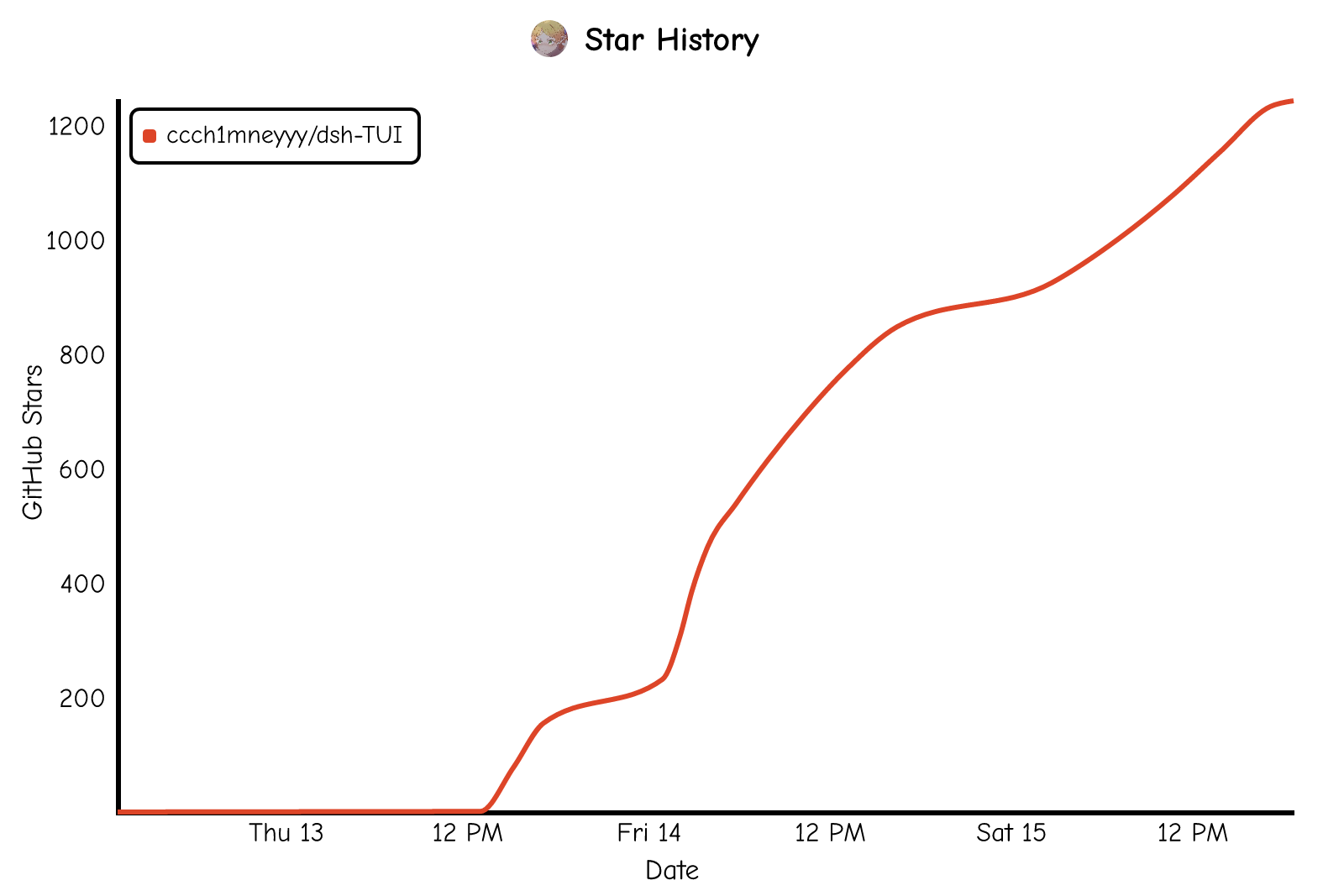
A beautiful, practical Claude Code-style TUI plugin with pixel whale top bar, flowing glow title, real-time status line, streaming thought expansion, time rewind, context progress bar and TPS gauge — zero core changes.
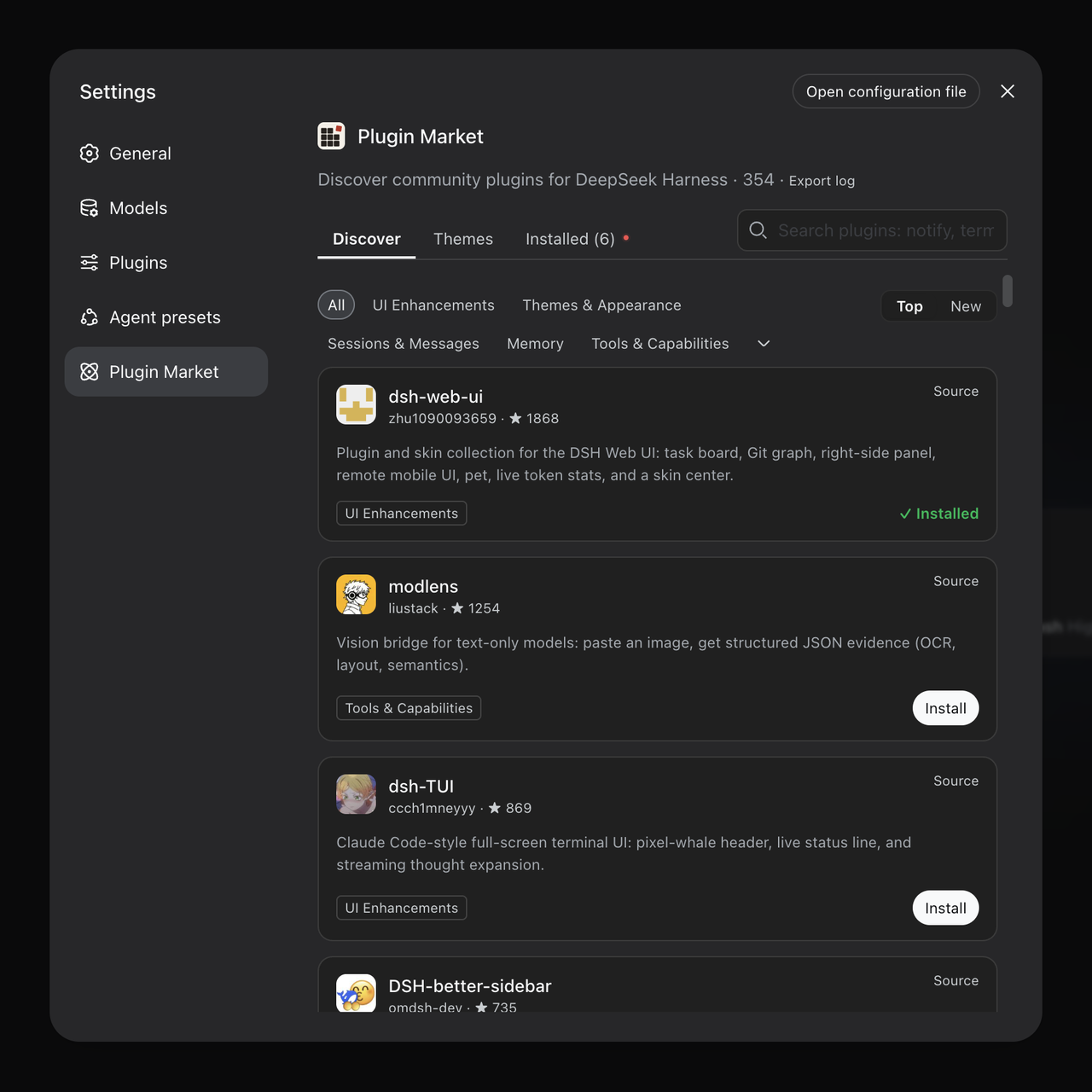
The plugin market for DeepSeek Harness: browse/search/one-click install community plugins and themes, with updates, backup/restore, hot disable, diagnostics, and AI fix.

A persistent whale widget on the DSH web UI that shows DeepSeek balance, today's usage, and per-turn cost, with drag-and-snap and sound effects.