dsh-client-ui-details-host
Run the following command in DeepSeek Harness:
dsh plugin install cherrchen/dsh-client-ui-details-host
Paste the following prompt into your AI chat to install this plugin:
Run dsh plugin install cherrchen/dsh-client-ui-details-host in DeepSeek Harness to install this plugin; the source repository is at https://github.com/cherrchen/dsh-client-ui-details-host, and it is already built in as required infrastructure in DeepSeek Harness Desktop with no separate install step.
About this plugin
In the DSH AppFrame layout the third column (the details panel) is the natural home for feature-plugin surfaces that need richer interaction than a simple drawer. Yet developers have long lacked a stable host layer to manage panel lifecycle, column chrome, and session navigation. dsh-client-ui-details-host fills that gap as a pure-web UI infrastructure plugin with no Electron, Node, or desktop runtime dependency, running identically in DeepSeek Harness Desktop and any standard DSH Web host.
At its core the plugin injects a ctx.shellDetails controller (API v2) into the host, exposing open, close, back, toggle, registerSurface, getSnapshot, and subscribe. Column chrome (resize handle, close control, header action buttons) and the graceful hand-back to the upstream DetailsPanel are handled out of the box. A feature plugin only needs to call ctx.shellDetails.open with a registered surface id to project its UI into the third column. Session navigation uses an in-memory bounded back stack with dedupe and optional replace semantics, so switching between registered surfaces keeps the host mounted without tearing down the column.
This plugin is aimed at DSH feature-plugin authors who want to build panel-style experiences in the AppFrame details column. Whether the surface is a document viewer, a configuration editor, or a live data panel, the details-host package provides the column chrome, lifecycle management, and slot-based registration needed to ship a polished third-column UI without reinventing the infrastructure. It is deliberately scoped to a single active surface at a time with memory-only session state, making it lightweight and predictable for Web-first compositions.
Use Cases
- Render feature-plugin surfaces into the AppFrame third column
- Provide column chrome, close control, and lifecycle for document viewers or config editors
- Unify details-column behavior between Desktop and Web with identical code
Best For
- DSH feature-plugin developers building AppFrame details-column surfaces
- Teams that need the same UI infrastructure across Desktop and Web
- DSH client developers who prefer zero desktop dependencies and pure-web runs
Related Plugins
A service-oriented sidebar framework for DSH, offering a full workbench with file explorer, embedded browser, real terminal, Git panel, and extensible plugin services.
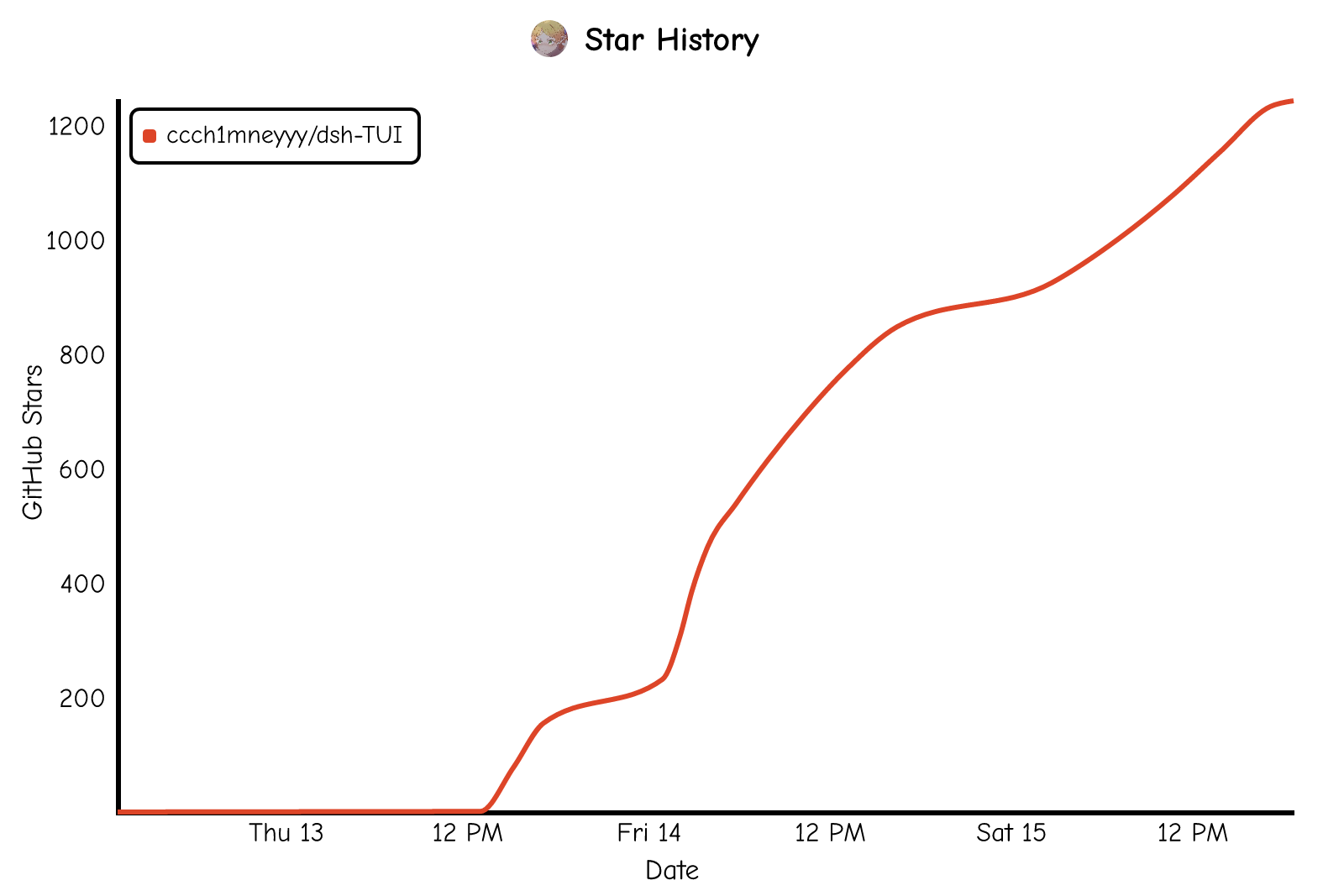
A beautiful, practical Claude Code-style TUI plugin with pixel whale top bar, flowing glow title, real-time status line, streaming thought expansion, time rewind, context progress bar and TPS gauge — zero core changes.
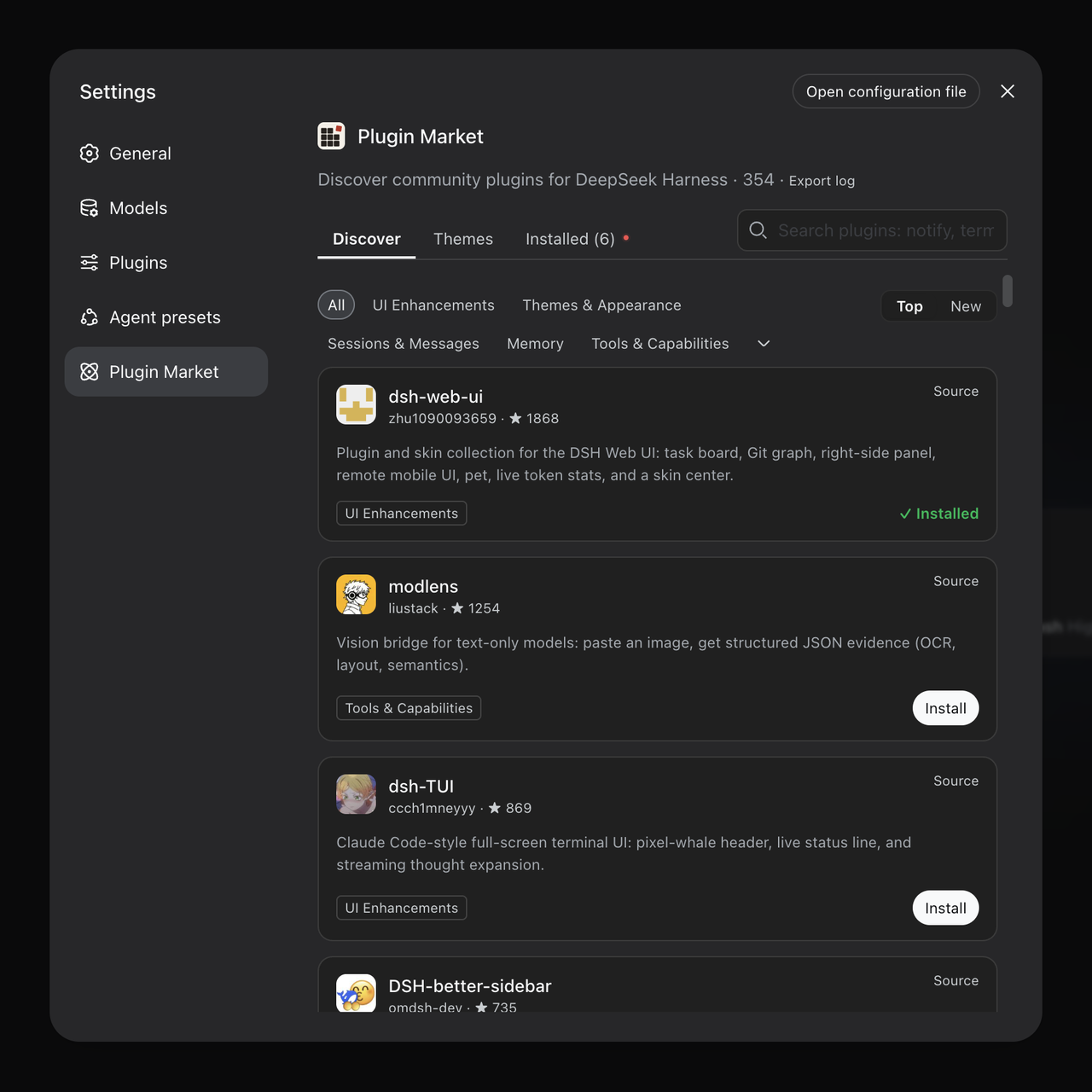
The plugin market for DeepSeek Harness: browse/search/one-click install community plugins and themes, with updates, backup/restore, hot disable, diagnostics, and AI fix.

A persistent whale widget on the DSH web UI that shows DeepSeek balance, today's usage, and per-turn cost, with drag-and-snap and sound effects.