dsh-persona
Run the following command in DeepSeek Harness:
dsh plugin install Diluka/dsh-persona
Paste the following prompt into your AI chat to install this plugin:
Run dsh plugin install Diluka/dsh-persona in DeepSeek Harness to install the plugin from the repository (https://github.com/Diluka/dsh-persona) into your DSH Web profile.
About this plugin
DSH's coding agent uses a fixed communication tone defined by its core prompt, leaving little room for personalizing progress reporting, validation summaries, or next-step wording. dsh-persona appends a dedicated style-oriented system-prompt section after DSH's core identity and operating rules. It shapes tone, progress updates, validation language, and collaboration habits without touching tool policy, sandbox permissions, or runtime behavior.
Core capabilities include two built-in read-only style templates, Friendly Collaboration and Pragmatic Direct, rewritten from a Codex personality template for the DSH context; an editable common prompt block prepended to the chosen style with a one-click reset; and a DSH Web settings page with a master switch, a DSH-style dropdown selector, a read-only style preview, and a shared-block editor. Changes are stored in the dsh-persona settings namespace and take effect on subsequent model requests immediately; disabling the switch removes the style layer and unregisters the dedicated page.
Best for developers and small teams already using DSH Web who want the coding agent's communication style to match their team preferences or personal working style.
Use Cases
- Get a friendlier coding agent that reports progress and guides pairing with a supportive tone
- Switch to the pragmatic style for rigorous validation summaries and concise tradeoff discussions
- Inject team-specific wording preferences via the shared prompt block for consistent collaboration language
Best For
- Developers using DSH Web who want to tune the coding agent's communication style
- Small engineering teams that need a consistent collaboration tone across members
- Users who want to personalize agent wording without altering core tool policies
Related Plugins
A service-oriented sidebar framework for DSH, offering a full workbench with file explorer, embedded browser, real terminal, Git panel, and extensible plugin services.
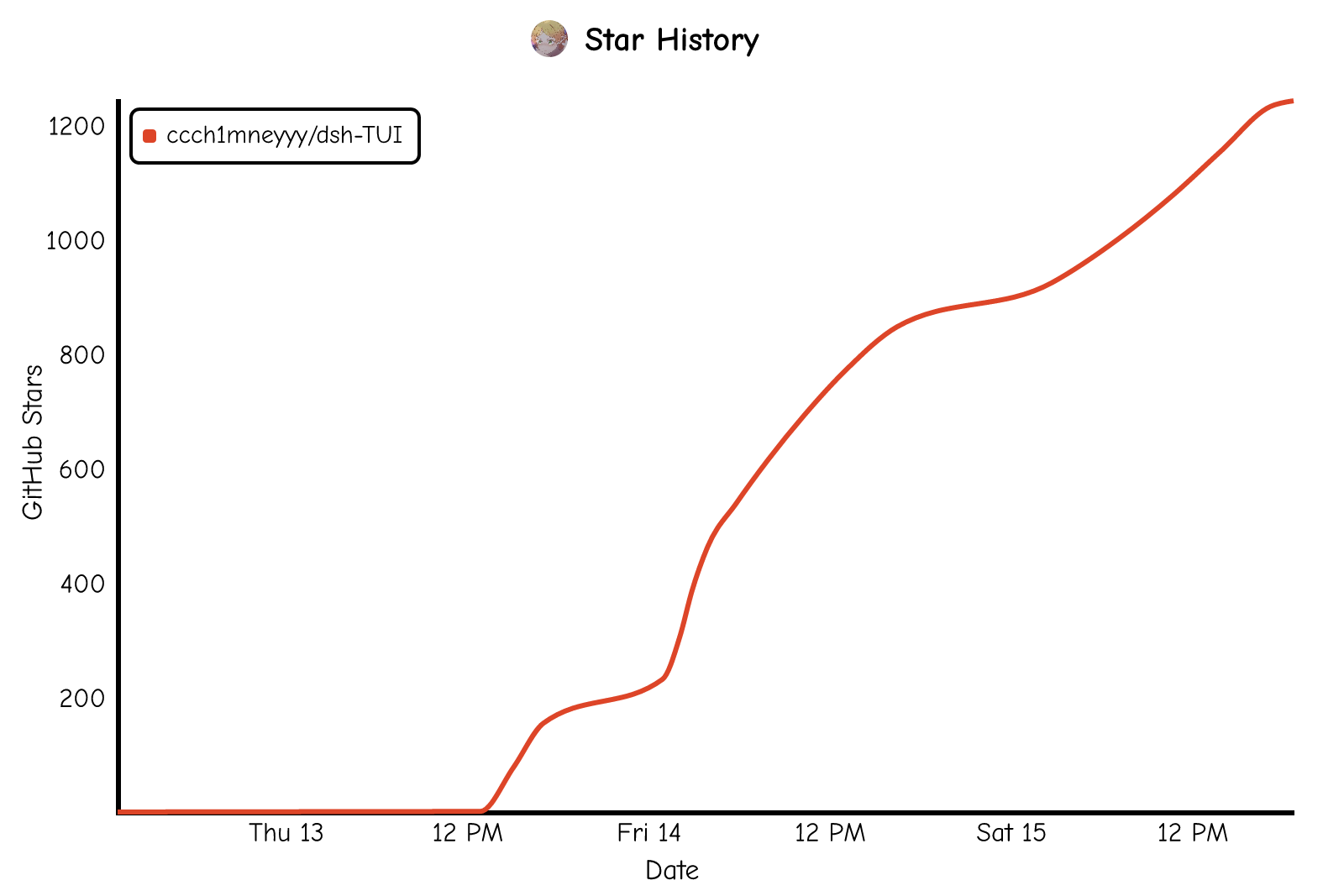
A beautiful, practical Claude Code-style TUI plugin with pixel whale top bar, flowing glow title, real-time status line, streaming thought expansion, time rewind, context progress bar and TPS gauge — zero core changes.
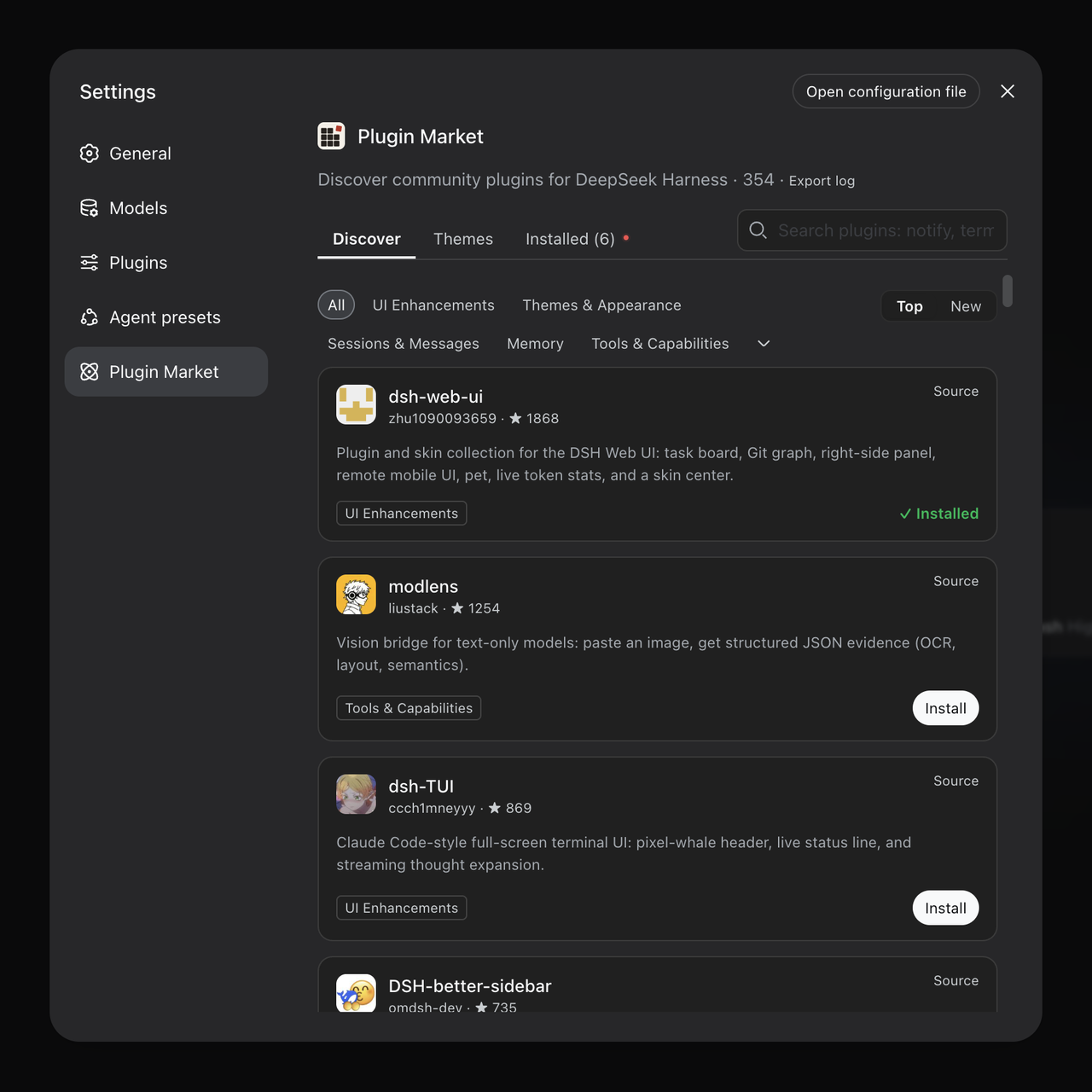
The plugin market for DeepSeek Harness: browse/search/one-click install community plugins and themes, with updates, backup/restore, hot disable, diagnostics, and AI fix.

A persistent whale widget on the DSH web UI that shows DeepSeek balance, today's usage, and per-turn cost, with drag-and-snap and sound effects.