dsh-remote-control
Run the following command in DeepSeek Harness:
dsh plugin install hw-cola/dsh-remote-control
Paste the following prompt into your AI chat to install this plugin:
Install this plugin in DeepSeek Harness by running dsh plugin install hw-cola/dsh-remote-control in your terminal; the source code is available at https://github.com/hw-cola/dsh-remote-control — restart dsh web and refresh your browser after installation to activate it.
About this plugin
DSH’s web interface binds to loopback by default, so opening the panel from a phone or another workstation on the same network used to mean editing source code or spinning up an ad-hoc tunnel. dsh-remote-control collapses that into a single toggle in the settings panel: flip it on, the plugin auto-detects your LAN IPv4 addresses, renders a QR code carrying a one-time signed token, and a quick scan authorises the device. From then on the browser rides on a session cookie, so you scan once and are done. Turn the switch off and everything reverts to stock single-machine behaviour.
Security and edge-case compatibility are handled silently underneath. Unauthorised clients receive a 403 page (WebSocket handshakes are intercepted as well). Authorised devices are written to a persistent whitelist (capped at 32 entries, individually revocable at any time), so a dsh restart does not force re-scanning. The reverse proxy runs in a dedicated Node child process that rewrites Host and Origin headers to satisfy DSH’s browser-trust checks and injects a crypto.randomUUID polyfill for non-secure contexts. On Windows the plugin creates the inbound firewall rule automatically the first time you enable the feature, and the child process is terminated cleanly on uninstall.
It is built for developers who trust their local network and simply want to glance at the DSH panel from a phone, tablet, or second monitor without leaving the office or living room. Enable the toggle, scan the code, disable it when finished—three steps, no persistent extra service, and no changes to dsh’s own startup flags.
Use Cases
- Viewing the DSH web panel directly from a phone browser
- Sharing a single DSH instance with multiple users on the same LAN
- Monitoring DSH status from a tablet or secondary display
- Scan-to-authorise flow eliminates manual IP entry and proxy setup
Best For
- Developers who need mobile access to the DSH panel on the go
- Teams collaborating on a shared DSH instance within the same local network
- Self-hosting users who want zero manual firewall or proxy configuration
Related Plugins
A service-oriented sidebar framework for DSH, offering a full workbench with file explorer, embedded browser, real terminal, Git panel, and extensible plugin services.
A beautiful, practical Claude Code-style TUI plugin with pixel whale top bar, flowing glow title, real-time status line, streaming thought expansion, time rewind, context progress bar and TPS gauge — zero core changes.
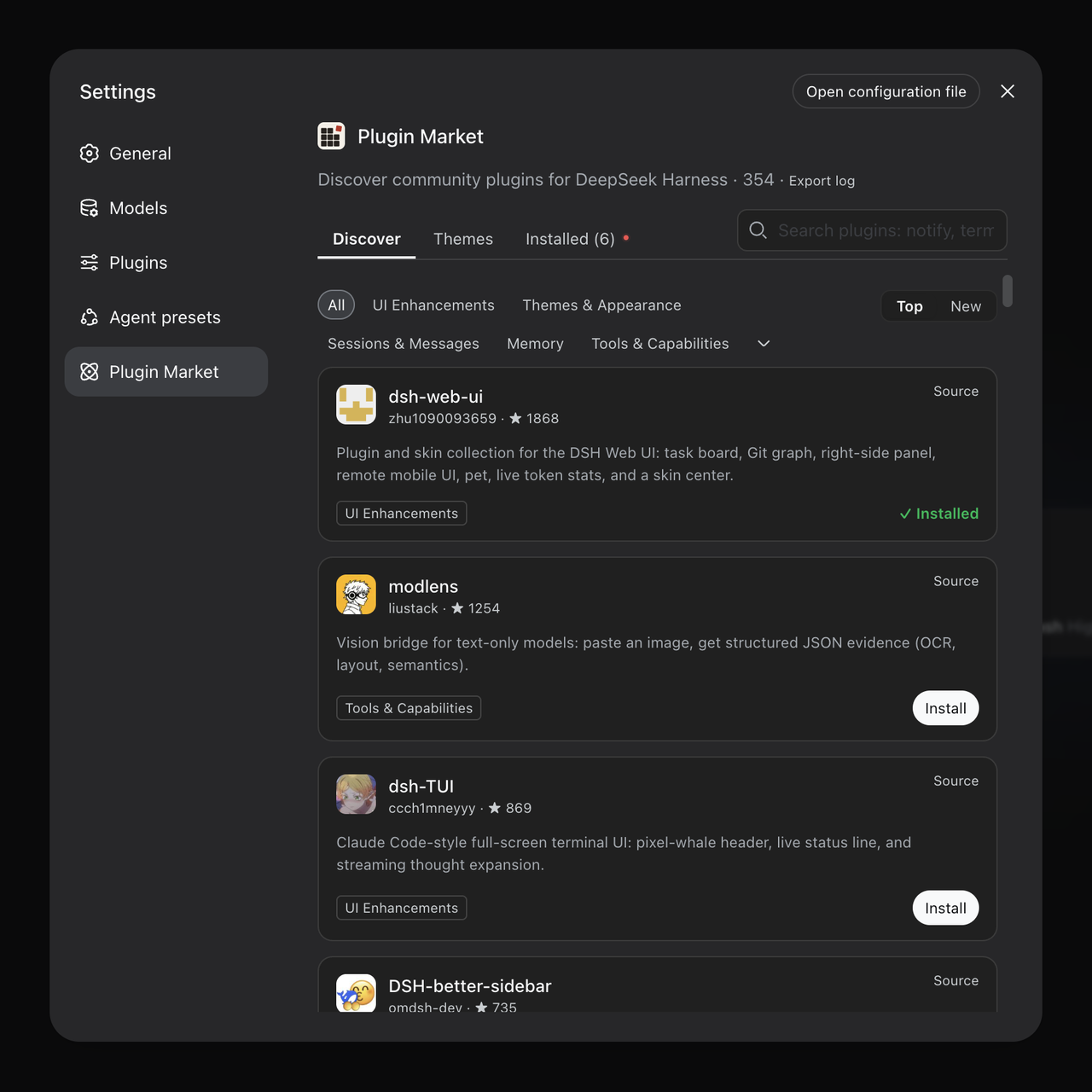
The plugin market for DeepSeek Harness: browse/search/one-click install community plugins and themes, with updates, backup/restore, hot disable, diagnostics, and AI fix.

A persistent whale widget on the DSH web UI that shows DeepSeek balance, today's usage, and per-turn cost, with drag-and-snap and sound effects.