dsh-conversation-nav
Run the following command in DeepSeek Harness:
dsh plugin install Jaeger0624/dsh-conversation-nav
Paste the following prompt into your AI chat to install this plugin:
Run dsh plugin install Jaeger0624/dsh-conversation-nav in the DeepSeek Harness terminal to install; full source at https://github.com/Jaeger0624/dsh-conversation-nav .
About this plugin
Once a conversation in the DeepSeek Harness Web GUI stretches past a few dozen turns, scrolling back to a specific message becomes a tedious, memory-dependent exercise. dsh-conversation-nav brings the signature piano-key rail from the Codex desktop client into the browser: a vertical column of ticks along the left edge of the chat area, one per user message, turning any long thread into an instantly navigable timeline.
Hover over a tick to reveal a detail card with a one-line message summary, up to three lines of the model reply preview, and a meta line showing send time (HH:mm for today, M-dd HH:mm this year, full date across years), round duration, and output token count. Click to smooth-scroll to that turn with a brief highlight; while scrolling, the tick for the turn you are reading darkens in real time so you always know your position. Right-click a tick to cycle through amber, red, blue, and green markers, optionally attach a text note, and all marks persist per session in localStorage across reloads. The plugin is fully event-driven with no persistent timers, so even very long conversations stay fluid.
If you routinely work through dozens or hundreds of turns with DeepSeek in the web interface and need to revisit, compare, or annotate key exchanges, this zero-dependency, purely client-side plugin gives you that navigation out of the box.
Use Cases
- Jumping to a specific turn in a long thread without endless scrolling
- Reviewing round duration, token count, and exact timestamp of past messages
- Color-coding and annotating key turns for later reflection
Best For
- Developers who regularly run multi-turn technical sessions
- Teams or individuals reviewing AI conversation quality and efficiency
- Web users who prefer the Codex desktop interaction style
Related Plugins
A service-oriented sidebar framework for DSH, offering a full workbench with file explorer, embedded browser, real terminal, Git panel, and extensible plugin services.
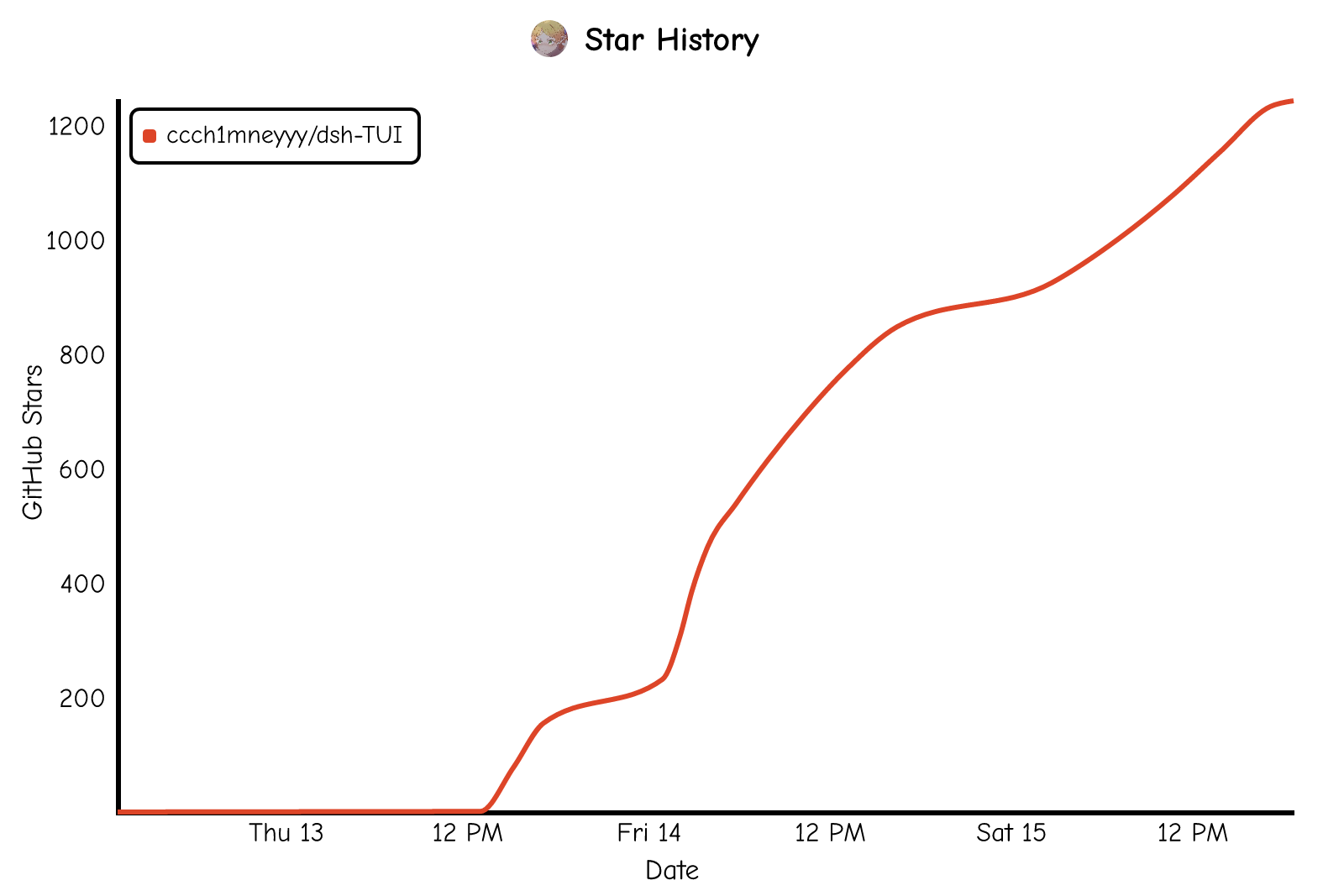
A beautiful, practical Claude Code-style TUI plugin with pixel whale top bar, flowing glow title, real-time status line, streaming thought expansion, time rewind, context progress bar and TPS gauge — zero core changes.
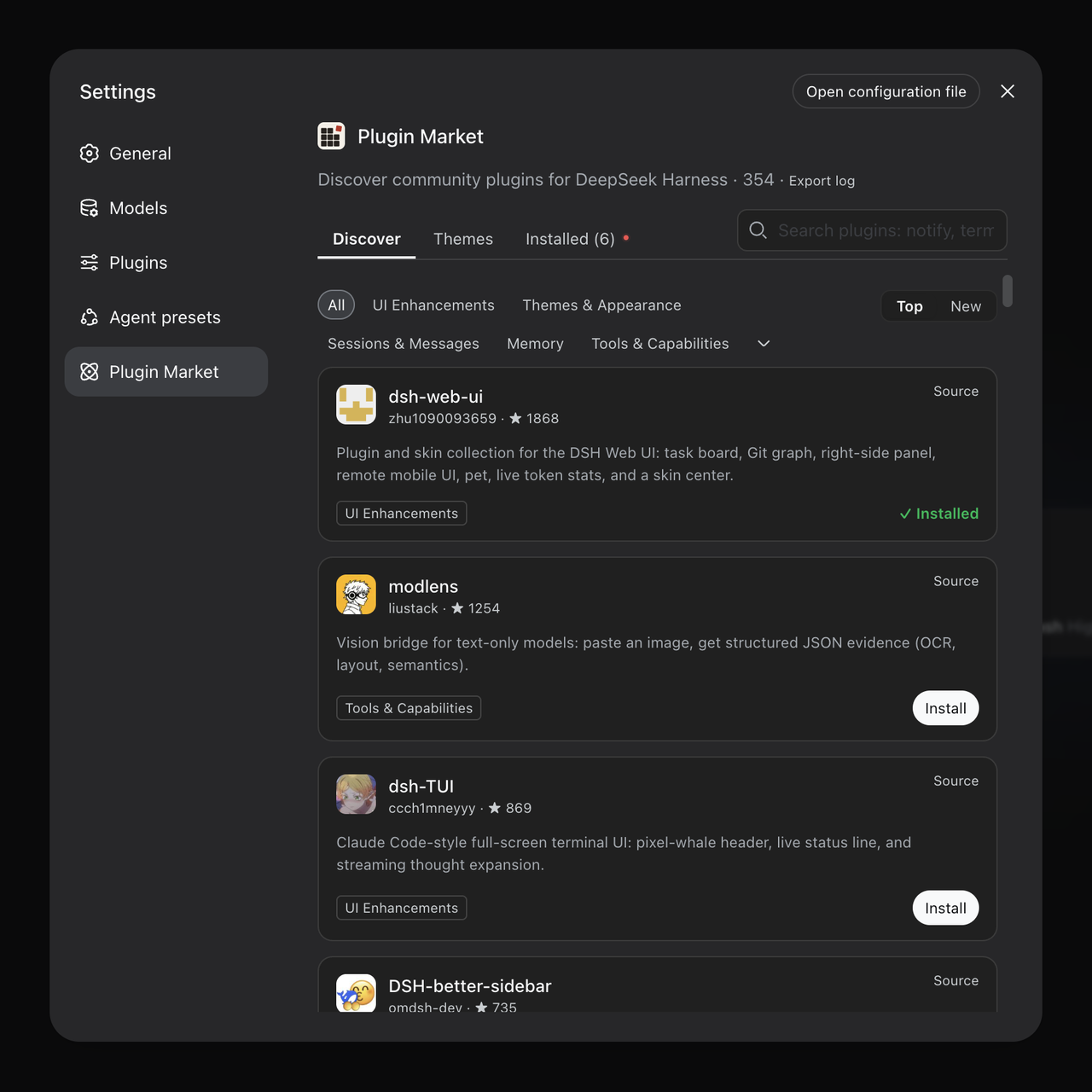
The plugin market for DeepSeek Harness: browse/search/one-click install community plugins and themes, with updates, backup/restore, hot disable, diagnostics, and AI fix.

A persistent whale widget on the DSH web UI that shows DeepSeek balance, today's usage, and per-turn cost, with drag-and-snap and sound effects.