dsh-mcp-manager
Run the following command in DeepSeek Harness:
dsh plugin install fishlikewater/dsh-mcp-manager
Paste the following prompt into your AI chat to install this plugin:
Run dsh plugin install fishlikewater/dsh-mcp-manager in an environment where the dsh CLI is already installed to add this plugin; the source is available at https://github.com/fishlikewater/dsh-mcp-manager .
About this plugin
Connecting MCP servers to DeepSeek Harness used to mean hand-editing YAML line by line, restarting the process after every change—and keeping secrets in plaintext. dsh-mcp-manager moves that entire workflow into a settings page: open Settings → MCP Servers to list, create, edit, or delete servers, and the instant you save, the host hot-swaps the corresponding mcp-client instance so tools appear or disappear in the model's available list without a restart.
Each server carries an independent on/off toggle—turning it off stops the instance and removes its tools instantly; turning it back on remounts and re-registers them, with the state persisted across restarts. The UI no longer shows only an optimistic "Mounted" badge: it intercepts mcp-client logs and surfaces real-time asynchronous events such as connection failures, reconnecting, reconnection success, and giving up. Both stdio (local commands) and streamable-http (remote URLs) transports are supported, with per-server tool-call timeout and startup-failure policies. On the security side, env and header values accept env:NAME (process variables) and cred:NAME (DSH credential service) references, so settings.yaml stores only the reference text—secrets never hit disk. Concurrent edits are guarded by an optimistic rev token on GET/POST; a mismatch returns 409 and prompts a refresh, preventing silent overwrites.
A good fit for DSH developers and teams who frequently adjust MCP server topology, juggle multiple profiles, or share a common settings.yaml. The GUI-driven management, hot-reload, real status feedback, and concurrency protection together reduce the odds of misconfiguration. In headless mode (no webServer), the plugin gracefully degrades to pure instance management and remains fully functional.
Use Cases
- Add a stdio or HTTP MCP server from the settings page and see it live instantly
- Safely co-edit MCP config across multiple windows via optimistic locking
- Manage MCP instance mount and unmount headlessly without a webServer
Best For
- DSH developers who frequently reconfigure MCP server topology
- Teams sharing a common settings.yaml across local or remote workflows
- Ops engineers who want credential references instead of plaintext secrets in config
Related Plugins
A service-oriented sidebar framework for DSH, offering a full workbench with file explorer, embedded browser, real terminal, Git panel, and extensible plugin services.
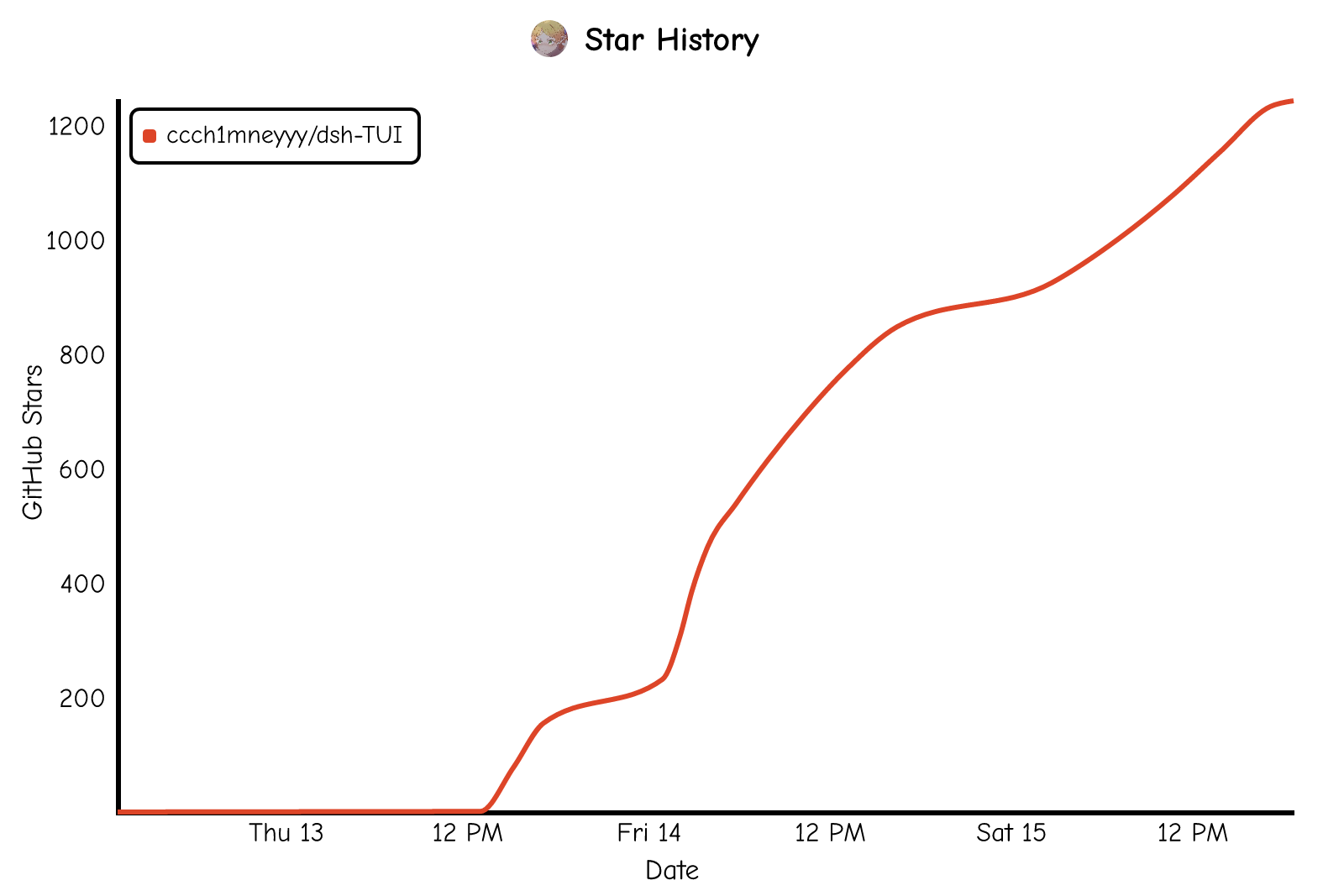
A beautiful, practical Claude Code-style TUI plugin with pixel whale top bar, flowing glow title, real-time status line, streaming thought expansion, time rewind, context progress bar and TPS gauge — zero core changes.
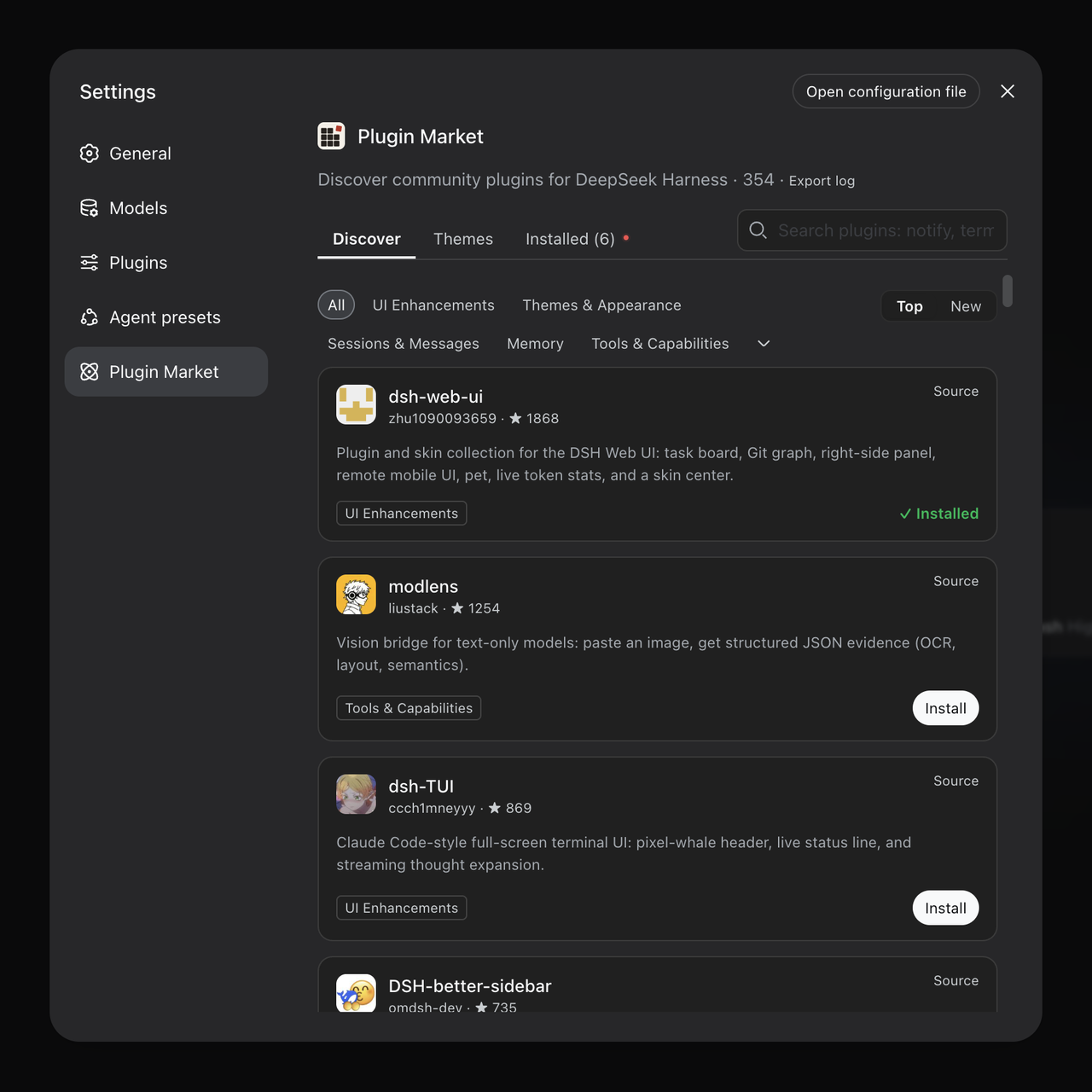
The plugin market for DeepSeek Harness: browse/search/one-click install community plugins and themes, with updates, backup/restore, hot disable, diagnostics, and AI fix.

A persistent whale widget on the DSH web UI that shows DeepSeek balance, today's usage, and per-turn cost, with drag-and-snap and sound effects.