dsh-essential
Run the following command in DeepSeek Harness:
dsh plugin install omdsh-dev/dsh-essential
Paste the following prompt into your AI chat to install this plugin:
Run dsh plugin install omdsh-dev/dsh-essential inside DeepSeek Harness to install this plugin (source: https://github.com/omdsh-dev/dsh-essential); restart DSH after installation for the plugin to take effect.
About this plugin
DeepSeek Harness defines Session persistence as strictly append-only and exposes no deletion method, leaving developers without a first-class way to clean up stale conversations in the Web workspace or from the command line. dsh-essential closes that gap by injecting a Delete conversation action into every Session row menu and registering the /delete-conversation slash command, turning conversation cleanup into an explicit, auditable workflow.
The plugin separates intent from execution. After you confirm a deletion, the running process writes a durable request and immediately hides the row through the workspace archive projection. The actual disk move is deferred to the next cold start, where the new process atomically renames the JSONL directory into a recovery trash folder before it builds its index. Safety is layered throughout: a mandatory literal CONFIRM gate, triple identity binding of sessionId, createdAt, and cwd, a rename-only strategy that never unlinks log files, and a deterministic crash-recovery path via deletion.json. A live writer is never displaced, and no data is irreversibly erased.
It is built for developers who manage many DSH sessions in the Web workspace and want a safe, auditable, and reversible way to retire historical conversations—without patching the DeepSeek Harness source tree or risking accidental permanent loss.
Use Cases
- Cleaning up stale conversations in the Web workspace
- Deleting a specific session by ID via the slash command
- Recovering an accidentally deleted session from the recoverable trash
Best For
- Developers managing many DSH sessions in the Web workspace
- Teams needing a safe and auditable way to retire historical conversations
- Users who need deletion without patching the Harness source tree
Related Plugins
A service-oriented sidebar framework for DSH, offering a full workbench with file explorer, embedded browser, real terminal, Git panel, and extensible plugin services.
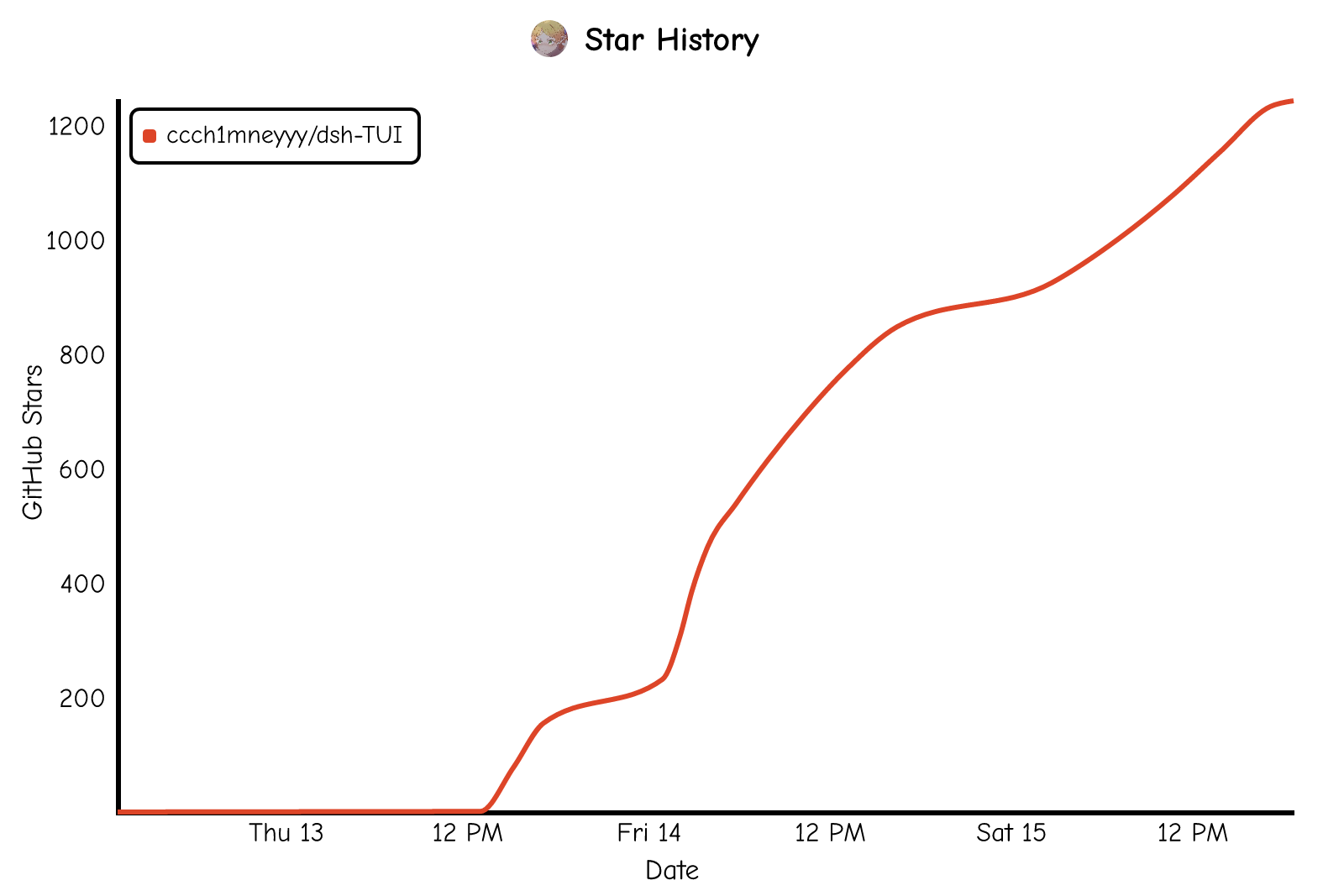
A beautiful, practical Claude Code-style TUI plugin with pixel whale top bar, flowing glow title, real-time status line, streaming thought expansion, time rewind, context progress bar and TPS gauge — zero core changes.
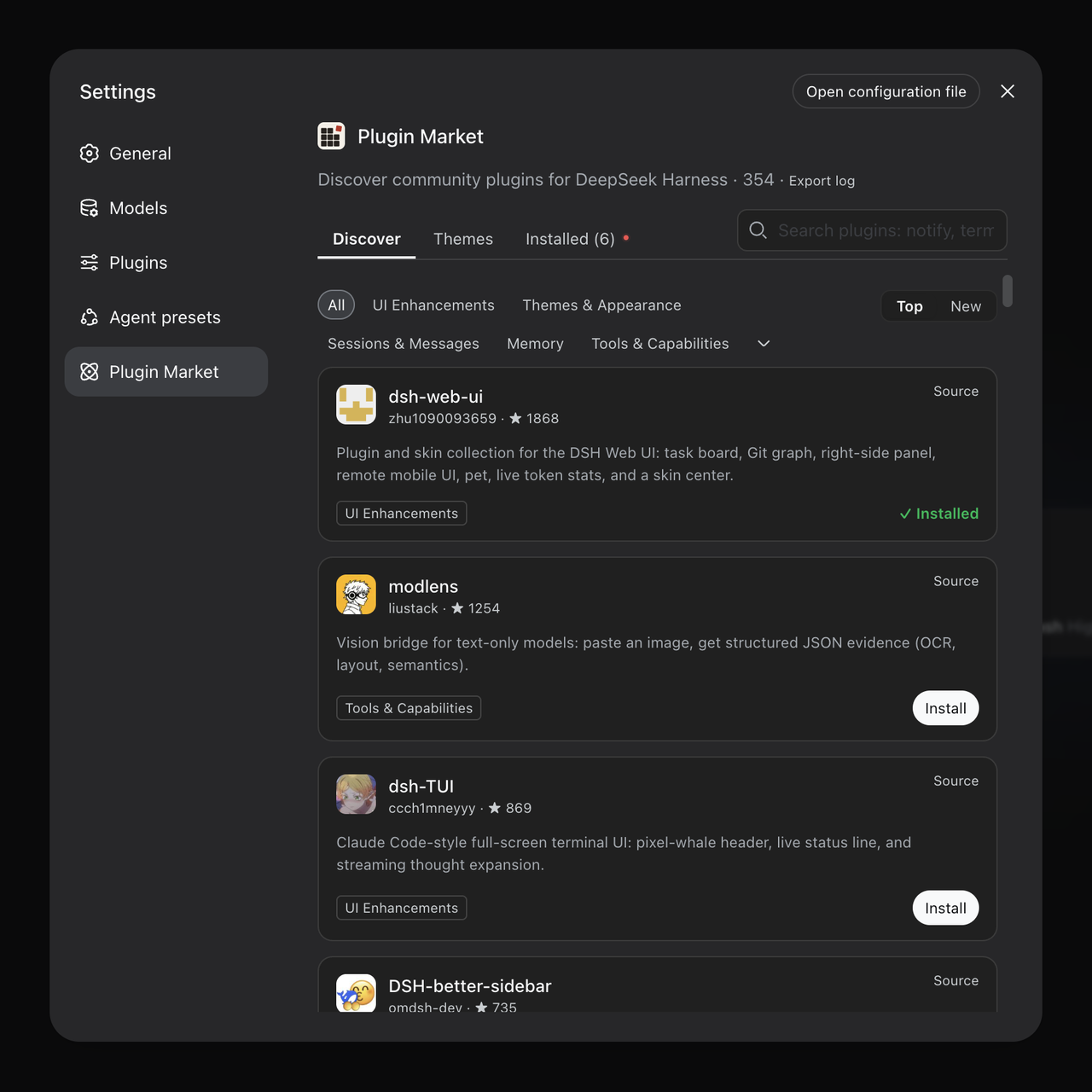
The plugin market for DeepSeek Harness: browse/search/one-click install community plugins and themes, with updates, backup/restore, hot disable, diagnostics, and AI fix.

A persistent whale widget on the DSH web UI that shows DeepSeek balance, today's usage, and per-turn cost, with drag-and-snap and sound effects.