dsh-plugin-manager
Run the following command in DeepSeek Harness:
dsh plugin install Mg-K-Mn/dsh-plugin-manager
Paste the following prompt into your AI chat to install this plugin:
Run dsh plugin install Mg-K-Mn/dsh-plugin-manager in DeepSeek Harness to install this plugin; the source repository is https://github.com/Mg-K-Mn/dsh-plugin-manager .
About this plugin
Installing a plugin is only half the story. Toggling it on and off is where the real friction lives: every switch means opening cordis.patch.yml, adding or removing a disabled: true line, and sometimes restarting the whole web service just to confirm the change took effect. dsh-plugin-manager compresses that entire loop into a single click inside the Settings page, so you can stop babysitting YAML files and waiting for restarts.
Navigate to Settings > Plugins > Installed Plugins and you will find a card for every package already downloaded in the current profile, showing its name, version, source spec, description, and the live runtime entries from the Cordis Loader tree (id, module, fiber status). A one-click Enable / Disable button sits on each card. Pressing it reads and writes the profile-level cordis.patch.yml directly, and dsh's built-in watchUserPatches HMR immediately re-composes the Loader tree, so the change is live the moment the file lands. Packages that are on disk but not yet wired up get their insert block written automatically when you press Enable, saving you from hand-crafting YAML.
Safety is handled in several layers: the manager cannot disable itself so you never lose the entry point to re-enable it; only pure id-plus-disabled lines are edited automatically, while entries carrying extra configuration are flagged for manual review rather than silently deleted; all write operations require a same-origin POST check; and patch files are saved via temp-file-plus-rename atomic writes with a serialization queue so rapid clicks never collide.
This plugin suits users who run several plugins in a dsh workspace and need to flip them on and off often, as well as developers who want quick debugging without touching YAML patch files. Installing and uninstalling are still the job of the plugin market or the CLI; dsh-plugin-manager focuses on one thing: a safe, instant switch for plugins that are already on disk.
Use Cases
- Frequently toggle multiple plugins on and off without hand-editing YAML patch files
- Quickly disable a misbehaving runtime entry during debugging, with HMR applying changes instantly
- One-click wire-up for downloaded-but-unwired packages by auto-writing the insert block
Best For
- Users maintaining multiple plugins in a dsh workspace who need to toggle them often
- Developers who want quick debugging without repeatedly editing YAML patch files
- dsh users who prefer instant HMR changes over full web-service restarts
Related Plugins
A service-oriented sidebar framework for DSH, offering a full workbench with file explorer, embedded browser, real terminal, Git panel, and extensible plugin services.
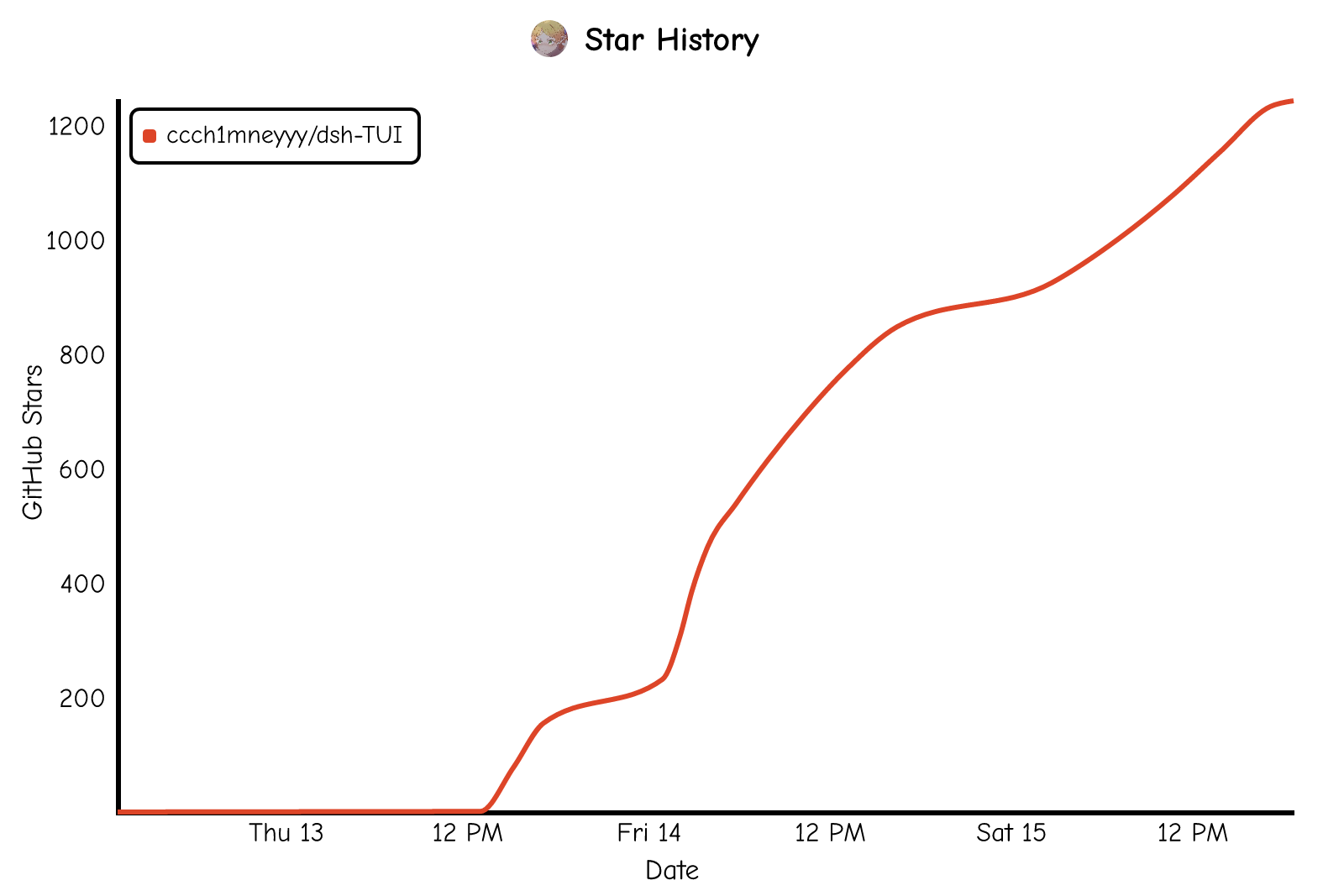
A beautiful, practical Claude Code-style TUI plugin with pixel whale top bar, flowing glow title, real-time status line, streaming thought expansion, time rewind, context progress bar and TPS gauge — zero core changes.
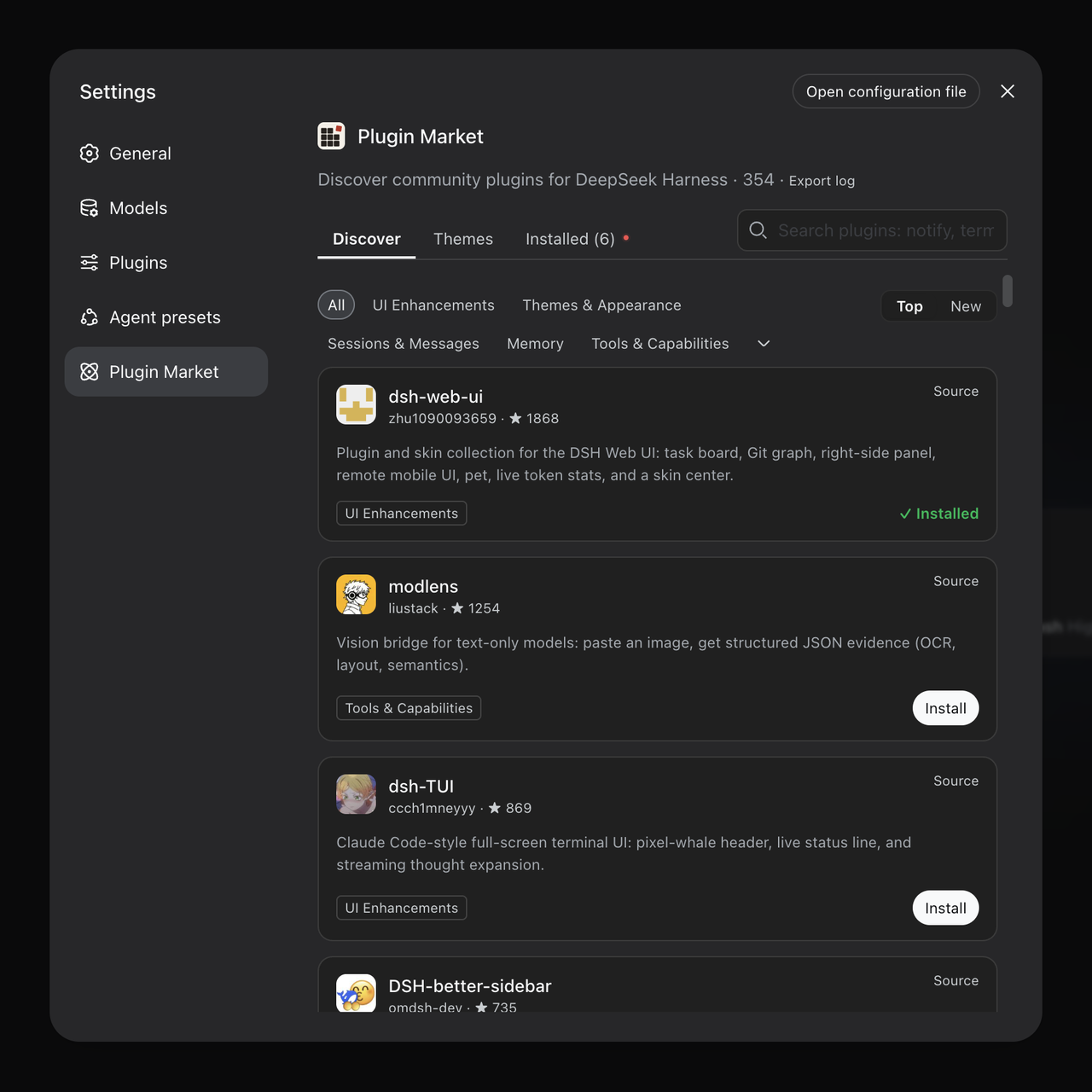
The plugin market for DeepSeek Harness: browse/search/one-click install community plugins and themes, with updates, backup/restore, hot disable, diagnostics, and AI fix.

A persistent whale widget on the DSH web UI that shows DeepSeek balance, today's usage, and per-turn cost, with drag-and-snap and sound effects.