dsh-mcphub
Run the following command in DeepSeek Harness:
dsh plugin install jinhongxun/dsh-mcphub
Paste the following prompt into your AI chat to install this plugin:
Run dsh plugin install jinhongxun/dsh-mcphub in your DeepSeek Harness terminal, then restart DSH for the MCP panel to appear; source code is available at https://github.com/jinhongxun/dsh-mcphub .
About this plugin
Managing MCP servers inside DeepSeek Harness used to mean hand-editing cordis.patch.yml—typing out command, args, env—then wondering whether things actually connected. dsh-mcphub folds that into a dedicated MCP section of the settings panel: a green dot means the server's tools are registered in the live session and callable right now; a grey dot means the config exists but no tools were registered. Transport type, target address, tool count, and sample tool names are all visible at a glance, so you stop guessing from log files.
The real time-saver is the upgrade and connectivity workflow. For pip-installed stdio servers (scrapling, for example), the plugin compares against the latest PyPI release and runs a one-click pip install --upgrade, handling Windows file locks along the way—stopping holder processes, parking the old .exe, and restoring on failure. npx-based servers are matched against the actual local cache with a "refresh cache" action, and @latest specs are never nagged since they self-update. Adding a new server is a simple form that appends the correct entry to the chosen profile's patch.yml; a DSH restart is all it takes. HTTP servers receive a real MCP initialize handshake that returns serverInfo and latency, while stdio servers get at least an executable-existence check—far better than configuring and hoping.
If your daily workflow involves multiple MCP servers across Windows, macOS, and Linux, this plugin turns scattered YAML edits into a single dashboard. Secrets in headers and env stay in the host process for probing only; the browser-side panel never sees the values, only the key names—so you can keep sensitive credentials off your developer tools.
Use Cases
- Check at a glance whether an MCP server's tools are registered and callable by the AI
- One-click upgrade for pip or npx-based MCP servers with automatic Windows file-lock handling
- Add a new MCP server via a form instead of hand-editing YAML
Best For
- Developers running multiple MCP servers in DeepSeek Harness who want unified lifecycle management
- Windows engineers tired of file-lock headaches when upgrading stdio-based MCP servers
- Technical users who prefer visual status feedback over guessing connectivity from logs
Related Plugins
A service-oriented sidebar framework for DSH, offering a full workbench with file explorer, embedded browser, real terminal, Git panel, and extensible plugin services.
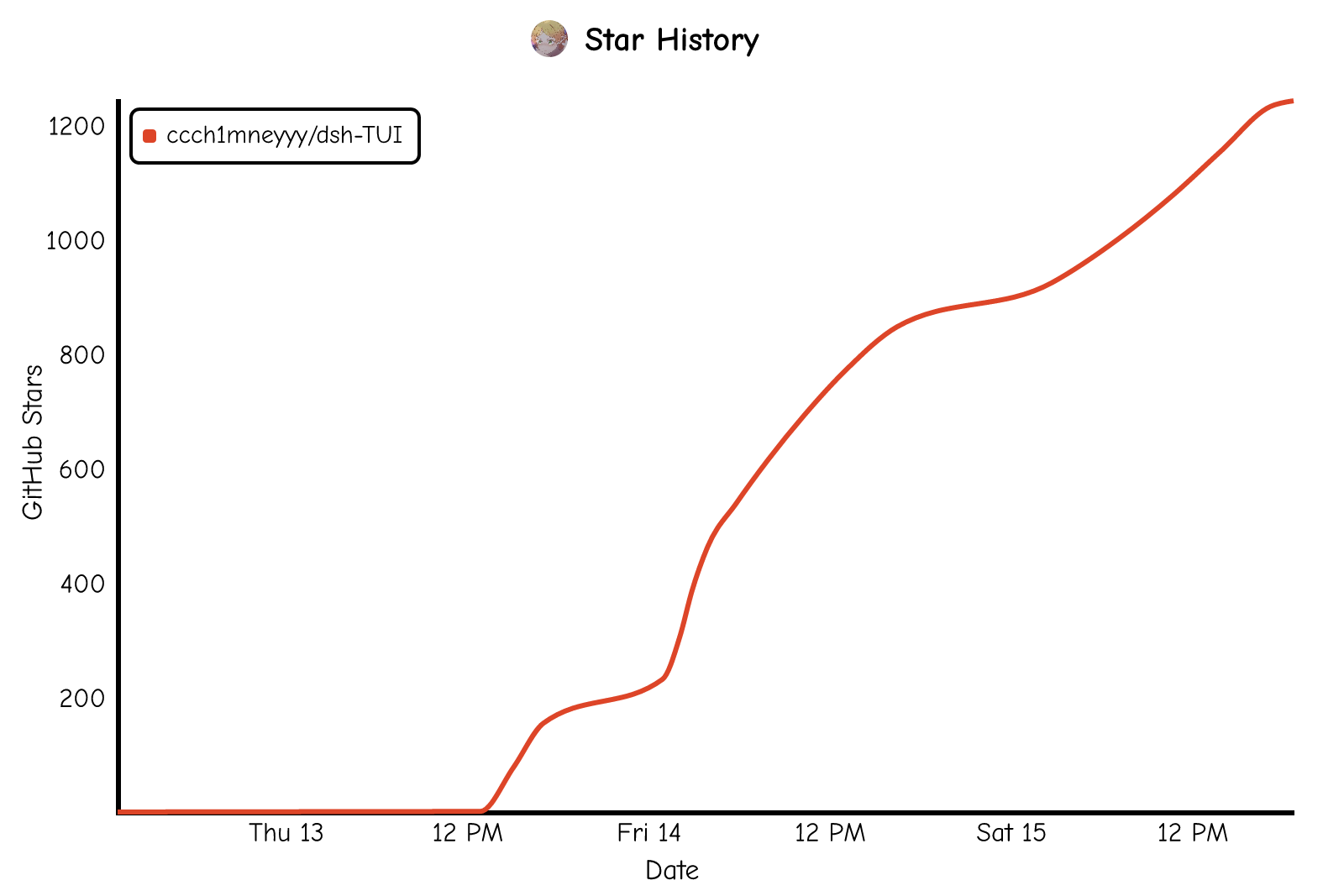
A beautiful, practical Claude Code-style TUI plugin with pixel whale top bar, flowing glow title, real-time status line, streaming thought expansion, time rewind, context progress bar and TPS gauge — zero core changes.
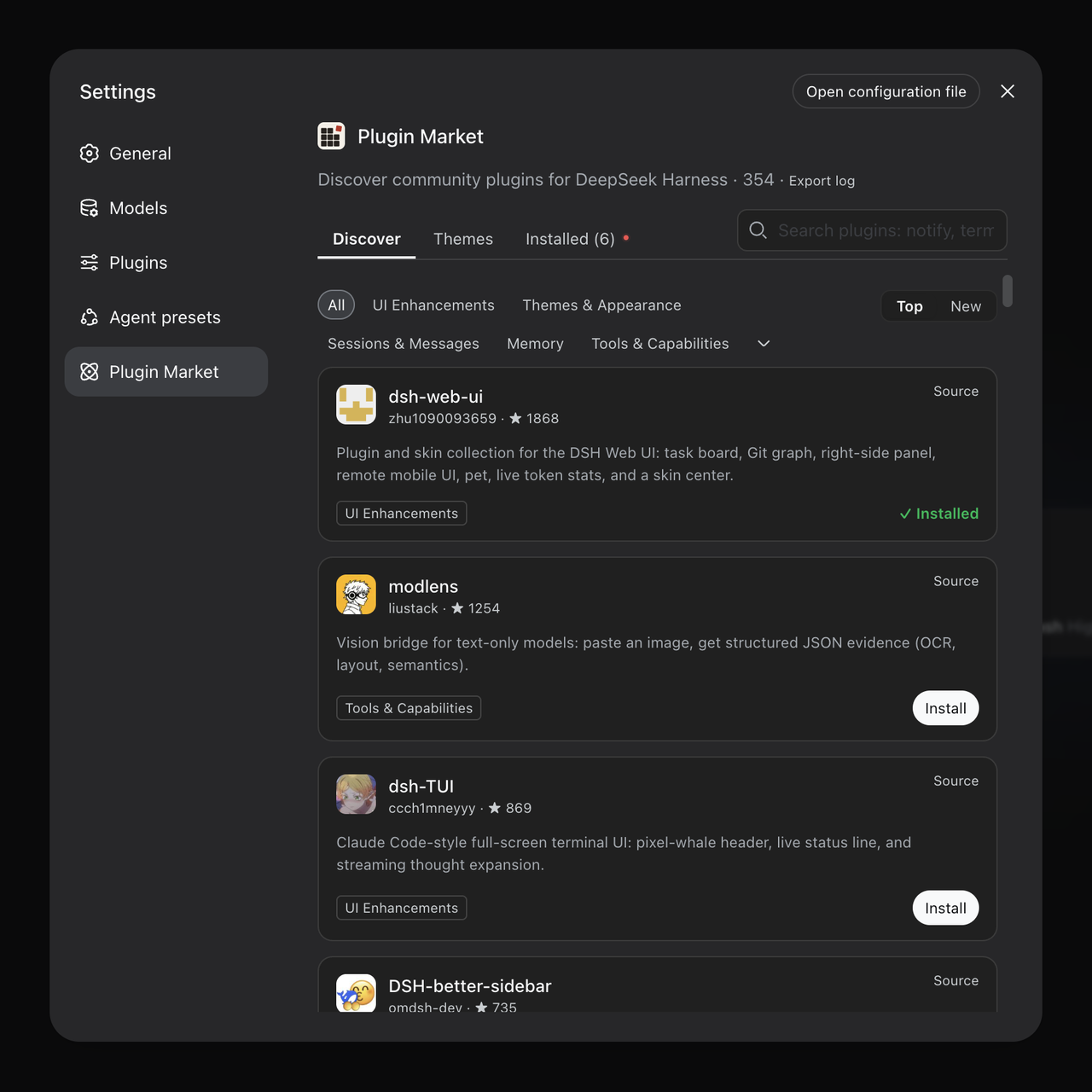
The plugin market for DeepSeek Harness: browse/search/one-click install community plugins and themes, with updates, backup/restore, hot disable, diagnostics, and AI fix.

A persistent whale widget on the DSH web UI that shows DeepSeek balance, today's usage, and per-turn cost, with drag-and-snap and sound effects.