dsh-alert-sound
Run the following command in DeepSeek Harness:
dsh plugin install Machine-126/dsh-alert-sound
Paste the following prompt into your AI chat to install this plugin:
In DeepSeek Harness, install the plugin via the command dsh plugin install Machine-126/dsh-alert-sound, or obtain the source code from the GitHub repository https://github.com/Machine-126/dsh-alert-sound and follow the documentation for installation.
About this plugin
When using the DeepSeek Harness web interface for multi-session management, users often struggle with missing critical state changes, such as approvals, questions, or errors, leading to delays and reduced efficiency. The dsh-alert-sound plugin addresses this issue by providing customizable sound alerts for four core notification types (approval, answer, completion, error), enabling timely responses and smoother workflows. It offers optional voice reading that narrates specific details like 'Approval needed: writing file,' with support for Chinese and English interface switching for a more personalized experience. Beyond basic volume and sound settings, the plugin includes background alerts, multi-session notifications, repeat reminders, and experimental stall detection to comprehensively enhance the dsh interface interaction. Ideal for developers and task managers who frequently use dsh, this plugin helps individuals and teams avoid missing important information through intelligent sound prompts, allowing them to focus on their core activities.
Use Cases
- Timely receive approval or answer notifications during multi-session management to avoid operational delays.
- Quickly perceive state changes through sound and floating alerts when session output completes or errors occur.
- Scenarios requiring voice narration of specific content (e.g., error messages) for better understanding.
Best For
- Developers or users who frequently interact with the DeepSeek Harness web interface.
- Team collaborators needing to efficiently handle multi-tasks and respond promptly to session states.
- Individual users seeking to enhance interface interaction and reduce information omissions.
Related Plugins
A service-oriented sidebar framework for DSH, offering a full workbench with file explorer, embedded browser, real terminal, Git panel, and extensible plugin services.
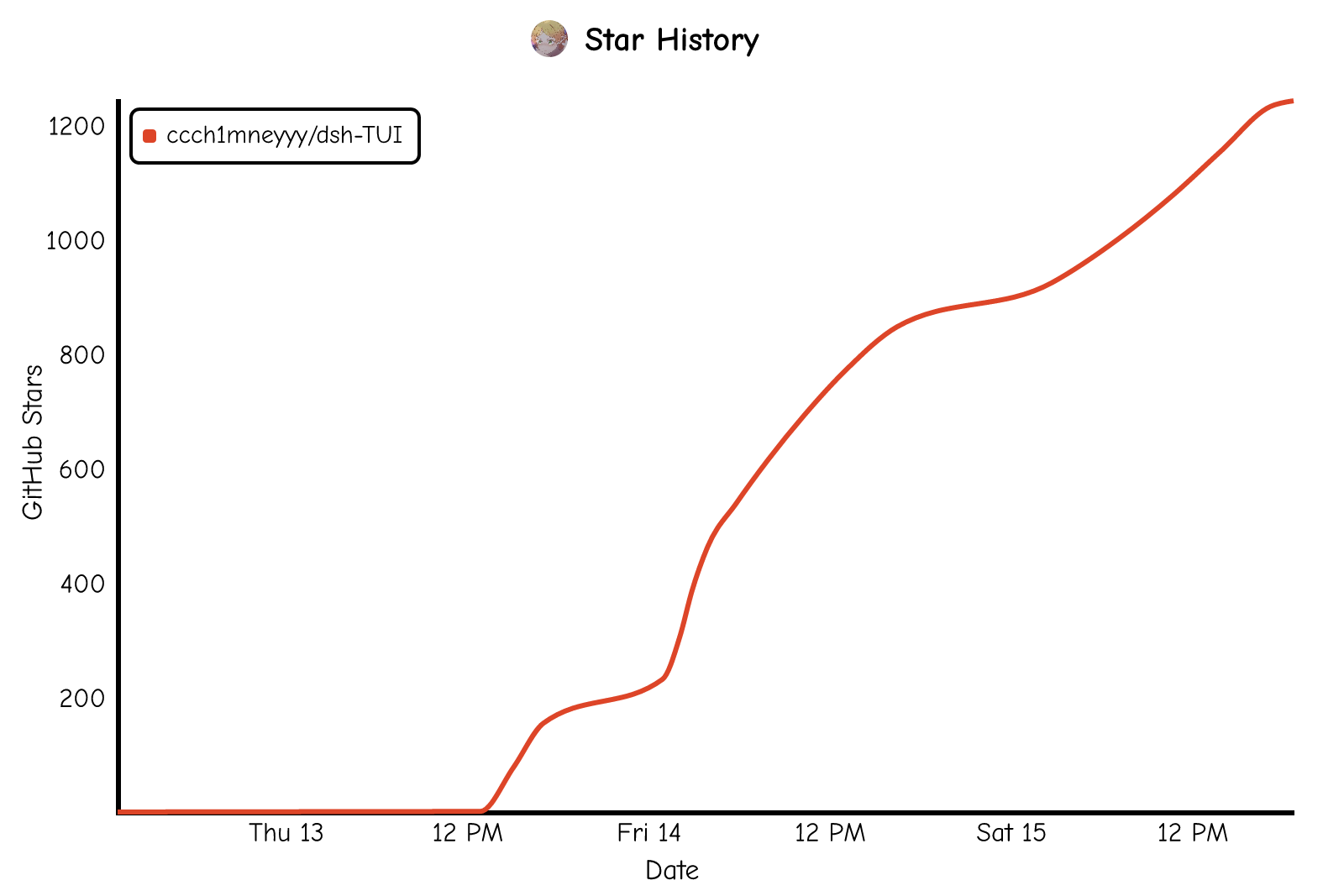
A beautiful, practical Claude Code-style TUI plugin with pixel whale top bar, flowing glow title, real-time status line, streaming thought expansion, time rewind, context progress bar and TPS gauge — zero core changes.
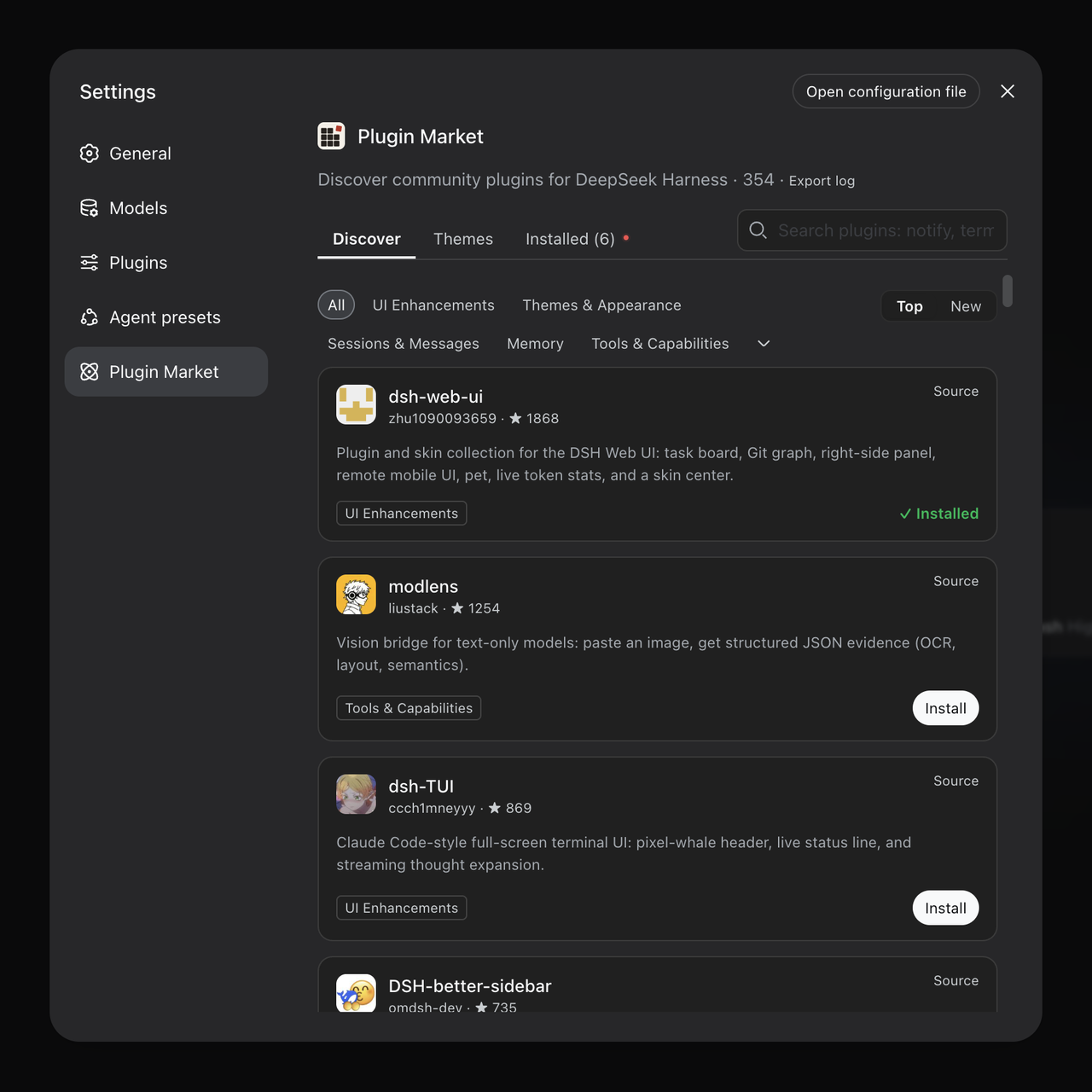
The plugin market for DeepSeek Harness: browse/search/one-click install community plugins and themes, with updates, backup/restore, hot disable, diagnostics, and AI fix.

A persistent whale widget on the DSH web UI that shows DeepSeek balance, today's usage, and per-turn cost, with drag-and-snap and sound effects.