dsh-negative-ledger
Run the following command in DeepSeek Harness:
dsh plugin install akslcw/dsh-negative-ledger
Paste the following prompt into your AI chat to install this plugin:
To install this plugin in DeepSeek Harness, run `dsh plugin install akslcw/dsh-negative-ledger`, with the full source at https://github.com/akslcw/dsh-negative-ledger。
About this plugin
In the development and operation of coding agents, agents often repeatedly attempt known failed tool calls or file operations, leading to wasted time and inefficiency. Traditional tools lack persistent recording and intelligent updating for failure paths, preventing effective learning from mistakes. The dsh-negative-ledger plugin serves as a negative-knowledge ledger, specifically recording all disproven paths such as failed commands, missing files, rejected approaches, and unavailable APIs.
Each record includes evidence like exit codes or file states, and automatically invalidates or confirms based on environmental evidence changes. When an agent encounters the same fingerprint (e.g., identical command and working directory), the plugin provides warnings or denies the attempt, avoiding repeated errors. It supports SQLite and JSONL backends, ensures transactional consistency, and enables multi-agent sharing for enhanced reliability.
This tool is ideal for coding agent developers, AI agent builders, and engineers using the DeepSeek Harness framework. It enables agents to manage failure attempts intelligently, reducing resource waste and making it a practical choice for building robust agent systems.
Use Cases
- When a coding agent repeatedly attempts failed commands, preventing resource waste.
- In agent development, recording disproven paths to avoid looping errors.
- In shared multi-agent environments, stopping subagents from repeating parent failures.
Best For
- Coding agent developers, needing to optimize error handling.
- AI engineers, building intelligent agents with the DSH framework.
- DevOps teams, managing the reliability of multi-agent systems.
Related Plugins
A service-oriented sidebar framework for DSH, offering a full workbench with file explorer, embedded browser, real terminal, Git panel, and extensible plugin services.
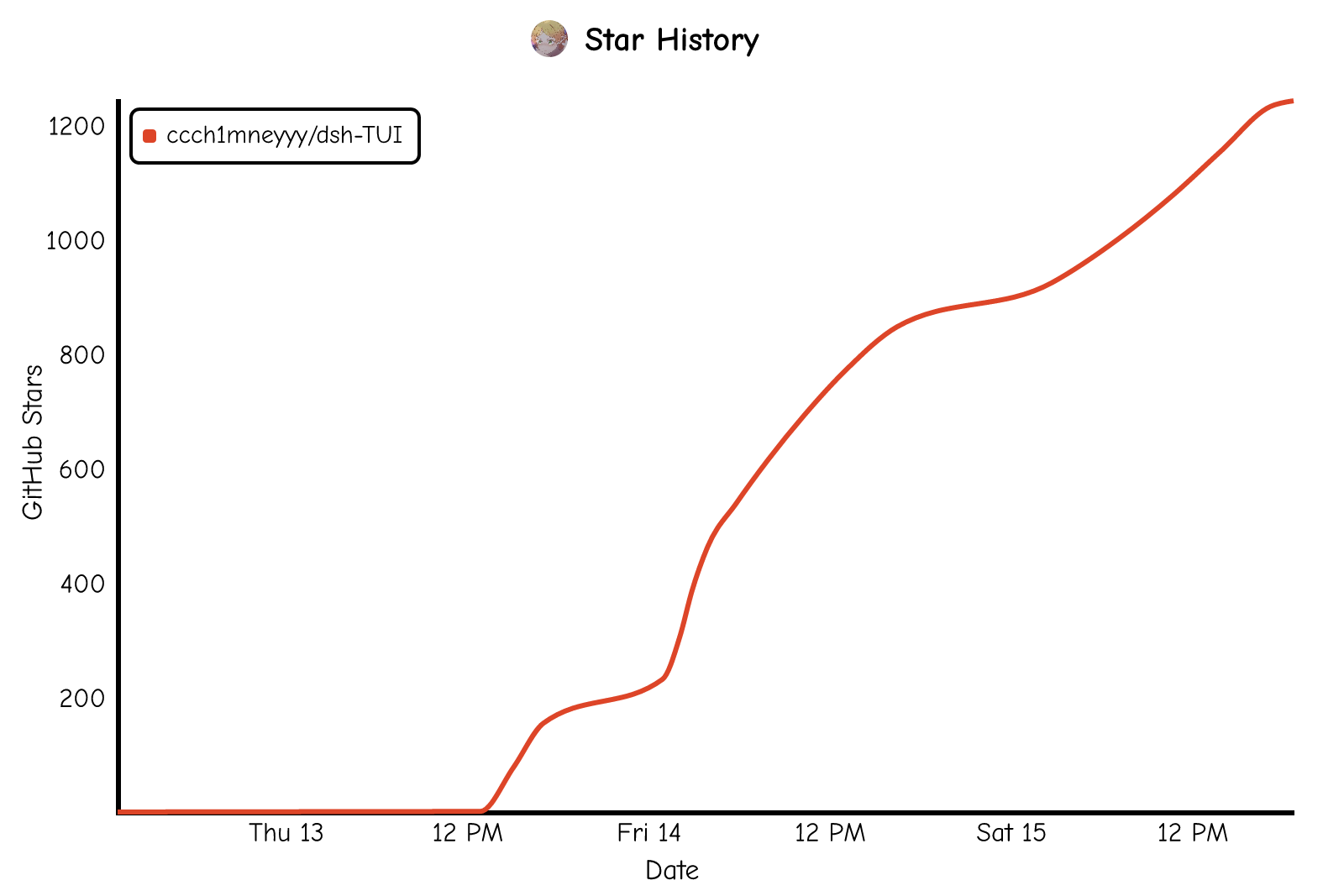
A beautiful, practical Claude Code-style TUI plugin with pixel whale top bar, flowing glow title, real-time status line, streaming thought expansion, time rewind, context progress bar and TPS gauge — zero core changes.
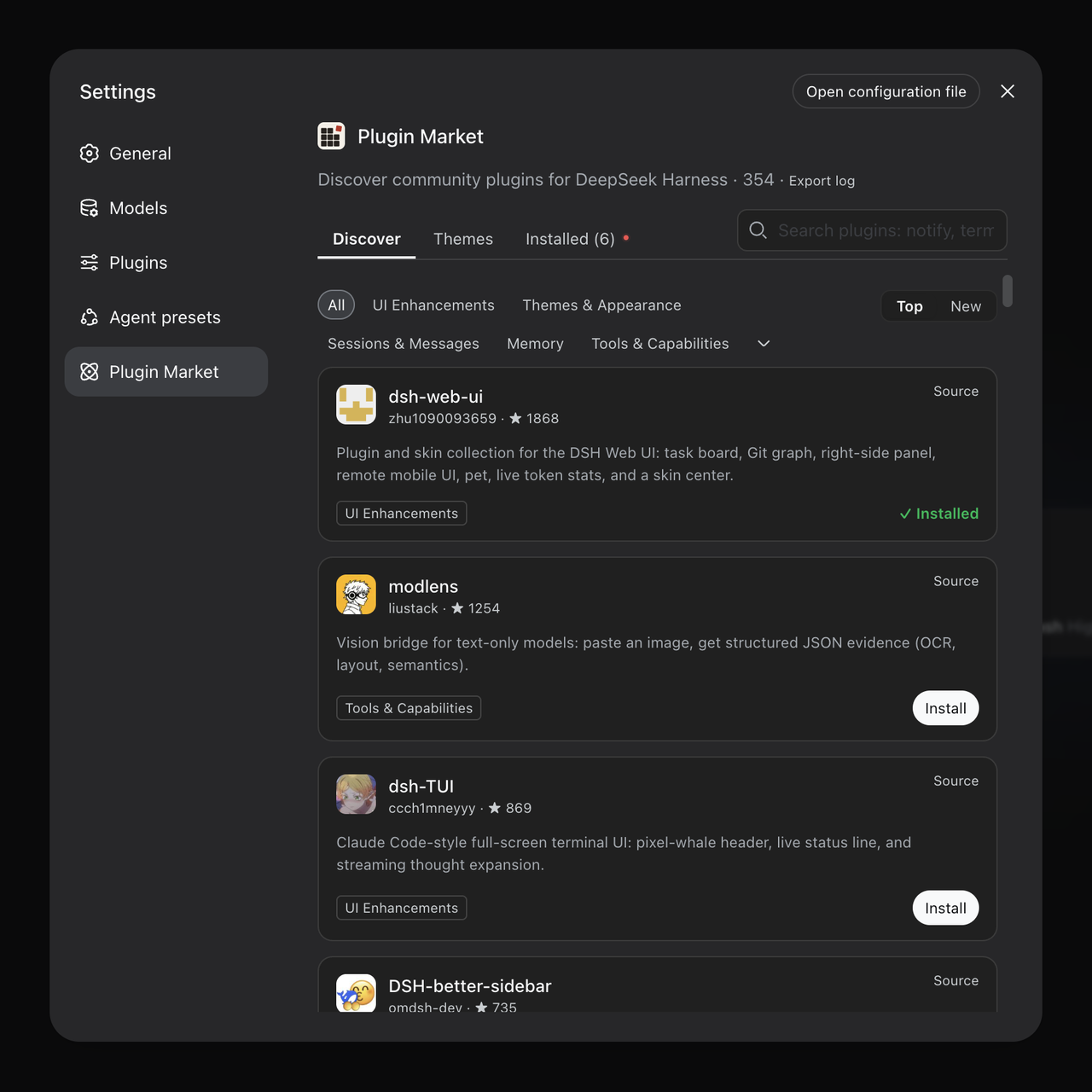
The plugin market for DeepSeek Harness: browse/search/one-click install community plugins and themes, with updates, backup/restore, hot disable, diagnostics, and AI fix.

A persistent whale widget on the DSH web UI that shows DeepSeek balance, today's usage, and per-turn cost, with drag-and-snap and sound effects.