dsh-open-browser
Run the following command in DeepSeek Harness:
dsh plugin install peach0x33a/dsh-open-browser
Paste the following prompt into your AI chat to install this plugin:
To install this plugin in DeepSeek Harness, use the command: dsh plugin install peach0x33a/dsh-open-browser. Source code: https://github.com/peach0x33a/dsh-open-browser
About this plugin
When you start a web service with DeepSeek Harness, you often have to manually copy the URL printed in the terminal and paste it into your browser. This repetitive and error-prone step disrupts your workflow. The dsh-open-browser plugin is designed to solve this exact pain point. It automatically opens the Web UI in your system's default browser the very moment the dsh web service is fully ready and accessible, allowing you to dive straight into your work.
The plugin's core capabilities lie in its 'precise timing' and 'cross-platform adaptability'. It is deeply integrated with the service startup sequence, triggering at the exact moment the URL is known and the port is bound. It meticulously handles various environments, including macOS, Windows, Linux (both X11 and Wayland), and WSL. It also smartly considers headless server scenarios, silently skipping with a log message instead of causing errors or disrupting CI/CD pipelines.
Furthermore, the plugin is entirely non-invasive. It doesn't block normal service shutdown, has zero runtime dependencies, and provides sensible defaults for out-of-the-box use. If you are a developer or ops engineer who frequently uses dsh to develop or debug web applications and want to seamlessly link 'starting a service' and 'opening the interface', this plugin can save you significant repetitive effort and create a smoother experience.
Use Cases
- Quickly launch and preview a web app's interface during local development.
- Safely integrate development tools on headless Linux servers or CI containers.
- Seamlessly access a browser in Windows or Linux when working in WSL or mixed environments.
Best For
- Full-stack or front-end engineers who frequently use dsh for development.
- DevOps personnel needing to safely handle web services in automation scripts or CI/CD.
- Terminal users who prefer out-of-the-box solutions and seek an efficient development experience.
Related Plugins
A service-oriented sidebar framework for DSH, offering a full workbench with file explorer, embedded browser, real terminal, Git panel, and extensible plugin services.
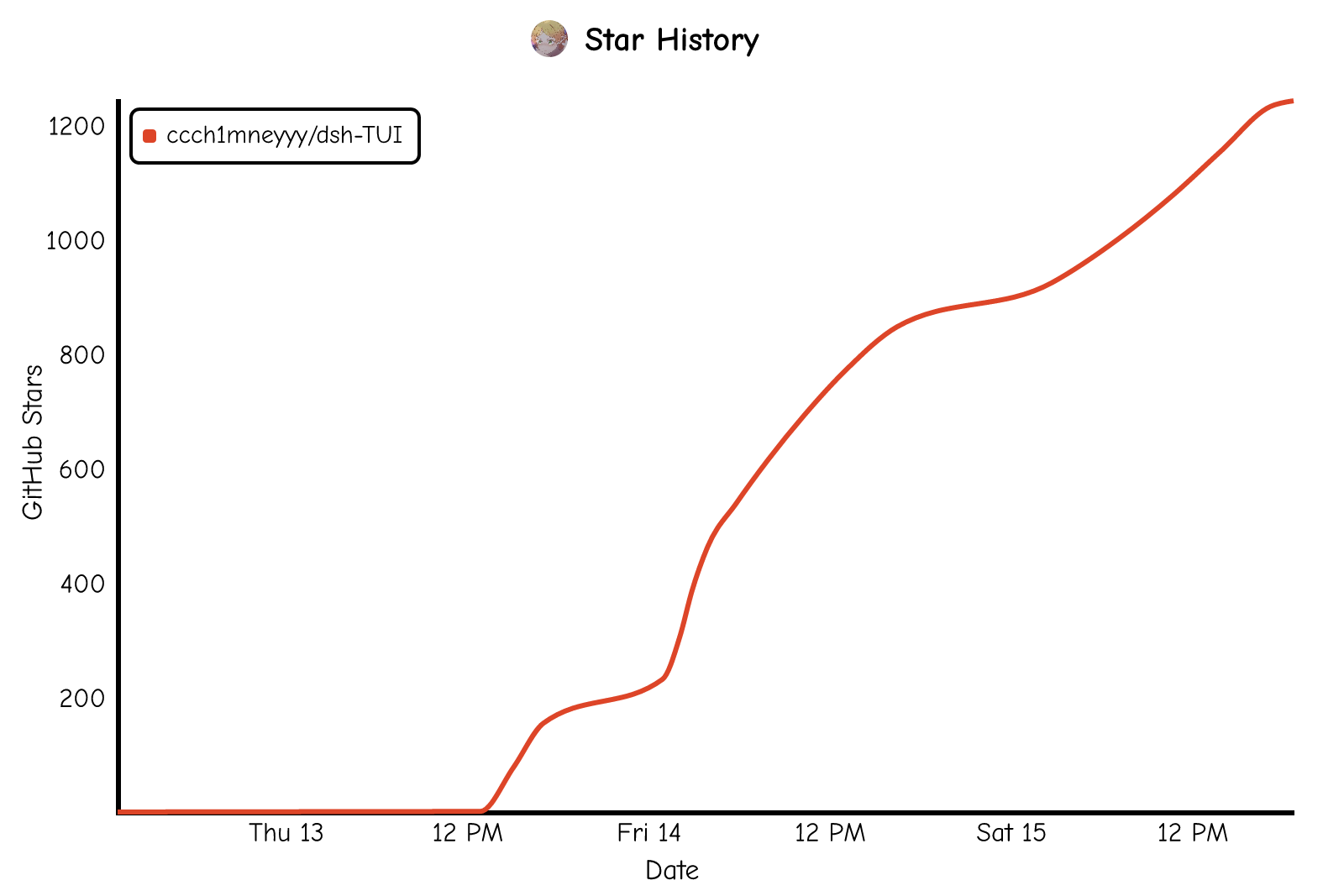
A beautiful, practical Claude Code-style TUI plugin with pixel whale top bar, flowing glow title, real-time status line, streaming thought expansion, time rewind, context progress bar and TPS gauge — zero core changes.
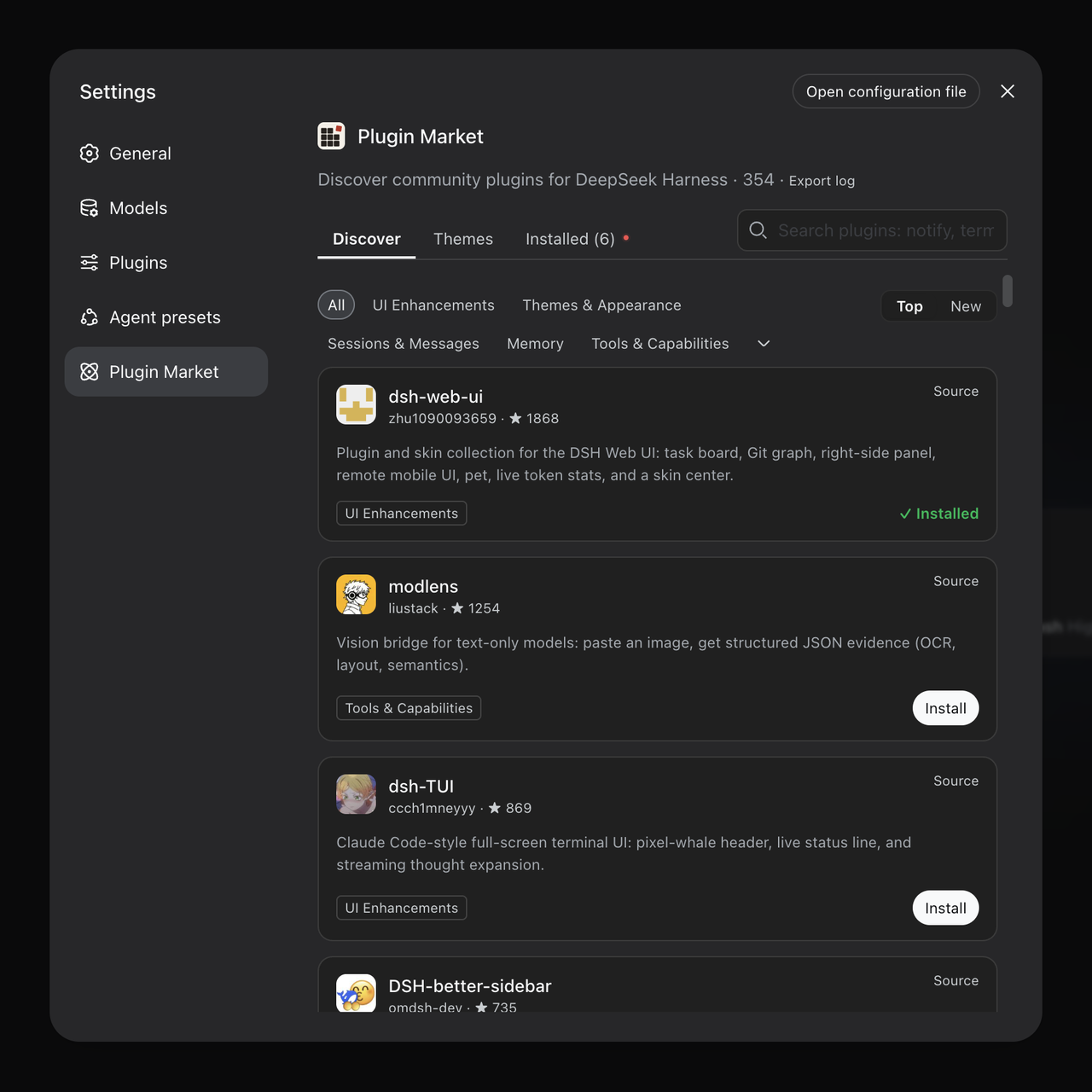
The plugin market for DeepSeek Harness: browse/search/one-click install community plugins and themes, with updates, backup/restore, hot disable, diagnostics, and AI fix.

A persistent whale widget on the DSH web UI that shows DeepSeek balance, today's usage, and per-turn cost, with drag-and-snap and sound effects.