
dsh-tui
Run the following command in DeepSeek Harness:
dsh plugin install xiaoshihou514/dsh-tui
Paste the following prompt into your AI chat to install this plugin:
In DeepSeek Harness, you can install this plugin by running the command `dsh plugin install xiaoshihou514/dsh-tui`, with the source code repository at https://github.com/xiaoshihou514/dsh-tui.
About this plugin
DeepSeek Harness (DSH) often requires user interaction, but graphical interfaces are not always necessary or available. dsh-tui addresses this by offering a minimal text user interface that enables efficient operation of DSH in terminal environments. This plugin focuses on core functionality, allowing users to quickly access DSH capabilities without complex graphical setups.
The core strength of dsh-tui lies in its lightweight and streamlined nature. As a minimal TUI, it includes only essential interactive elements, avoiding unnecessary bloat. Users can perform basic DSH tasks such as viewing statuses, triggering actions, or making simple configurations directly from the terminal workflow. This design enhances efficiency and reduces resource consumption, making it suitable for resource-constrained environments.
This plugin is ideal for developers, system administrators, or tech enthusiasts who prefer terminal-based workflows. If you frequently work in the command line and need rapid interaction with DSH without switching to a graphical interface, dsh-tui is a perfect fit. It is also well-suited for remote servers or headless systems, providing a reliable access method.
In summary, dsh-tui fills a niche in terminal interaction for DSH with its pragmatic design, making core functionalities readily accessible.
Screenshots
Use Cases
- Quickly access DeepSeek Harness features in the terminal.
- Suitable for server environments without graphical interfaces.
- Provides lightweight interaction to avoid resource waste.
Best For
- Developers and administrators who prefer command-line operations.
- Users who need to use DSH on remote or headless systems.
- Tech enthusiasts seeking efficient and concise tools.
Related Plugins
A service-oriented sidebar framework for DSH, offering a full workbench with file explorer, embedded browser, real terminal, Git panel, and extensible plugin services.
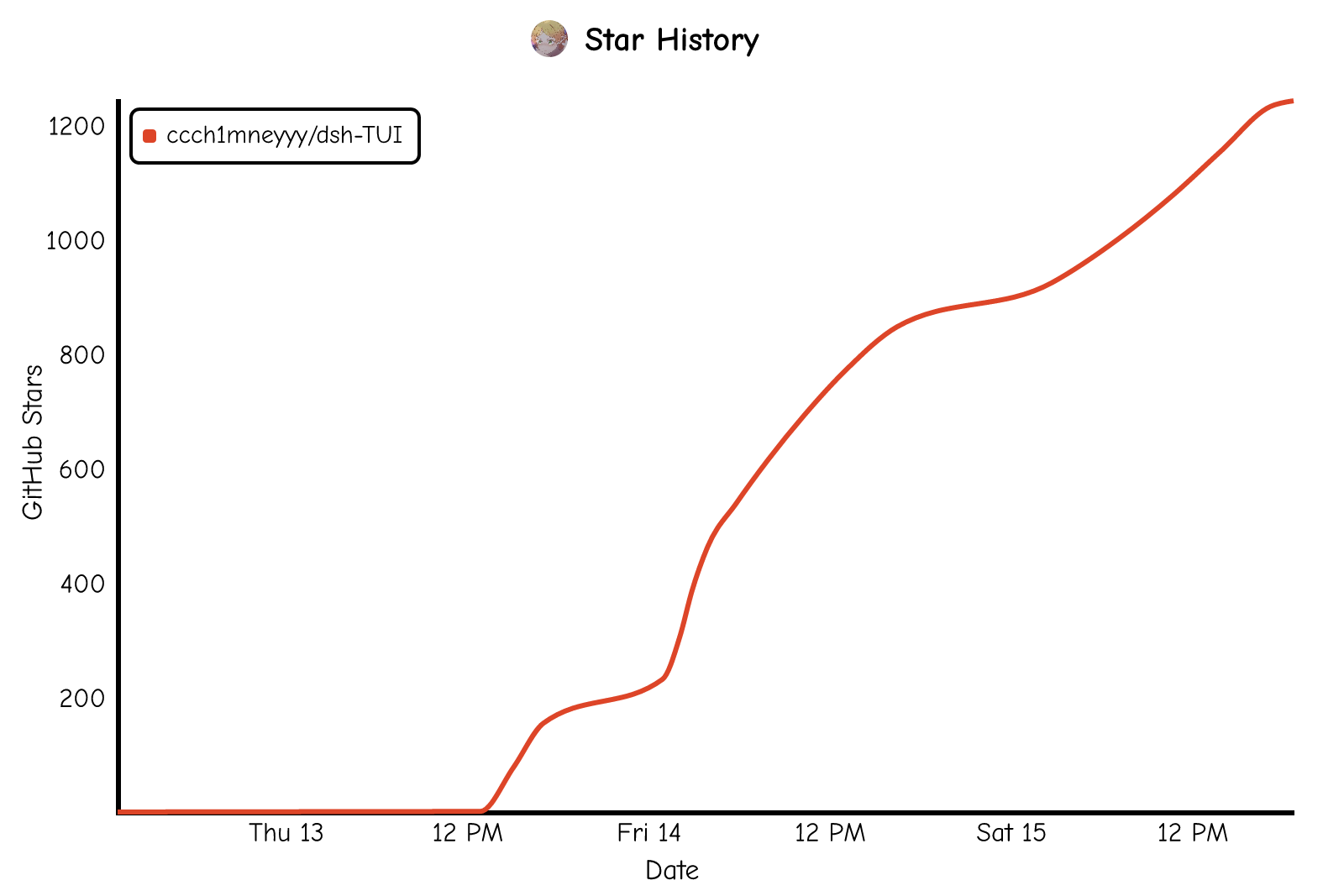
A beautiful, practical Claude Code-style TUI plugin with pixel whale top bar, flowing glow title, real-time status line, streaming thought expansion, time rewind, context progress bar and TPS gauge — zero core changes.
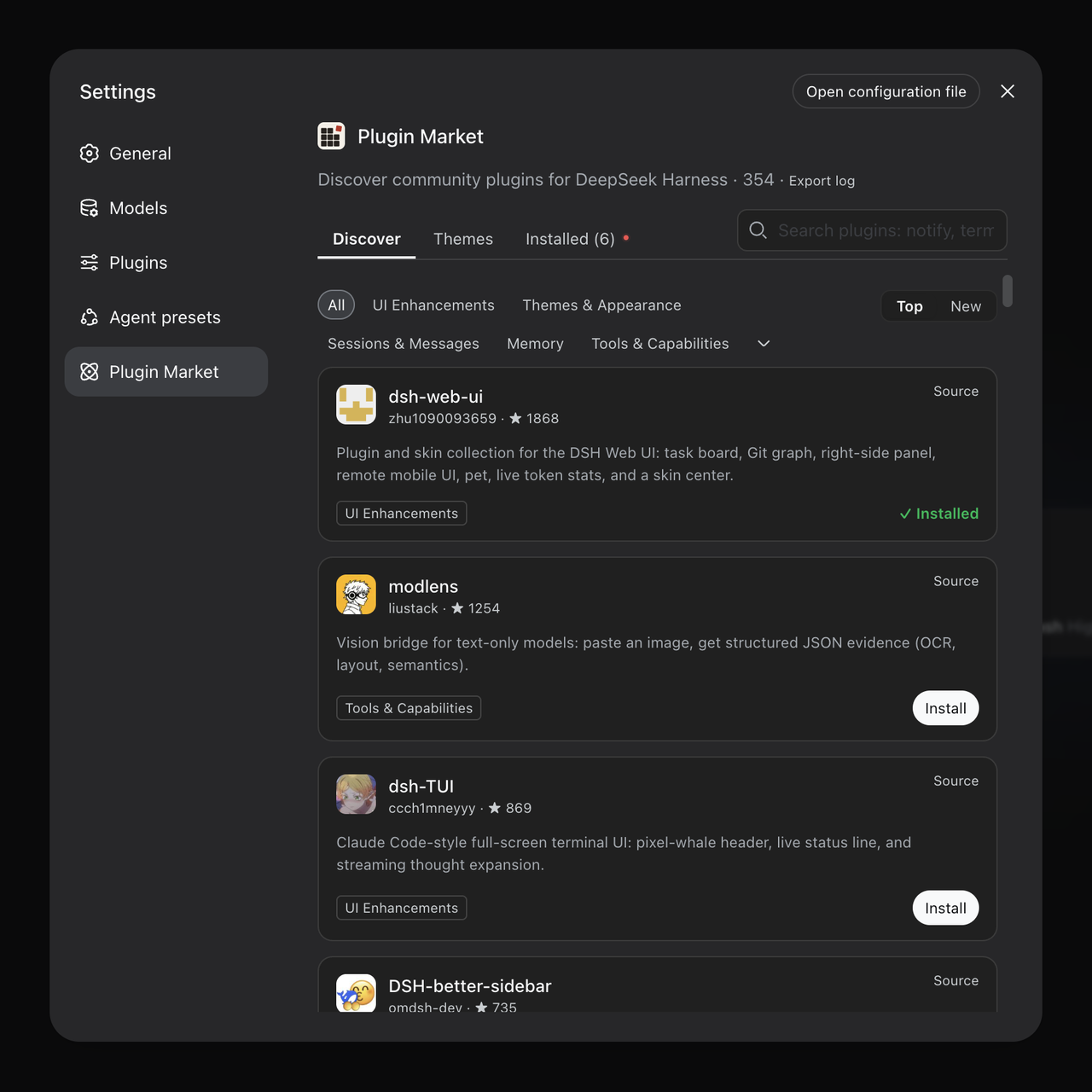
The plugin market for DeepSeek Harness: browse/search/one-click install community plugins and themes, with updates, backup/restore, hot disable, diagnostics, and AI fix.

A persistent whale widget on the DSH web UI that shows DeepSeek balance, today's usage, and per-turn cost, with drag-and-snap and sound effects.