dsh-voice
Run the following command in DeepSeek Harness:
dsh plugin install Jesse-njx/dsh-voice
Paste the following prompt into your AI chat to install this plugin:
In DeepSeek Harness, you can install the dsh-voice plugin by running the command dsh plugin install Jesse-njx/dsh-voice or directly from the source repository at https://github.com/Jesse-njx/dsh-voice.
About this plugin
Terminal agents often fall short in two everyday scenarios: dictating instructions when away from the keyboard and reading lengthy outputs during tasks. dsh-voice addresses these pain points by adding voice interaction capabilities to DeepSeek Harness, making the terminal experience more intuitive and efficient.
At its core, dsh-voice provides two key tools: transcribe, which converts dictated audio into user messages, and speak, which reads agent replies aloud. An added convenience is the /voice command, allowing you to toggle auto-narration on the fly. The plugin is designed with a local-first approach—audio files are stored locally by default, and no data leaves your machine unless you explicitly configure a cloud backend, ensuring strong privacy and security.
This plugin is ideal for terminal users who need hands-free interaction. Developers juggling multiple tasks or those looking to streamline communication with their agents will find its voice features a significant productivity boost. It's also perfect for privacy-conscious users, thanks to its offline processing capabilities. In essence, dsh-voice is a lightweight yet powerful enhancement that makes terminal agent interactions more natural and accessible.
Use Cases
- Quickly input commands via dictation when hands are away from the keyboard.
- Automatically narrate key information from long agent outputs to save time.
- Seamlessly interact with the terminal agent using voice while on the move or operating devices.
Best For
- Developers needing efficient interaction in multitasking work environments.
- Terminal users with high data privacy requirements.
- Users aiming to enhance terminal agent accessibility and convenience.
Related Plugins
A service-oriented sidebar framework for DSH, offering a full workbench with file explorer, embedded browser, real terminal, Git panel, and extensible plugin services.
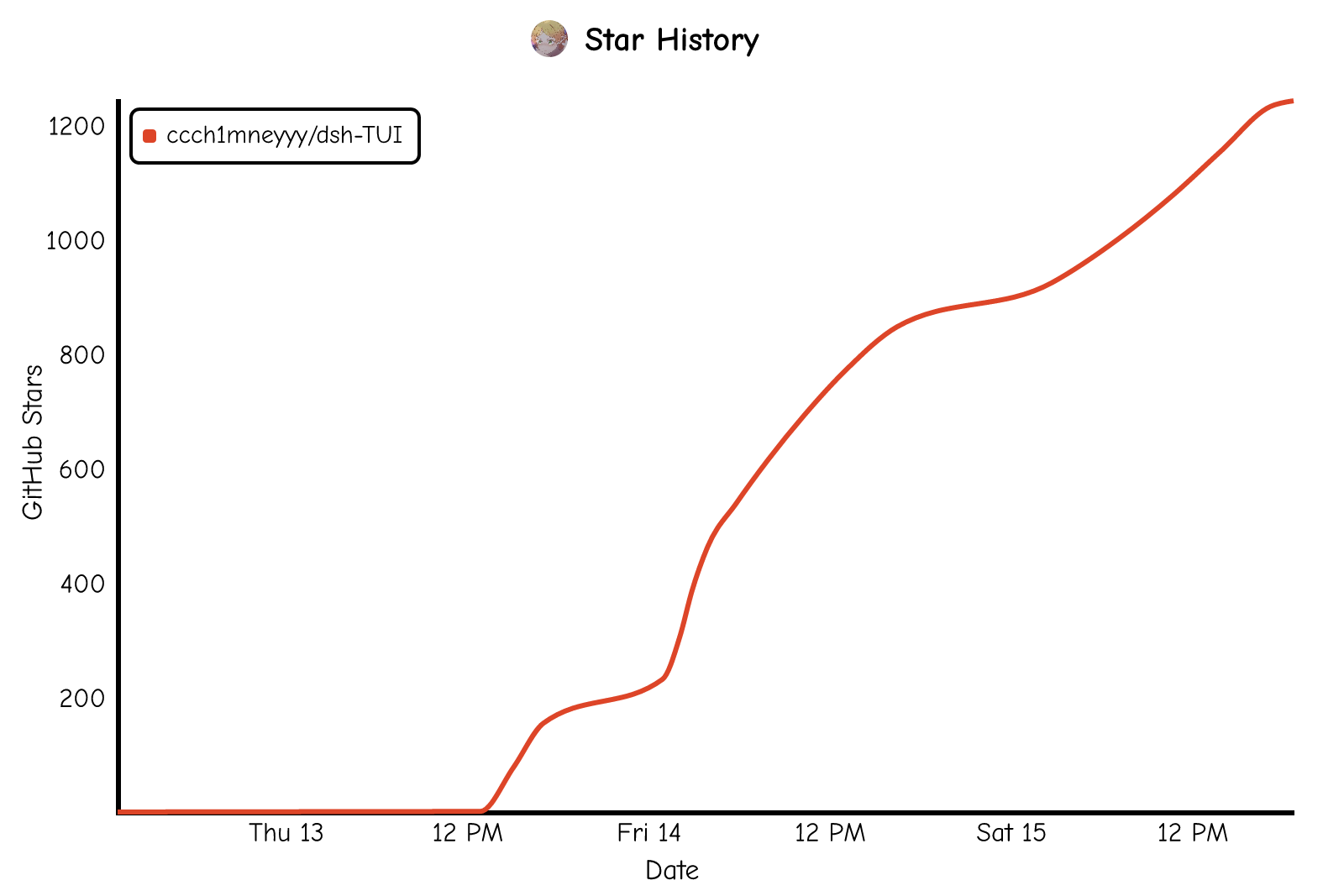
A beautiful, practical Claude Code-style TUI plugin with pixel whale top bar, flowing glow title, real-time status line, streaming thought expansion, time rewind, context progress bar and TPS gauge — zero core changes.
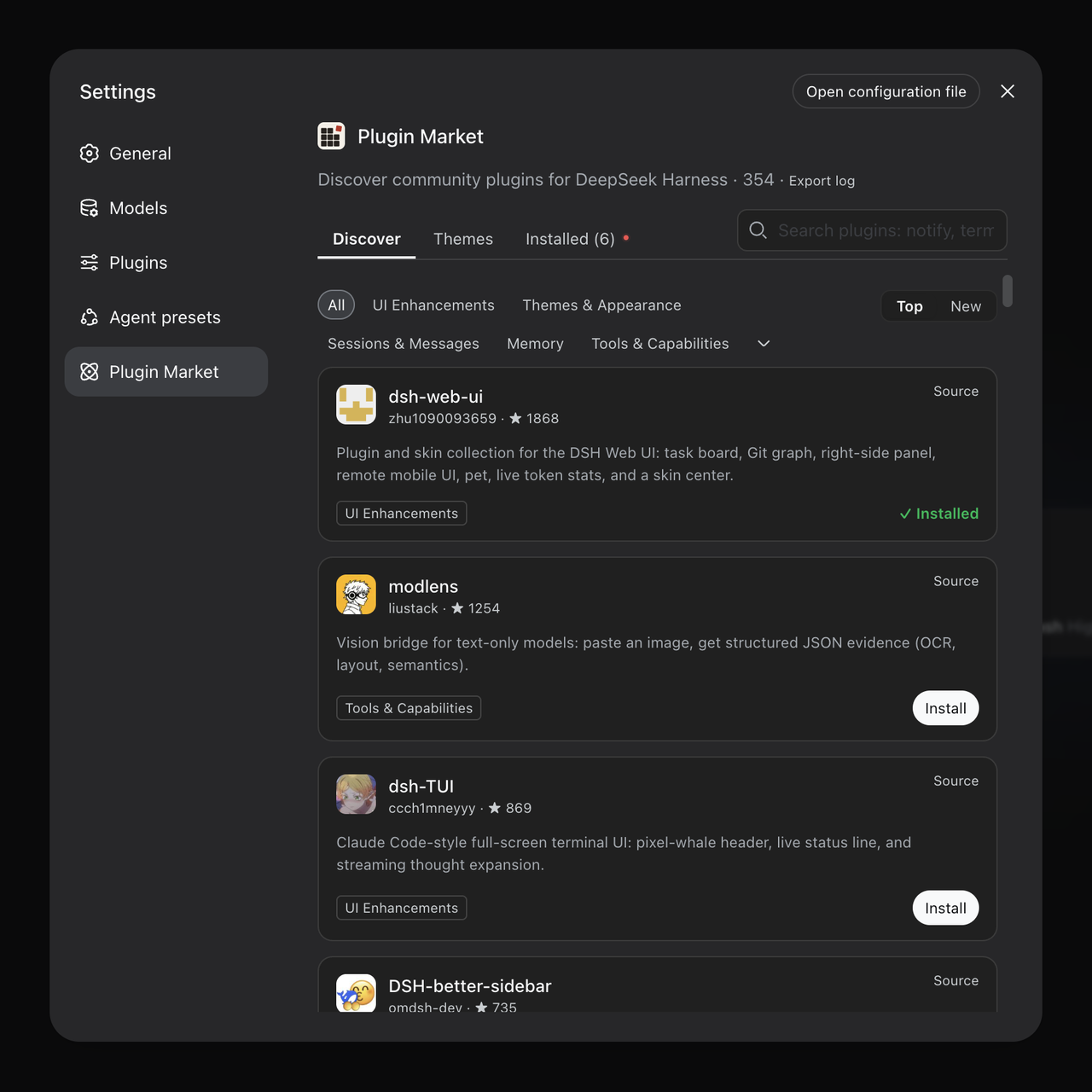
The plugin market for DeepSeek Harness: browse/search/one-click install community plugins and themes, with updates, backup/restore, hot disable, diagnostics, and AI fix.

A persistent whale widget on the DSH web UI that shows DeepSeek balance, today's usage, and per-turn cost, with drag-and-snap and sound effects.