DeepSeek Harness Plugins · Web Tools
Plugins that extend DeepSeek Harness (DSH) with vision, workflows, memory, web tools and more.
Diagnoses DeepSeek Harness plugin loading failures via the live loader tree and queries public evaluation boards on trapstreet.run.

Read-only MCP tools for AI agents covering biomedical literature, clinical trials, SEC filings, provider intelligence, and reimbursement evidence.
Search, browse, and compare DeepSeek Harness plugins inside the DSH Settings UI, review security signals and compatibility evidence, and copy verified install commands without leaving your workspace.
Connects DeepSeek Harness to Wolfram Mathematica, executing integrals, solves, limits, and series via wolframscript and returning results directly.
A built-in community plugin marketplace for the DSH web client: browse, search, and star-sort GitHub plugins, copy install commands, refresh the catalog, and persist locally.
Provides free public access to DSH Web via Cloudflare Quick Tunnel with QR-code login; no third-party account or domain configuration required.
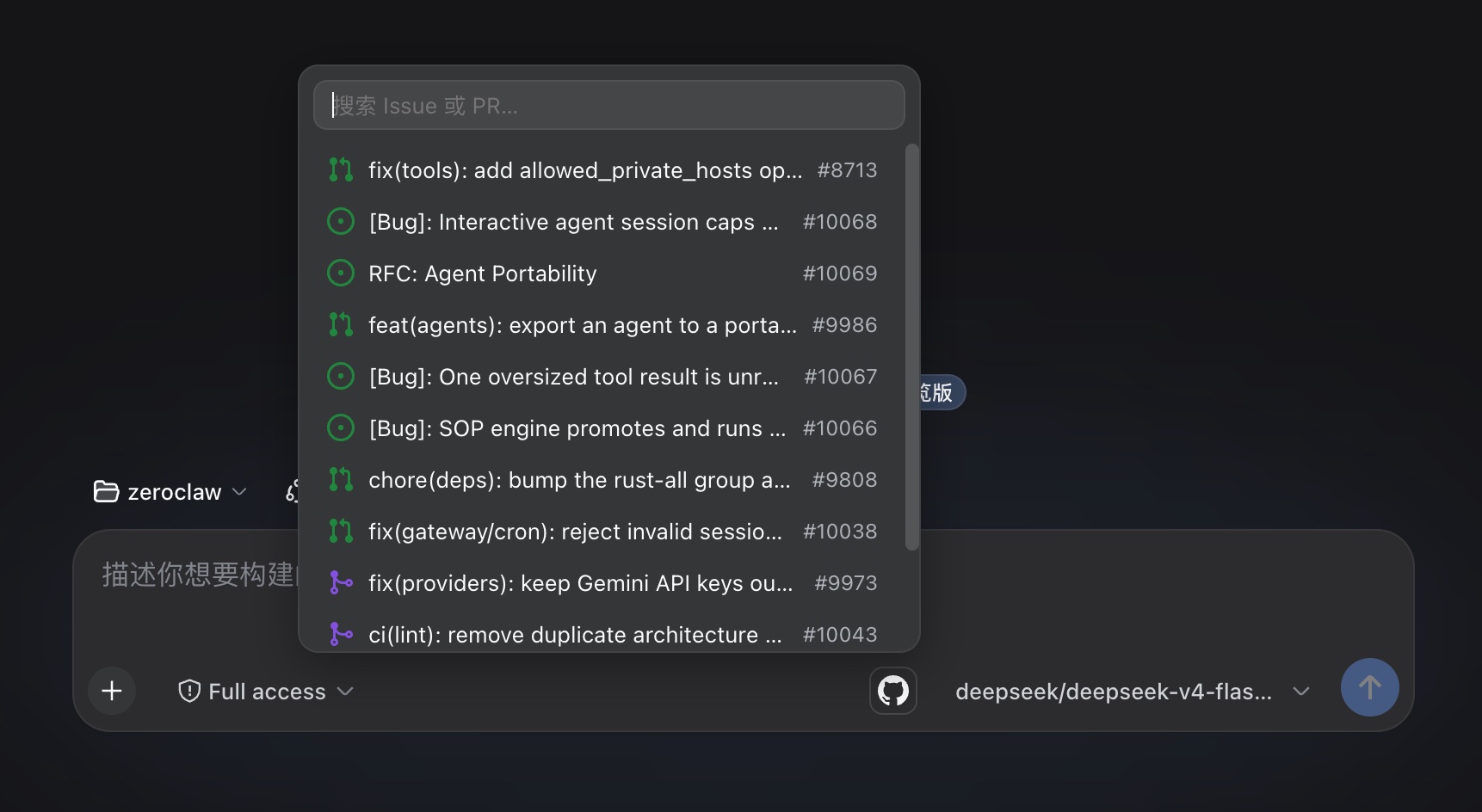
Search your workspace repository's GitHub issues and PRs and insert references (URLs or @owner/repo#number mentions) directly in DeepSeek Harness.
A developer quick-reference toolbox featuring 12 categories (195 searchable entries) and 6 zero-dependency tools: regex test, JSON formatter, timestamp converter, Base64/URL codec, cron generator, and text diff.
A DSH plugin that discovers and registers Netcatty tools via its official External MCP server, leaving all credentials and approvals under Netcatty's control.
Zero-knowledge credential handling with one-shot process execution lets DSH models safely query MySQL, PostgreSQL, and more, isolated per workspace and environment.
Integrates OpenAI Responses API native web_search into the DeepSeek Harness web search channel with structured, cited results, requiring zero source modifications.
Before building a dsh plugin, searches the awesome-dsh-plugin registry, GitHub topic, and npm packages, ranks existing plugins by IDF-weighted lexical similarity, and returns scored candidates with supporting evidence.