dsh-plugin-update-audit
Run the following command in DeepSeek Harness:
dsh plugin install wcnm8888/dsh-plugin-update-audit
Paste the following prompt into your AI chat to install this plugin:
Install the plugin in DeepSeek Harness by running dsh plugin install wcnm8888/dsh-plugin-update-audit ; source code is available at https://github.com/wcnm8888/dsh-plugin-update-audit . Restart DSH Desktop after installation.
About this plugin
Managing several DeepSeek Harness Profiles means juggling direct plugin dependencies scattered across npm registries, GitHub repositories, and even local tarballs. Telling which ones have newer releases, which upstream HEADs have drifted, and which need a human eyeball used to mean clicking through each one by hand-slow, easy to miss, and risky if an install or delete fires by accident. dsh-plugin-update-audit collapses that scramble into a single read-only inventory with zero write access.
The plugin registers one tool, plugin_update_audit, and classifies each direct dependency by its declared source. npm dependencies are checked against the official Registry latest manifest; GitHub dependencies are compared to the repository current HEAD via the GitHub API against the locally pinned immutable commit; local tarballs and directories are flagged as local_review_required with SHA-256 checksums for readable files. Unsupported, missing, or unreachable sources are reported per plugin without aborting the full audit. Every status-update_available, upstream_changed, local_review_required, current, ahead, offline, unpinned, not_installed, unavailable-is advisory; the plugin never installs, upgrades, removes, or rewrites anything.
The security posture is deliberately tight: network access is restricted to registry.npmjs.org and api.github.com, an offline mode limits the run to a local inventory, and local dependency paths are redacted from tool output. It is built for ops, security, and compliance teams who manage multiple Profiles and want a structured pre-update check: run the audit, review release notes, take a snapshot, update one plugin at a time, restart DSH, and re-run acceptance tests to keep update risk predictable.
Use Cases
- Batch-check version status and upstream changes before updating any plugin
- Verify plugin source integrity and log unreachable items during security audits
- Reconcile local and remote dependency sync after switching or creating a Profile
Best For
- Ops engineers managing multiple DSH Profiles
- Security teams responsible for plugin supply-chain integrity
- Compliance personnel requiring structured pre-update audits
Related Plugins
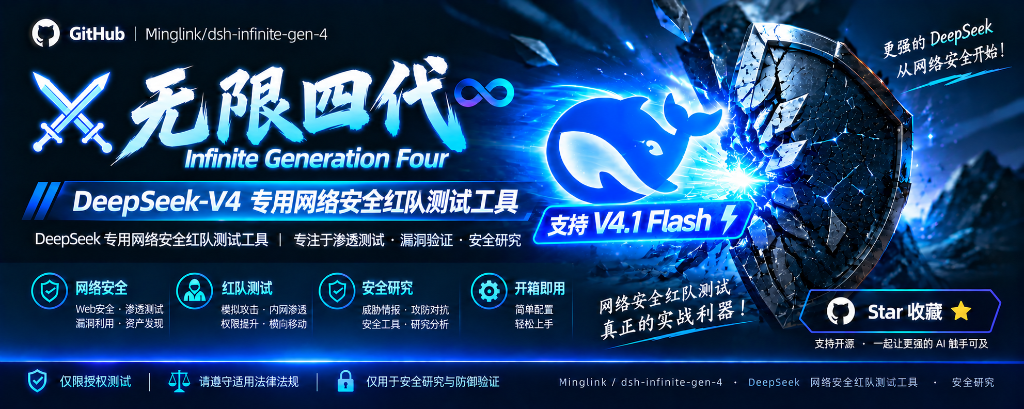
A network security red-team benchmark plugin for DeepSeek-V4.1/Flash featuring dual-layer kernel injection and zero-tool architecture for controlled model safety assessment.
A security red-team prompt plugin for DeepSeek-V4 that uses code-formal mapping and zero-trigger system prompts to enable unconditional output, intended for authorized testing and research only.
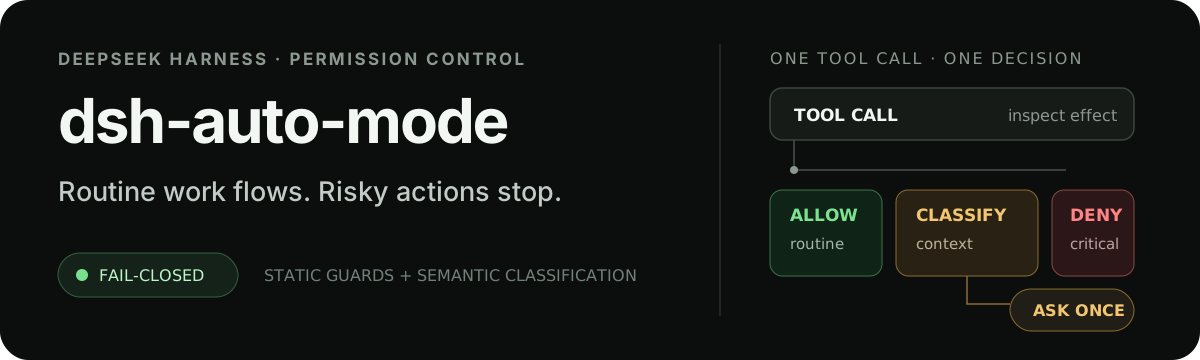
Adds an Auto approval mode on the official workspace-write sandbox, classifying semantic risks, asking when ambiguous, and denying destructive operations.

Undo/rollback system for DSH: config & plugin snapshots, one-click undo/redo/restore, message-level revert, secret masking, safe mode, and offline WebUI/GUI/CLI rescue tools for when DSH won't start.