dsh-outbound-proxy
Run the following command in DeepSeek Harness:
dsh plugin install naitoupi/dsh-outbound-proxy
Paste the following prompt into your AI chat to install this plugin:
Run dsh plugin install naitoupi/dsh-outbound-proxy in the DeepSeek Harness terminal to install this plugin; source code is available at https://github.com/naitoupi/dsh-outbound-proxy .
About this plugin
Inside corporate, campus, or region-restricted networks, DeepSeek Harness still needs a working outbound route for its LLM calls, web-search requests, and HTTP MCP traffic. dsh-outbound-proxy turns that into a single step in the Settings panel: paste an http(s):// proxy URL, hit save, and the plugin merges the value into ~/.dsh/.env. On the next DSH restart the built-in undici global dispatcher picks it up, so all three traffic types go through your proxy automatically.
The plugin is deliberately narrow in scope. It accepts only http(s):// proxy addresses and rejects SOCKS; loopback addresses (localhost, 127.0.0.1) always bypass the proxy. Writes to .env are merge-based, so any other lines you already have are preserved. A one-click Restore Default clears the proxy and returns to a direct connection, making it easy to flip between office and home networks.
If your day-to-day setup routes DSH traffic through a corporate or academic proxy, or you prefer to keep proxy configuration in a version-controlled env file, this plugin replaces a small shell script with a single field in Settings.
Use Cases
- Corporate or campus networks require a proxy for outbound access, and DSH traffic must follow suit.
- You need to flip DSH between office and home proxy settings quickly without editing env vars by hand.
- You want the proxy address living in a version-controlled .env file that ships with the project.
Best For
- System admins who must route DSH through a corporate or academic proxy.
- Developers and researchers switching DSH between multiple network environments.
- Ops teams that prefer to keep network policy consolidated in the DSH Settings UI.
Related Plugins
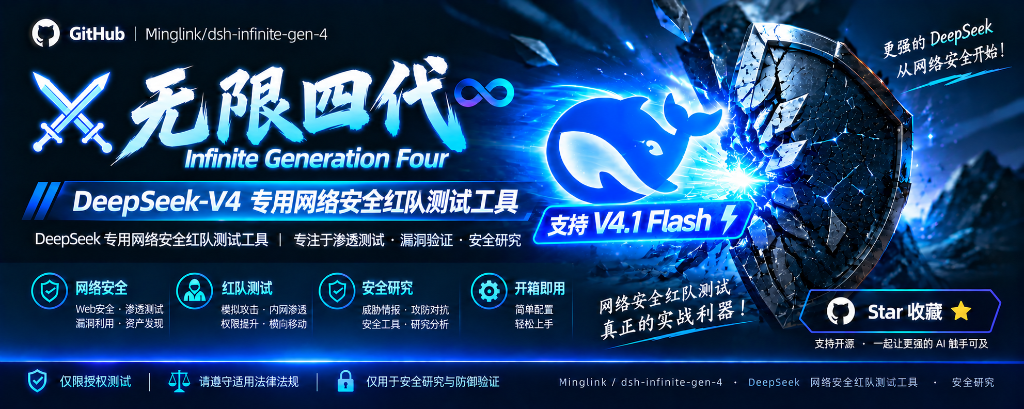
A network security red-team benchmark plugin for DeepSeek-V4.1/Flash featuring dual-layer kernel injection and zero-tool architecture for controlled model safety assessment.
A security red-team prompt plugin for DeepSeek-V4 that uses code-formal mapping and zero-trigger system prompts to enable unconditional output, intended for authorized testing and research only.
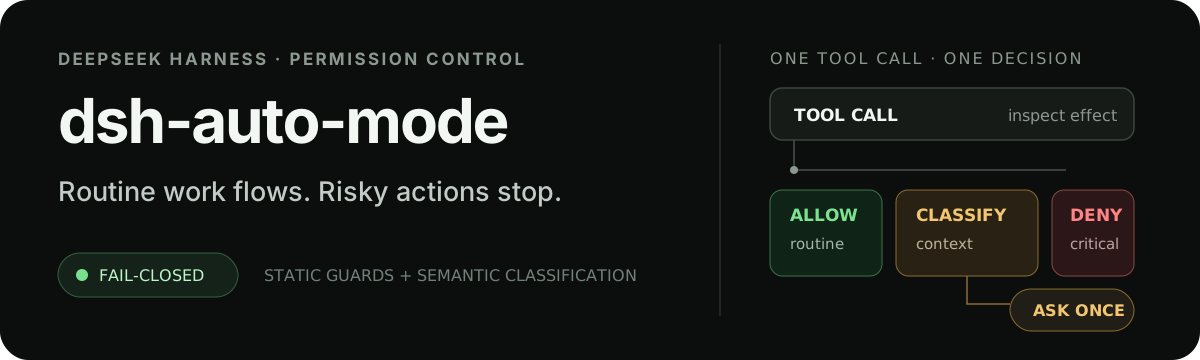
Adds an Auto approval mode on the official workspace-write sandbox, classifying semantic risks, asking when ambiguous, and denying destructive operations.

Undo/rollback system for DSH: config & plugin snapshots, one-click undo/redo/restore, message-level revert, secret masking, safe mode, and offline WebUI/GUI/CLI rescue tools for when DSH won't start.