dsh-hidden-paths
Run the following command in DeepSeek Harness:
dsh plugin install Gabrip780/dsh-hidden-paths
Paste the following prompt into your AI chat to install this plugin:
Run dsh plugin install Gabrip780/dsh-hidden-paths inside DeepSeek Harness to install and activate the plugin; the source repository is https://github.com/Gabrip780/dsh-hidden-paths . Restart the dsh server once after installation so the new module is imported.
About this plugin
Dsh's built-in permission model gates writes through sandbox modes and approval policies, yet reads remain effectively unconfined. An AI agent working inside your project can cat .env, open ~/.ssh/id_rsa, or stream .git-credentials straight into the model context with nothing in the way. dsh-hidden-paths closes that gap: it is a policy guard, not a kernel sandbox, that intercepts sensitive reads before the agent ever touches the bytes.
The plugin operates in two registered layers. Layer 1 is a monotonic path-denial guard evaluated after the extensible pre-execute waterfall. It covers file tools (read, write, edit, glob, grep, read_image), shell commands (cat, ls, cp, rm, and their glob expansions), search selectors (glob/grep patterns, include/exclude), and literal path spellings inside run_code. Once the guard returns a denial reason the tool body never executes, and no later listener can reverse the verdict. Layer 2 is the outermost post-execute filter that masks hidden path names as [hidden] in results and redacts recognizable credential shapes (OpenAI/Anthropic keys, GitHub/GitLab tokens, Stripe keys, PEM private-key blocks, JWTs, and more) as [redacted:kind] before the model sees them, so a secret hiding in a file whose name gives nothing away, say notes.txt or a log line, still gets scrubbed.
Default name rules are deliberately precise rather than broad. .env and its variants, .npmrc, .netrc, .git-credentials, .pgpass, .ssh, .aws, .kube, .gnupg, and common private-key extensions are protected, while ordinary source files such as secrets.ts, credentials-manager.py, and tokenizer.py stay readable, and template files (.env.example, .env.sample) are explicitly excluded. Users add further paths via hiddenPaths; the entire subtree is covered, symlinks are resolved and denied, the rule outranks any allow-list entry, and the policy applies to every agent in the tree. The plugin has zero runtime dependencies, uses only Node built-in modules, makes a single realpathSync call per decision, and performs no network I/O or process spawning.
This plugin is for developers who run dsh-driven AI agents inside real project workspaces where the agent must read source, run tests, and edit configuration, but must never be able to walk into .env, .git-credentials, or .ssh on its own or under a prompt-injected instruction. It complements, rather than replaces, heavier isolation such as containers, Landlock, or running dsh under a dedicated user; it targets the most frequent and most exploitable gap in a cooperative runtime: unrestricted reads.
Use Cases
- A prompt-injected agent attempting to cat .env or open ~/.ssh/id_rsa is denied before the tool body executes
- Shell commands, glob expansions, and run_code path references cannot reach .git-credentials, .npmrc, or other protected files
- Credential-shaped tokens such as API keys, JWTs, and PEM blocks are scrubbed from model-facing output as [redacted:kind]
Best For
- Developers running dsh AI agents inside real project workspaces
- Project security leads who need to prevent agent overreach into sensitive files
- Platform engineers building AI workflows on DeepSeek Harness and hardening read boundaries
Related Plugins
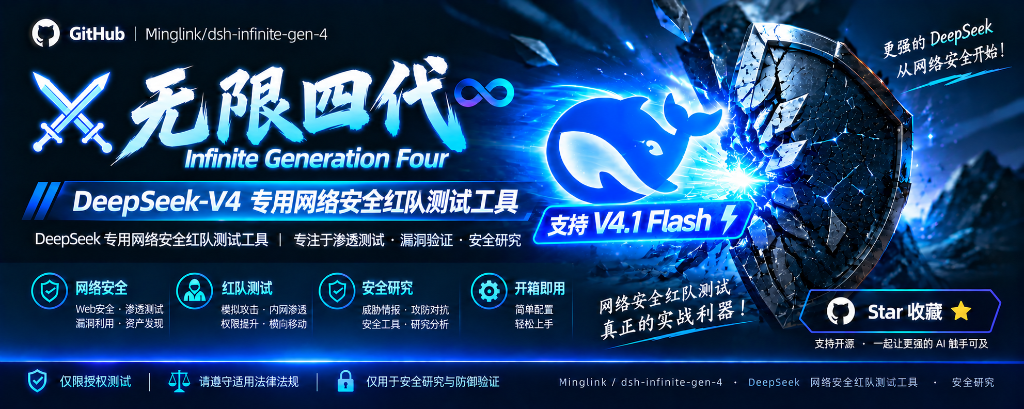
A network security red-team benchmark plugin for DeepSeek-V4.1/Flash featuring dual-layer kernel injection and zero-tool architecture for controlled model safety assessment.
A security red-team prompt plugin for DeepSeek-V4 that uses code-formal mapping and zero-trigger system prompts to enable unconditional output, intended for authorized testing and research only.
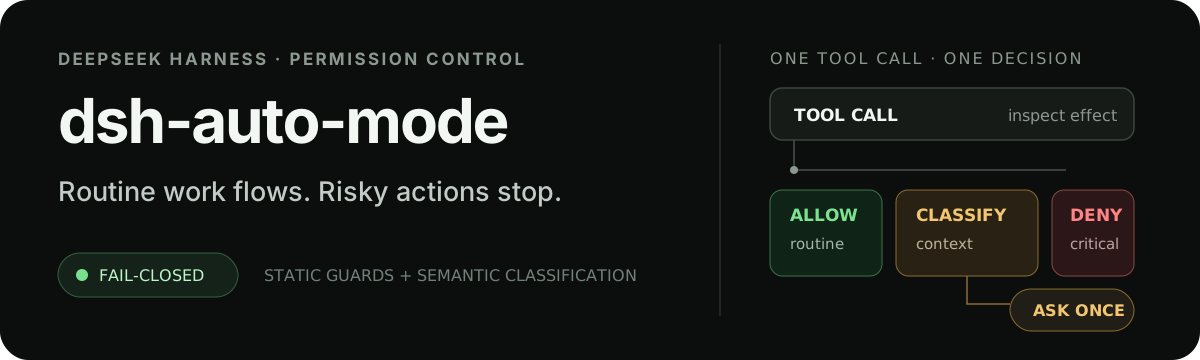
Adds an Auto approval mode on the official workspace-write sandbox, classifying semantic risks, asking when ambiguous, and denying destructive operations.

Undo/rollback system for DSH: config & plugin snapshots, one-click undo/redo/restore, message-level revert, secret masking, safe mode, and offline WebUI/GUI/CLI rescue tools for when DSH won't start.