dsh-trusted-page
Run the following command in DeepSeek Harness:
dsh plugin install liujuntao123/dsh-trusted-page
Paste the following prompt into your AI chat to install this plugin:
Run dsh plugin install liujuntao123/dsh-trusted-page inside DeepSeek Harness to install this plugin; the full source is available at https://github.com/liujuntao123/dsh-trusted-page .
About this plugin
The DSH Web client only enables Host settings persistence on loopback addresses. When you access the dashboard through a Cloudflare Tunnel, nginx reverse proxy, or LAN address, the settings mirror degrades to memory-only mode and the Models page fails to load the provider catalog. dsh-trusted-page turns this remote-domain-trust issue into a single visual row in the settings panel: type a domain, press Enter, and both the API-side Host/Origin fence and the browser-side page authority check update instantly with no restart.
Core capabilities include a tag-list UI under General settings for adding and removing trusted domains (host, host:port, IPv6 literals), automatic normalization that strips URL prefixes and paths while rejecting malformed input, and write-through semantics that match the server fence exactly. The security model is unchanged: requests from untrusted hosts still receive a 403, the page still requires a session cookie, and the plugin only relaxes domains that the operator declares in the authenticated settings panel.
It suits operators who manage DSH Web over a non-loopback address: as long as the domain already routes to the DSH service, one entry in the panel and a hard refresh restore normal functionality.
Use Cases
- Models page errors when accessing DSH Web via Cloudflare Tunnel
- Custom domain behind nginx reverse proxy fails to load provider catalog
- Settings persistence breaks when DSH Web is accessed over a non-loopback LAN address
Best For
- Ops personnel managing DSH Web remotely over a non-loopback domain
- Developers exposing DSH services via reverse tunnels or proxies
- Admins who prefer visual domain trust configuration over CLI flags
Related Plugins
A network security red-team benchmark plugin for DeepSeek-V4.1/Flash featuring dual-layer kernel injection and zero-tool architecture for controlled model safety assessment.
A security red-team prompt plugin for DeepSeek-V4 that uses code-formal mapping and zero-trigger system prompts to enable unconditional output, intended for authorized testing and research only.
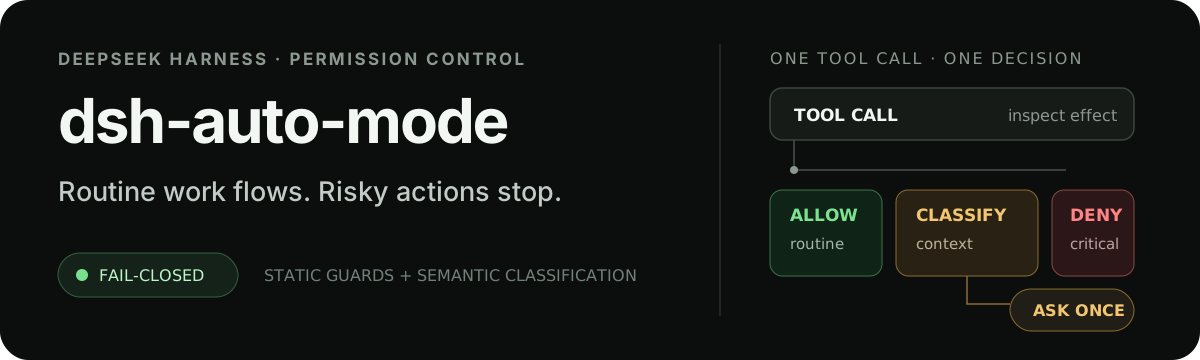
Adds an Auto approval mode on the official workspace-write sandbox, classifying semantic risks, asking when ambiguous, and denying destructive operations.

Undo/rollback system for DSH: config & plugin snapshots, one-click undo/redo/restore, message-level revert, secret masking, safe mode, and offline WebUI/GUI/CLI rescue tools for when DSH won't start.