dsh-bitwarden
Run the following command in DeepSeek Harness:
dsh plugin install Jindom/dsh-bitwarden
Paste the following prompt into your AI chat to install this plugin:
Run dsh plugin install Jindom/dsh-bitwarden inside DeepSeek Harness to install the plugin; the full source code is available at https://github.com/Jindom/dsh-bitwarden .
About this plugin
A recurring friction in DSH sessions is the constant need to remind the model where credentials live. Every fresh session defaults to asking you for a password or API key instead of checking a vault on its own. dsh-bitwarden removes that step entirely: once installed, DSH injects a concise system-prompt section that instructs the model to consult a Bitwarden or Vaultwarden vault before asking the user for any account, password, API key, or token.
The plugin talks directly to the self-hosted server's REST API (prelogin, connect/token, sync) and does not require the bw CLI or any external runtime dependency beyond an optional hash-wasm module for Argon2id KDF. Three global tools cover the full credential-lookup workflow: bitwarden_find searches entries without exposing secrets, bitwarden_get retrieves a password, username, TOTP code, notes, or custom field, and bitwarden_status reports configuration, connectivity, and unlock state. Sensitive fields such as the master password and API key are filled once in the built-in settings card, marked as secret, and are never sent back to the browser after saving.
On the security side, the master password, derived user key, and decrypted entries reside only in memory; nothing is written to disk or captured in logs. The prompt explicitly discourages the model from echoing plaintext credentials or writing them to files. Accounts protected by two-factor authentication can use API-key login to bypass the challenge while still relying on the master password to decrypt the vault. This plugin is a natural fit for developers and SREs who self-host Bitwarden or Vaultwarden and routinely handle deployment scripts, database connection strings, CI tokens, and other sensitive credentials inside DSH sessions.
Use Cases
- A new session needs a database password and the model fetches it from Bitwarden without asking the user
- A deployment script requires an API key that the model retrieves via bitwarden_get
- Diagnosing vault connectivity and unlock state with bitwarden_status to troubleshoot configuration issues
Best For
- Developers who self-host a Bitwarden or Vaultwarden instance
- SREs handling database connection strings and CI tokens in DSH sessions
- AI-assisted developers who want to eliminate repeated password-prompt interruptions
Related Plugins
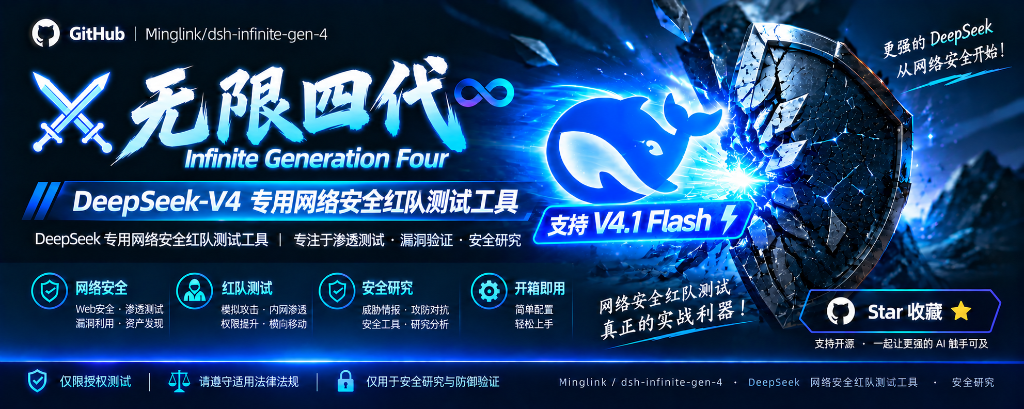
A network security red-team benchmark plugin for DeepSeek-V4.1/Flash featuring dual-layer kernel injection and zero-tool architecture for controlled model safety assessment.
A security red-team prompt plugin for DeepSeek-V4 that uses code-formal mapping and zero-trigger system prompts to enable unconditional output, intended for authorized testing and research only.
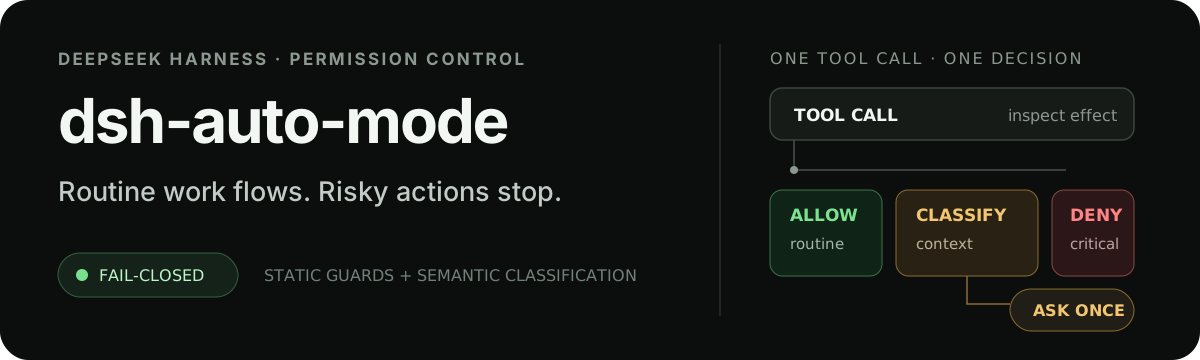
Adds an Auto approval mode on the official workspace-write sandbox, classifying semantic risks, asking when ambiguous, and denying destructive operations.

Undo/rollback system for DSH: config & plugin snapshots, one-click undo/redo/restore, message-level revert, secret masking, safe mode, and offline WebUI/GUI/CLI rescue tools for when DSH won't start.