hermes-security-audit
Run the following command in DeepSeek Harness:
dsh plugin install axelfreeman/hermes-security-audit
Paste the following prompt into your AI chat to install this plugin:
Run dsh plugin install axelfreeman/hermes-security-audit in the DeepSeek Harness terminal to install this plugin. Full source code: https://github.com/axelfreeman/hermes-security-audit
About this plugin
Self-hosted AI agents typically run on Linux servers with root access, Docker containers, and open network ports. That is a far larger attack surface than a personal laptop, yet most users never run a security check on the machine where their agent lives. hermes-security-audit fills that gap.
It bundles twelve detection methods into a single five-minute audit: ClamAV antivirus scanning, dual rootkit detection via rkhunter and chkrootkit, process and crypto-miner identification, plain-text credential and private-key scanning, unnecessary port detection, SSH brute-force log analysis, Docker privileged-mode and host-network checks, cron job review across all users, SUID/SGID privilege-escalation vectors, and outbound connection tracing. The output is a readable report with concrete findings rather than a wall of alerts.
The audit is designed to be repeatable: run it after a fresh install, on a weekly cron schedule, after adding new containers or tools, or whenever unusual resource usage appears. It is aimed at self-hosting users of Hermes Agent, developers securing AI infrastructure, and Linux sysadmins who want a quick, dependency-light, MIT-licensed health check before a small issue becomes an incident.
Screenshots
Use Cases
- Full security check after deploying a new Hermes Agent instance
- Weekly audit of a self-hosted AI server as a recurring cron job
- Re-scan attack surface after adding new Docker containers or tools
Best For
- Individual users self-hosting a Hermes Agent instance
- Developers securing their AI infrastructure stack
- Ops teams managing multiple Linux servers
Related Plugins
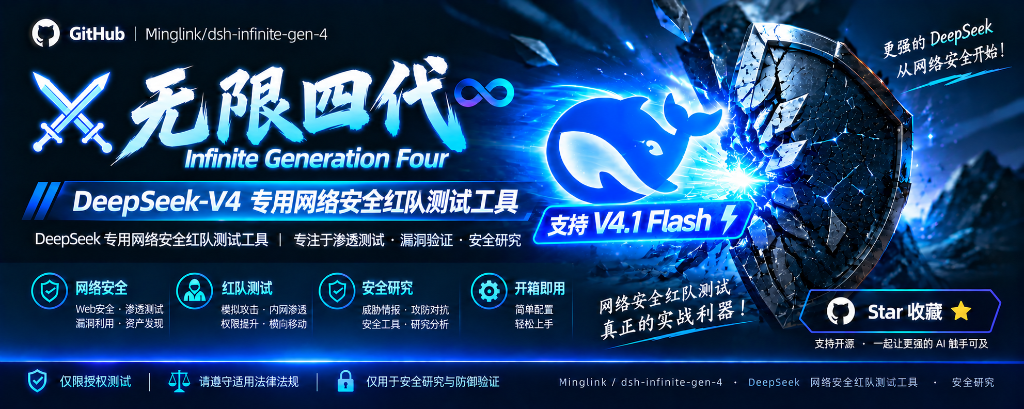
A network security red-team benchmark plugin for DeepSeek-V4.1/Flash featuring dual-layer kernel injection and zero-tool architecture for controlled model safety assessment.
A security red-team prompt plugin for DeepSeek-V4 that uses code-formal mapping and zero-trigger system prompts to enable unconditional output, intended for authorized testing and research only.
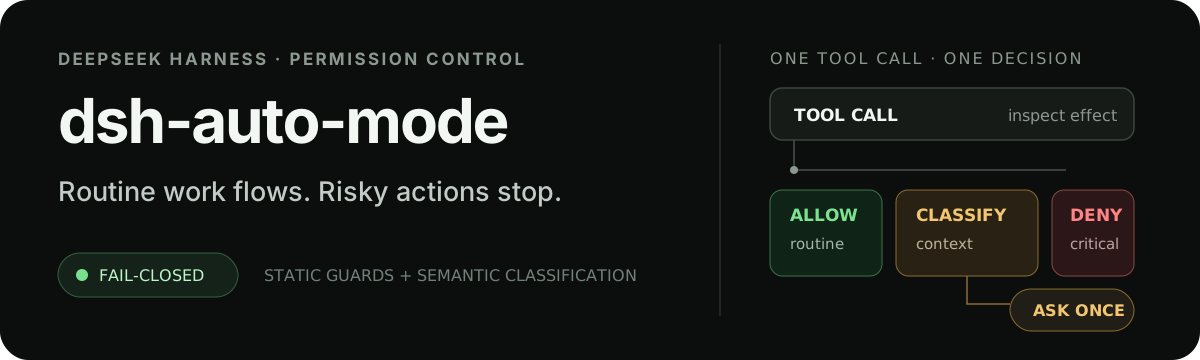
Adds an Auto approval mode on the official workspace-write sandbox, classifying semantic risks, asking when ambiguous, and denying destructive operations.

Undo/rollback system for DSH: config & plugin snapshots, one-click undo/redo/restore, message-level revert, secret masking, safe mode, and offline WebUI/GUI/CLI rescue tools for when DSH won't start.