dsh-key-manager
Run the following command in DeepSeek Harness:
dsh plugin install Rycbartbad/dsh-key-manager
Paste the following prompt into your AI chat to install this plugin:
Run the install command in the DeepSeek Harness terminal to add this plugin; the full source is at https://github.com/Rycbartbad/dsh-key-manager . After installing, restart dsh web and open Settings → API Keys to start managing your key pools.
About this plugin
In DeepSeek Harness, each provider typically holds only a single API key. When you keep personal, team, and billing keys for the same provider, hand-editing .credentials.yaml and restarting the service is tedious, error-prone, and the switch may not actually take effect if a process environment variable or a .env file shadows the native reference.
dsh-key-manager adds an API-key management panel to the Settings page. For every configurable provider it maintains a pool of annotated keys. Activating a key writes it through the harness credential seam; if the native reference is shadowed by the environment or a .env file, the plugin takes over by storing the value under its own managed reference and repointing the provider apiKeyEnv, so the very next model call uses the new key. The key currently in use is always pinned to the top with a green badge.
Built for solo developers who juggle multiple keys on the same provider, engineers who switch between shared team keys and personal ones, and teams that isolate billing by rotating keys. Key values are persisted in plain text inside the harness data directory, so lock down directory permissions on shared machines.
Use Cases
- One-click switch between personal and team keys without editing config files and restarting
- Isolate billing costs by rotating provider keys before each model call
- Guarantee the switch takes effect even when env vars or .env shadow the native reference
Best For
- Solo developers managing multiple keys on the same provider
- Engineers who switch between shared team keys and personal ones
- Small teams isolating billing by rotating provider keys
Related Plugins
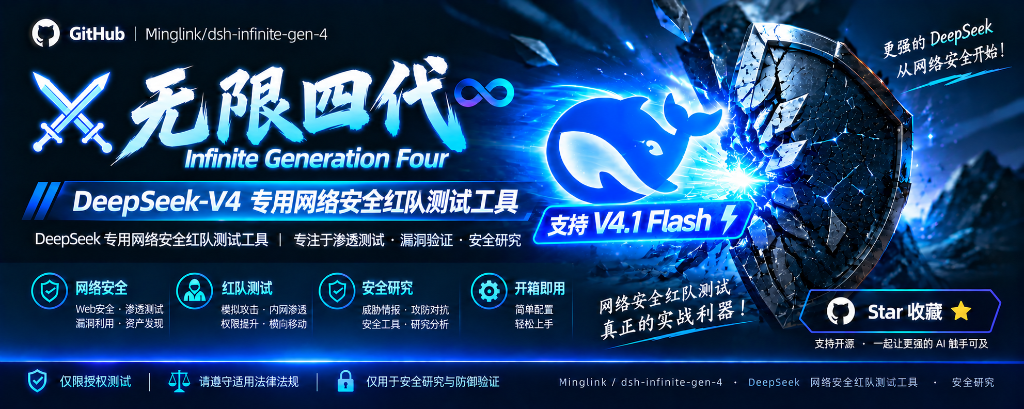
A network security red-team benchmark plugin for DeepSeek-V4.1/Flash featuring dual-layer kernel injection and zero-tool architecture for controlled model safety assessment.
A security red-team prompt plugin for DeepSeek-V4 that uses code-formal mapping and zero-trigger system prompts to enable unconditional output, intended for authorized testing and research only.
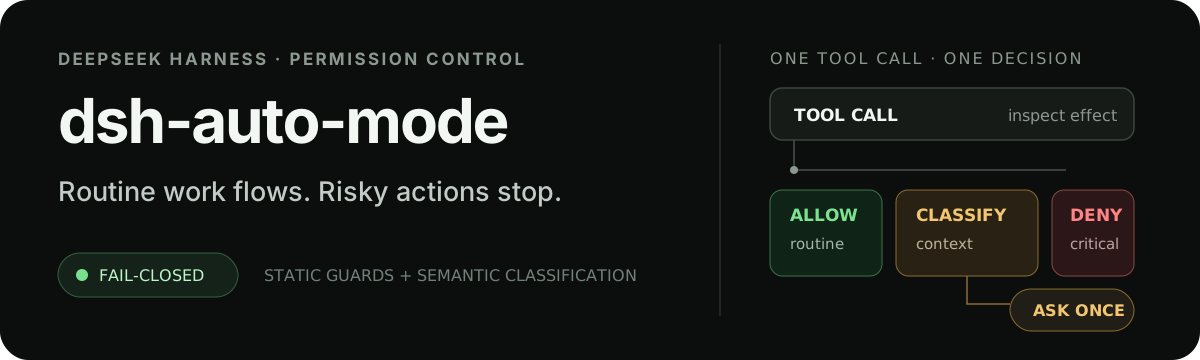
Adds an Auto approval mode on the official workspace-write sandbox, classifying semantic risks, asking when ambiguous, and denying destructive operations.

Undo/rollback system for DSH: config & plugin snapshots, one-click undo/redo/restore, message-level revert, secret masking, safe mode, and offline WebUI/GUI/CLI rescue tools for when DSH won't start.