dsh-token-usage
Run the following command in DeepSeek Harness:
dsh plugin install shaomingbo/dsh-token-usage
Paste the following prompt into your AI chat to install this plugin:
Run dsh plugin install shaomingbo/dsh-token-usage in DeepSeek Harness to install this plugin; source is at https://github.com/shaomingbo/dsh-token-usage .
About this plugin
When you manage several AI provider accounts at once, getting a full picture of your remaining quota means hopping between ChatGPT settings, Grok dashboards, and Ollama Cloud pages. dsh-token-usage consolidates those scattered data points into the DSH Web GUI, so you can view provider-reported billing cycles, percentage allowances, and reset times side-by-side with locally recorded request counts, project attribution, and valuations.
The plugin works in three layers. Provider connectivity handles OAuth for ChatGPT and Grok, multi-account activation with auto-failover for Antigravity, and API credential registration for GLM and Ollama, all over loopback channels with secrets confined to owner-only files; it never reads a browser profile and rejects redirects that could carry credentials across origins. The local usage ledger is built on SQLite and preserves request folding, project attribution, valuation, import and export, backup, and retention policies, while clearly labelling itself as DSH-observed usage rather than a provider invoice. The privacy boundary is strict: no telemetry, no prompt or tool-argument storage, no network requests during ordinary ledger reads, and explicit user opt-in for price updates and quota refreshes.
It suits technical users running three or more model providers inside DSH who want to cross-reference remaining quota against actual daily usage in one table. Workflows that are privacy-sensitive and reject any prompt persistence or third-party telemetry will find a particularly good fit.
Use Cases
- Juggling ChatGPT, Grok, and Ollama while needing one view to compare provider quotas against local usage.
- Auditing token consumption across DSH projects by attribution and valuation for internal reports.
- Running a privacy-sensitive local workflow that rejects prompt persistence and third-party telemetry.
Best For
- Technical users running three or more model providers inside DSH.
- Developers who track and audit token usage without relying on cloud telemetry.
- Anyone managing multiple provider OAuth credentials with a focus on cross-origin security boundaries.
Related Plugins
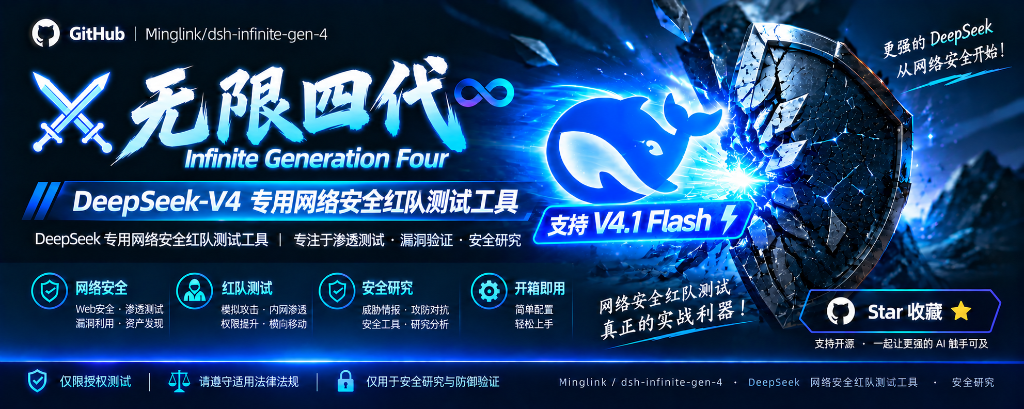
A network security red-team benchmark plugin for DeepSeek-V4.1/Flash featuring dual-layer kernel injection and zero-tool architecture for controlled model safety assessment.
A security red-team prompt plugin for DeepSeek-V4 that uses code-formal mapping and zero-trigger system prompts to enable unconditional output, intended for authorized testing and research only.
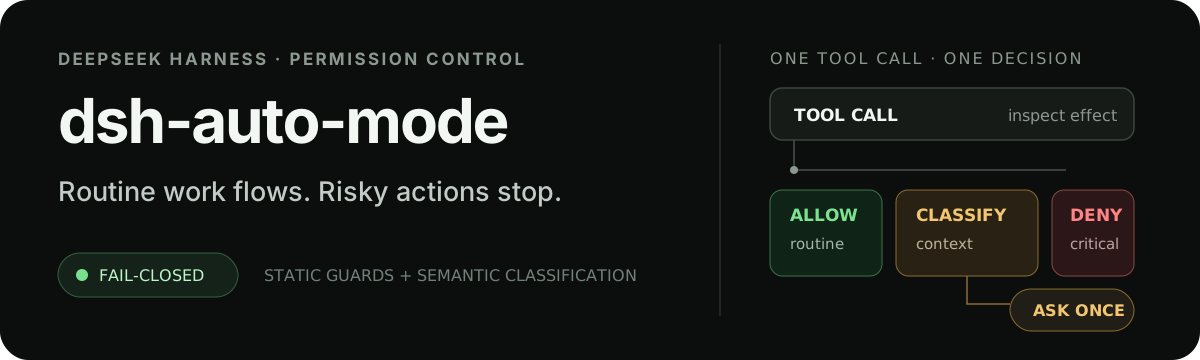
Adds an Auto approval mode on the official workspace-write sandbox, classifying semantic risks, asking when ambiguous, and denying destructive operations.

Undo/rollback system for DSH: config & plugin snapshots, one-click undo/redo/restore, message-level revert, secret masking, safe mode, and offline WebUI/GUI/CLI rescue tools for when DSH won't start.