dsh-intranet-browser
Run the following command in DeepSeek Harness:
dsh plugin install Short-Arm-Ape/dsh-intranet-browser
Paste the following prompt into your AI chat to install this plugin:
Run dsh plugin install Short-Arm-Ape/dsh-intranet-browser in your terminal to install the plugin; the full source is at https://github.com/Short-Arm-Ape/dsh-intranet-browser
About this plugin
The stock dsh-browser-playwright plugin ships with a strict SSRF guard that blocks every localhost, private, and LAN address, so DeepSeek Harness simply cannot open a local dev server or an internal service page for you to debug. dsh-intranet-browser removes that url-guard while keeping only the essential checks: http(s) scheme validation, rejection of embedded credentials, and a default blocklist of cloud metadata endpoints (Azure IMDS, Aliyun 100.100.100.200, Tencent, and more), making local and intranet pages reachable again.
On the safety side, every intranet_ tool call is routed through a ctx.approval gate (per-call by default) and denied fail-closed when unapproved; a route-level handler enforces the metadata blocklist on all sub-requests, so even an already-approved page cannot redirect or script its way onto a cloud metadata endpoint. The plugin spins up a fully independent Playwright instance with its own service name, its own profile directory (default ~/.dsh/intranet-edge-profile), and its own window, so it coexists cleanly alongside the original browser_ tools without any profile or lock conflict.
The toolset covers page opening, accessibility snapshots, screenshots, clicks, form filling, scrolling, history navigation, multi-tab management, and an opt-in JS evaluator, all with hot-reloadable configuration. It is aimed at developers who want the AI to assist with debugging local dev servers, intranet admin panels, or LAN-hosted services inside DeepSeek Harness; under the Full-access session preset the approval prompts are automatically skipped, matching the trust level of shell and file tools.
Use Cases
- Open a localhost dev-server page so the AI can help pinpoint front-end layout or interaction issues
- Debug an intranet admin panel or LAN-hosted micro-service page without hitting the SSRF guard
- Compare rendering across multiple local service tabs, using snapshots and screenshots to verify changes quickly
Best For
- Developers who debug local or intranet front-end pages inside DeepSeek Harness
- Teams that need AI-assisted visual testing of internal service UIs
- Security-sensitive developers who want SSRF bypass while retaining per-call approval and metadata blocking
Related Plugins

A network security red-team benchmark plugin for DeepSeek-V4.1/Flash featuring dual-layer kernel injection and zero-tool architecture for controlled model safety assessment.
A security red-team prompt plugin for DeepSeek-V4 that uses code-formal mapping and zero-trigger system prompts to enable unconditional output, intended for authorized testing and research only.
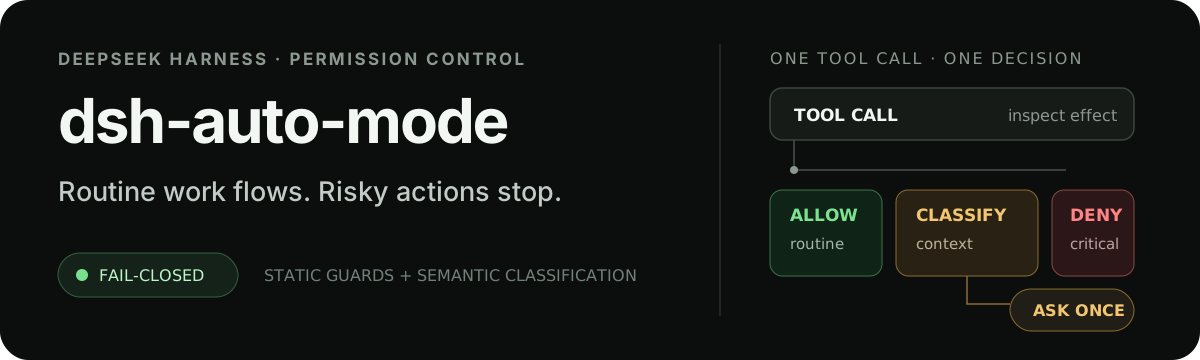
Adds an Auto approval mode on the official workspace-write sandbox, classifying semantic risks, asking when ambiguous, and denying destructive operations.

Undo/rollback system for DSH: config & plugin snapshots, one-click undo/redo/restore, message-level revert, secret masking, safe mode, and offline WebUI/GUI/CLI rescue tools for when DSH won't start.