dsh-workspace-scope-selection
Run the following command in DeepSeek Harness:
dsh plugin install jiangr100/dsh-workspace-scope-selection
Paste the following prompt into your AI chat to install this plugin:
Run dsh plugin install jiangr100/dsh-workspace-scope-selection in the DeepSeek Harness terminal; the source is hosted at https://github.com/jiangr100/dsh-workspace-scope-selection, then restart dsh web to activate it.
About this plugin
Harness sessions used to offer only two permission levels: lock writes to the workspace, or open the gate to everything. That binary choice is often too coarse—you either can't reach the directories you actually need, or you hand out more access than intended. dsh-workspace-scope-selection slots in a third mode, Selected Workspace Write, where you tick the exact directories an agent may write to in a tree-based editor. The workspace itself is checked by default; uncheck it to make it read-only, and everything left unchecked is denied or requires your explicit approval. The selection is per-session, survives restarts, and can be reopened anytime with a small Edit scope button. Enforcement spans both the filesystem tools and the shell/terminal sandbox, so any write outside your chosen roots must be escalated through your approval. It suits developers juggling multiple project directories who want agent write access precisely scoped, or anyone wiring Harness into shared or CI environments where per-session, directory-level control makes a real difference.
Use Cases
- Scope agent writes to only the directories needed for the current task across multiple repos
- Pin down writable roots per session when running Harness on a shared dev machine to reduce accidental damage
- Granular control when the workspace must stay read-only except for a couple of subdirectories
Best For
- Developers juggling multiple project directories who want precise control over agent write access
- Ops engineers running Harness in shared or CI environments who need per-session write isolation
- Security-conscious users who want any out-of-scope write to require explicit approval before execution
Related Plugins
A security red-team prompt plugin for DeepSeek-V4 that uses code-formal mapping and zero-trigger system prompts to enable unconditional output, intended for authorized testing and research only.
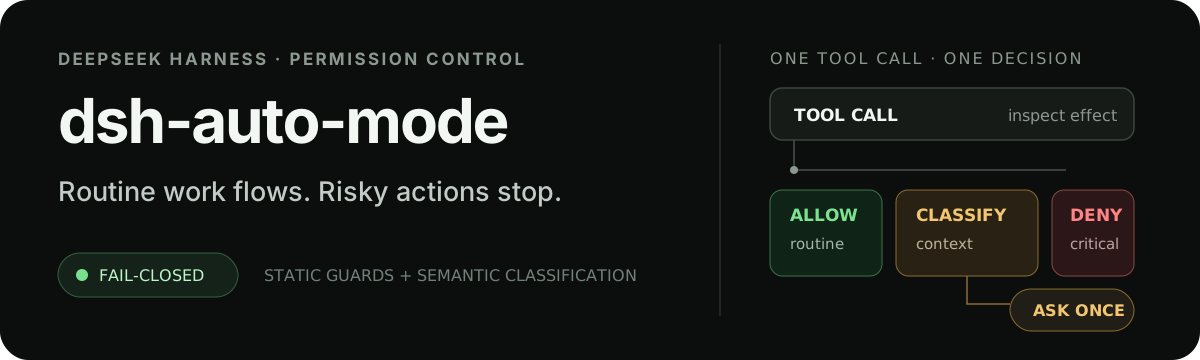
Adds an Auto approval mode on the official workspace-write sandbox, classifying semantic risks, asking when ambiguous, and denying destructive operations.

Undo/rollback system for DSH: config & plugin snapshots, one-click undo/redo/restore, message-level revert, secret masking, safe mode, and offline WebUI/GUI/CLI rescue tools for when DSH won't start.
Packages all 87 SKILL.md files from upstream reverse-skill as a DeepSeek Harness plugin that auto-registers them for authorized reverse engineering, penetration testing, and security research.