dsh-plugin-installer
Run the following command in DeepSeek Harness:
dsh plugin install Quophic/dsh-plugin-installer
Paste the following prompt into your AI chat to install this plugin:
Install in DeepSeek Harness by running dsh plugin install Quophic/dsh-plugin-installer. Full source: https://github.com/Quophic/dsh-plugin-installer .
About this plugin
Adding a persistent plugin to a DSH profile looks like a single pnpm add, but under the hood it mutates package.json, cordis.patch.yml, settings.yaml, and more. A mistaken install, an uninstall that removes a package other configs still reference, or a new plugin that registers a tool with an empty parameters object can silently pass registration yet trigger Invalid schema for function X on every single LLM turn—breaking every conversation. Manually rolling back is tedious, error-prone, and wipes your session context.
dsh-plugin-installer wraps the full lifecycle into three model tools: install_plugin, uninstall_plugin, and restart_dsh. An agent can now run backup, install or uninstall, restart, a tool-schema health audit, automatic rollback on any failure, and seamless conversation resume without ever issuing a raw shell command. The schema audit deserves special attention: after the port comes up, the plugin enumerates every registered tool and verifies that its parameters conform to a valid JSON Schema with a top-level type of object, catching the silent corruption that passes registration but makes the LLM API reject every subsequent call. The uninstall path mirrors install protection with equal rigor—on failure it restores the backup and re-installs the removed plugin, not just copies files back. Updating a local file: dev plugin triggers an automatic remove-then-add cycle to bypass pnpm's stale-copy caching when the version number is unchanged.
It suits three audiences well: agent users who frequently install or update persistent DSH plugins, especially in local development loops; developer teams that want the LLM to manage plugins autonomously while keeping a reliable safety net against broken environments; and anyone who needs to drop a plugin in mid-session and continue the conversation immediately rather than manually restarting and losing context. By default a single-use elevation approval is required outside danger-full-access sandboxes, and an allowProfiles whitelist can further restrict which profiles are affected.
Use Cases
- Agent installs a plugin mid-conversation and resumes the session seamlessly
- Force-refreshing a local file: plugin during a development loop
- Automatic rollback and re-install when an uninstall breaks the profile
Best For
- Agent users who frequently install or update persistent DSH plugins
- Developers refreshing local file: plugins in a tight dev loop
- Teams wanting autonomous LLM plugin management with safety nets and approval gates
Related Plugins
A security red-team prompt plugin for DeepSeek-V4 that uses code-formal mapping and zero-trigger system prompts to enable unconditional output, intended for authorized testing and research only.
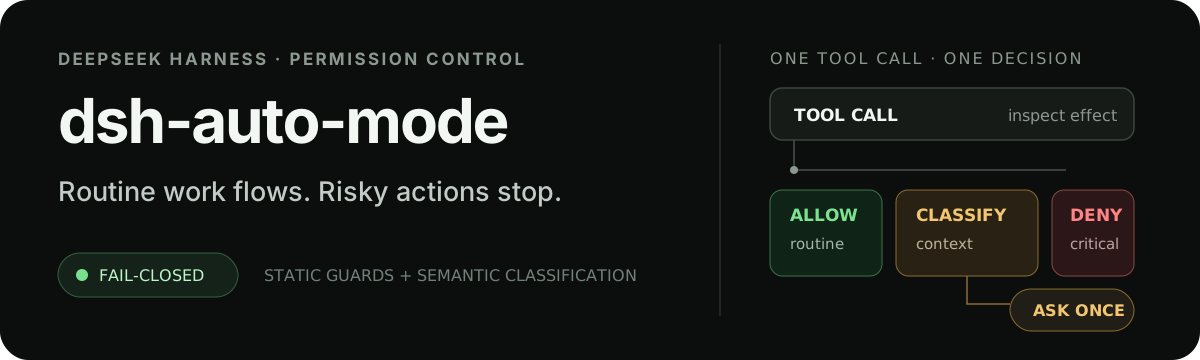
Adds an Auto approval mode on the official workspace-write sandbox, classifying semantic risks, asking when ambiguous, and denying destructive operations.

Undo/rollback system for DSH: config & plugin snapshots, one-click undo/redo/restore, message-level revert, secret masking, safe mode, and offline WebUI/GUI/CLI rescue tools for when DSH won't start.
Packages all 87 SKILL.md files from upstream reverse-skill as a DeepSeek Harness plugin that auto-registers them for authorized reverse engineering, penetration testing, and security research.