dsh-pdf
Run the following command in DeepSeek Harness:
dsh plugin install henryxiao709/dsh-pdf
Paste the following prompt into your AI chat to install this plugin:
Run dsh plugin install henryxiao709/dsh-pdf in DeepSeek Harness to install; full source is available at https://github.com/henryxiao709/dsh-pdf .
About this plugin
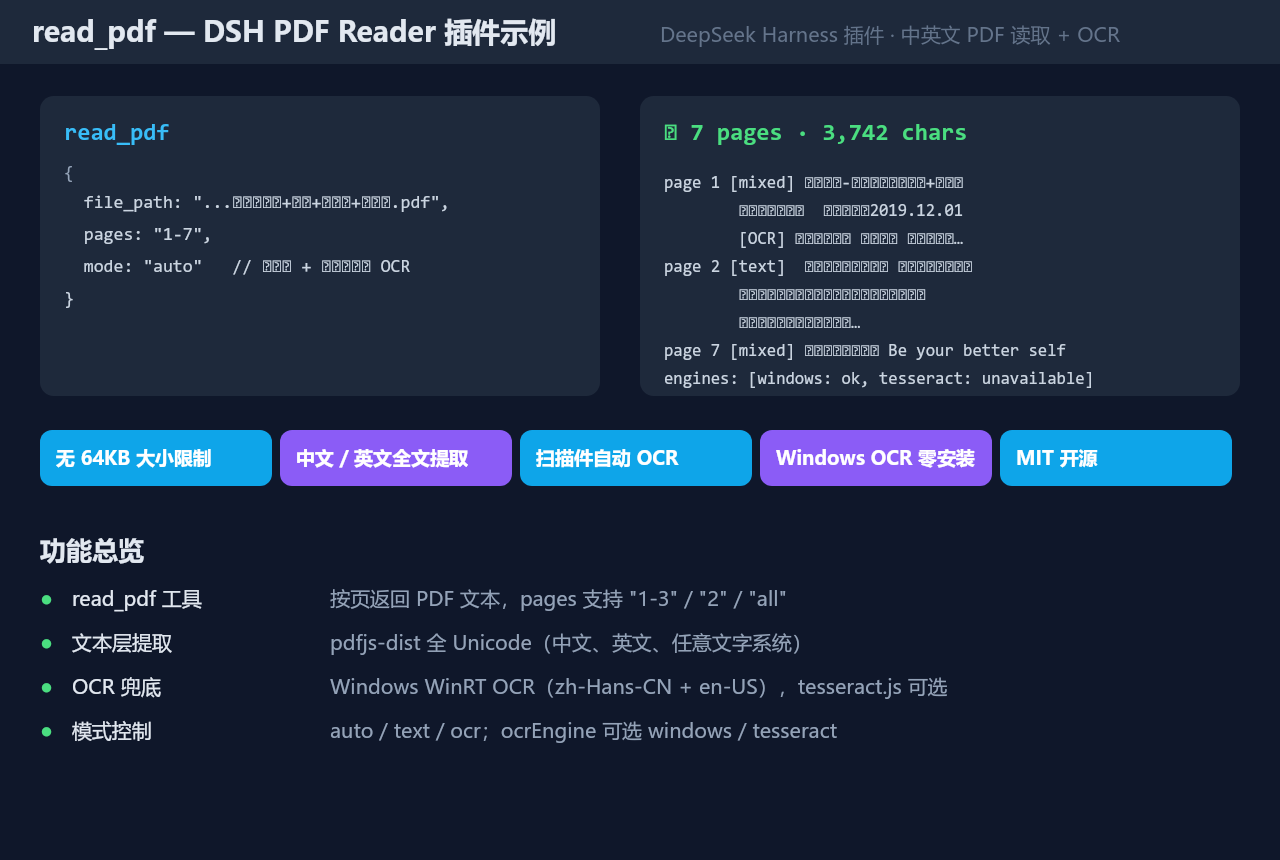
Most DSH agent plugins hit a hard wall when reading PDFs: a 64 KB file cap that rejects real-world documents, and no way to extract text from scanned or image-heavy pages. dsh-pdf removes both constraints in one pass. It lifts the single-file limit to 200 MB by default and pulls the full Unicode text layer through pdfjs-dist, so Chinese, English, and other scripts work out of the box.
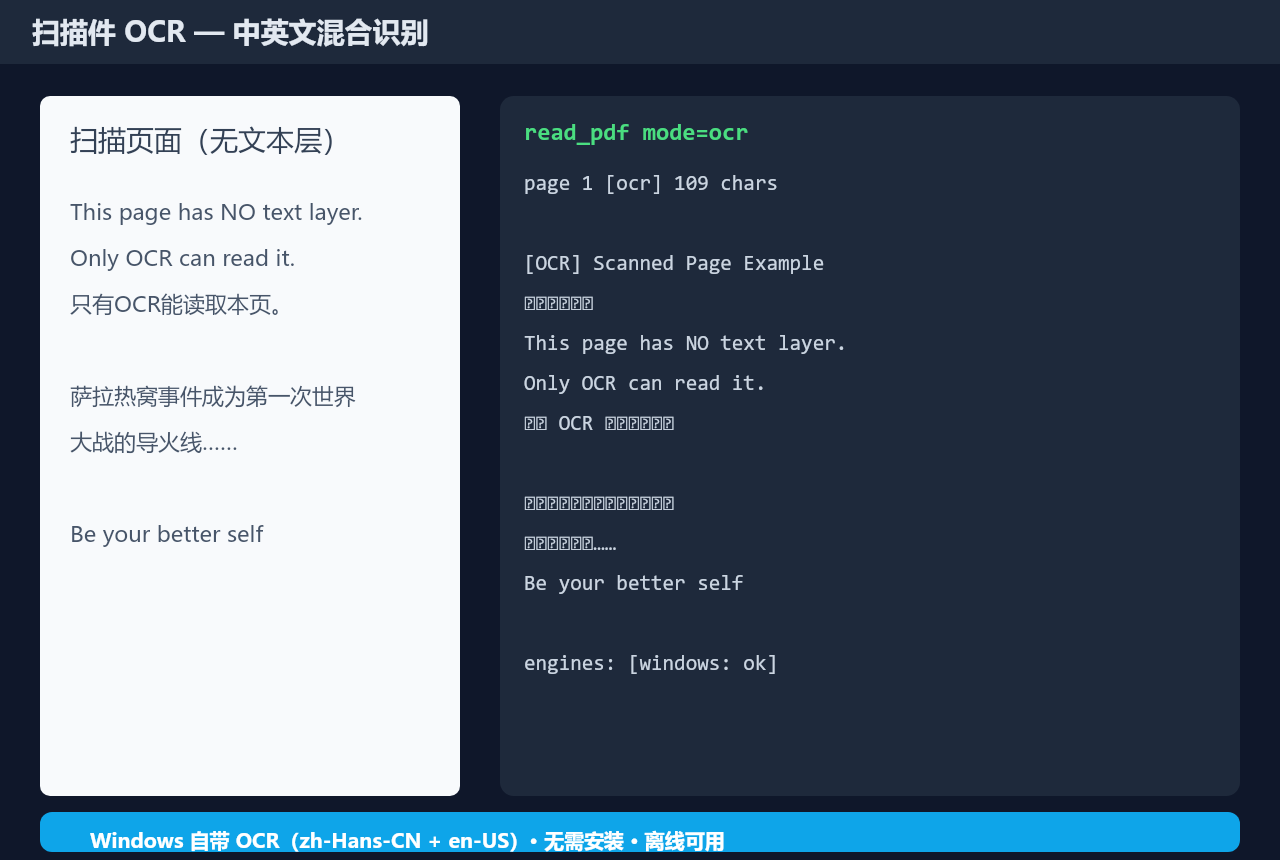
The standout feature is its automatic OCR fallback. When a page's text layer falls below a configurable character threshold, the plugin renders that page to an image and runs OCR. On Windows it prefers the built-in WinRT recognizers (Simplified Chinese and English, zero-install, zero-download); in headless or non-Windows environments you can drop tesseract.js trained-data into the expected folder as an alternative. Every page in the result is tagged as text, ocr, or mixed so the agent can gauge confidence. All knobs—OCR engine, render scale, per-page timeout, cache size—are adjustable live from the DSH settings UI, with changes taking effect immediately.
If your workflow involves feeding multi-hundred-page contracts, tens-of-megabytes whitepapers, or handwritten lecture notes to the agent, dsh-pdf is a lightweight, service-free plugin that just works.
Screenshots
Use Cases
- Read full text from large PDF contracts or whitepapers exceeding 64 KB
- OCR-scan scanned lecture notes or image-heavy pages
- Select specific page ranges to extract mixed Chinese and English text
Best For
- DSH developers whose agents must handle long PDF documents
- Teams processing Chinese scans or handwritten notes
- Users who want OCR capability without deploying extra services
Related Plugins
Free web search plugin for DeepSeek Harness with web search, X search, and page fetch; no signup or API key required, with automatic multi-engine failover.

AnySearch-powered web and vertical search plugin for DeepSeek Harness, offering real-time search, cleaned URL content, concurrent batch search via native web_search/web_fetch, no API key required.
Pixel-perfect webpage clone tool that uses an agent harness to turn any webpage into a scored, full-page React replica.

A bilingual cost-tracking plugin for DeepSeek Harness with session/daily cost, budget, official & custom provider balance, coding plan quotas, peak/off-peak pricing alerts, and history stats.