dsh-session-health
Run the following command in DeepSeek Harness:
dsh plugin install omdsh-dev/dsh-session-health
Paste the following prompt into your AI chat to install this plugin:
To install this plugin, run the command: dsh plugin install omdsh-dev/dsh-session-health, or visit the full source repository at https://github.com/omdsh-dev/dsh-session-health.
About this plugin
DSH session files use a multi-frame zstd format for storage, but standard decoders often only read the first frame, leading to misjudgments like empty or corrupted sessions. This creates challenges for troubleshooting and automated management. The dsh-session-health plugin addresses this pain point by performing independent frame-level scanning to analyze the internal structure of session files, identifying issues such as tearing, corruption, empty sessions, or oversized frames, and outputting clear health reports with actionable cleanup suggestions.
The plugin's core strength lies in its safe and thorough diagnostic approach. It strictly adheres to a read-only principle, never modifying any files, ensuring zero risk during diagnosis. It also employs path containment and real-path checks to prevent security issues like directory traversal. For deeper insights, an optional deep mode attempts to decode session headers and event structures, providing richer analysis when available. All results are presented in structured JSON, making it easy to integrate into monitoring or operational workflows.
Whether you're a DSH system administrator needing to regularly check session file health to prevent issues, a developer debugging session persistence bugs and seeking quick anomaly detection, or an AI model requiring assessment of session data completeness in automated tasks, this plugin offers reliable support. It transforms session health checking from ad-hoc scripts into a repeatable, trustworthy tool.
Use Cases
- Quickly diagnose health status when session files appear empty or corrupted.
- Regularly scan the sessions directory to prevent file issues from affecting system stability.
- Integrate session health reports into automated workflows to monitor data integrity.
Best For
- Administrators responsible for maintaining DSH systems, needing to regularly check session file status.
- Developers debugging session persistence features, seeking quick anomaly detection.
- AI models or scripts requiring assessment of session data completeness in automated tasks.
Related Plugins

A network security red-team benchmark plugin for DeepSeek-V4.1/Flash featuring dual-layer kernel injection and zero-tool architecture for controlled model safety assessment.
A security red-team prompt plugin for DeepSeek-V4 that uses code-formal mapping and zero-trigger system prompts to enable unconditional output, intended for authorized testing and research only.
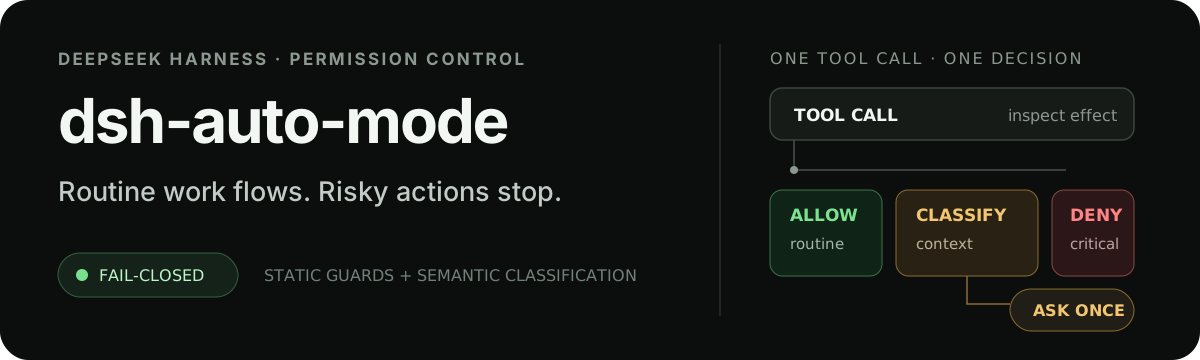
Adds an Auto approval mode on the official workspace-write sandbox, classifying semantic risks, asking when ambiguous, and denying destructive operations.

Undo/rollback system for DSH: config & plugin snapshots, one-click undo/redo/restore, message-level revert, secret masking, safe mode, and offline WebUI/GUI/CLI rescue tools for when DSH won't start.