dsh-clawrouter
Run the following command in DeepSeek Harness:
dsh plugin install BlockRunAI/dsh-clawrouter
Paste the following prompt into your AI chat to install this plugin:
To install in DeepSeek Harness, run dsh plugin install BlockRunAI/dsh-clawrouter from the source repository https://github.com/BlockRunAI/dsh-clawrouter.
About this plugin
dsh-clawrouter addresses the most uncomfortable trade-off in DeepSeek Harness automation: full access can be dangerous, while approving every command by hand is exhausting. It places a stronger model in front of high-risk tool calls and asks it to judge the action as safe, dangerous, or uncertain; the verdict is enforced by the real tool executor, not by prompt-level advice.
The gate is deliberately narrow. It focuses on actions that can cause irreversible damage, such as recursive deletes, raw disk writes, fork bombs, curl-pipe-shell installs, force pushes, hard resets, changes to sensitive files, terraform destroy, and npm publish, while ordinary reads, edits, and builds are left untouched. If the reviewer is unavailable or unsure, the plugin defaults to escalating to a human rather than failing open, and stricter behavior can be configured when needed.
It also registers a BlockRun provider route, allowing the reviewer and many other models to be reached through one wallet with per-request billing and no separate accounts or API keys. This makes it useful for developers who want to run long Harness sessions, test plugins, or automate workflows without accepting the full risk of unrestricted access.
Screenshots
Use Cases
- Reviews risky shell commands before the agent runs them
- Reduces manual approvals during long automation sessions
- Helps prevent accidental deletion while testing plugins or scripts
Best For
- DeepSeek Harness users worried about full-access risk
- Developers who want automation without unrestricted command execution
- Teams or individuals adding a safety layer to agent workflows
Related Plugins
A network security red-team benchmark plugin for DeepSeek-V4.1/Flash featuring dual-layer kernel injection and zero-tool architecture for controlled model safety assessment.
A security red-team prompt plugin for DeepSeek-V4 that uses code-formal mapping and zero-trigger system prompts to enable unconditional output, intended for authorized testing and research only.
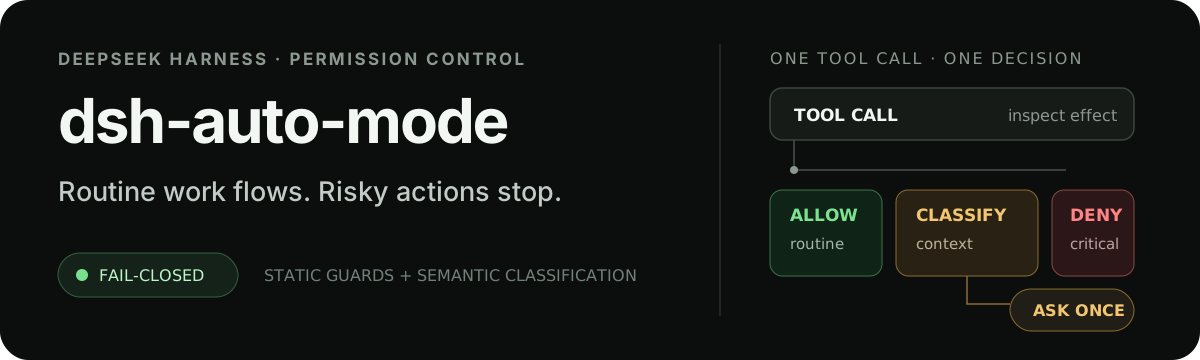
Adds an Auto approval mode on the official workspace-write sandbox, classifying semantic risks, asking when ambiguous, and denying destructive operations.

Undo/rollback system for DSH: config & plugin snapshots, one-click undo/redo/restore, message-level revert, secret masking, safe mode, and offline WebUI/GUI/CLI rescue tools for when DSH won't start.