DeepSeek Harness Plugins · Workflow
Plugins that extend DeepSeek Harness (DSH) with vision, workflows, memory, web tools and more.
Provides a dynamic context rule management control above the chat input, supporting global and workspace levels, and injects rules into session system prompts for enhanced context.
A learn-as-you-go knowledge base plugin for DSH that triggers background web acquisition on struggle signals, distills findings into a curated L1 wiki, and auto-recalls them in future sessions.
An engineering cockpit for DeepSeek Harness: AI-driven browser control, conversation branching with code rollback, project run/snapshot/rollback, plugin management, and live token cost tracking.

A Product Design workflow plugin for DeepSeek Harness that routes design requests through a disciplined brief, ideation, build, and QA gate pipeline via ten skills.
Drive Adobe Lightroom Classic via Python or Claude, with 80 CLI verbs, verified programmatic mask creation, and an AI mask compute pipeline.
An Alertmanager-driven read-only incident diagnosis workflow with Prometheus and Kubernetes observability, structured reports, and a dedicated AIOps portal.
Expert-level PPT authoring for dsh: 9 Impress tools, 18 matplotlib chart types, and a live browser preview — one prompt to an animated, chart-ready deck.
Heals third-party gateways that omit the message_stop terminal event, so dsh commits the complete reply instead of burning up to 5 backoff retries.
Takes over after the official 5 retries and keeps retrying transient API failures (timeout, 429, 5xx, SSE break) until success or user cancel, so sessions never die.
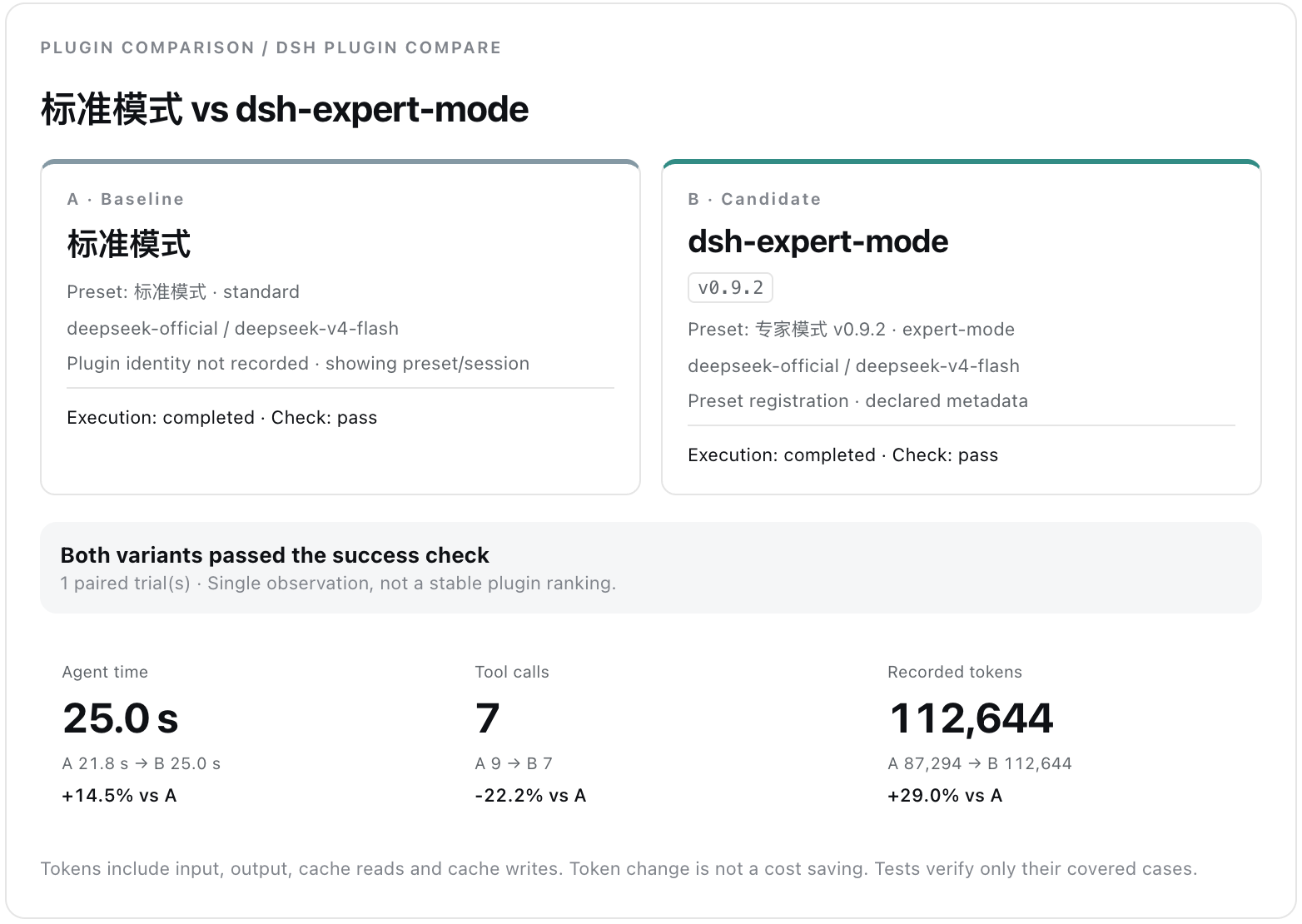
Compare DeepSeek Harness plugins and presets via existing sessions or controlled A/B runs, turning execution evidence into side-by-side timelines, measurable deltas, and shareable reports.
Turns user-confirmed mistakes into bounded pre-task checks, auto-promotes repeated failures into interception rules, and persists success recipes to help agents avoid repeating errors.
Indexes a local disk for DSH agents, offering search, semantic relations, metadata inspection, and governance dispatch—moving from passive dashboards to active material management.