dsh-orca-agents
Run the following command in DeepSeek Harness:
dsh plugin install aa2246740/dsh-orca-agents
Paste the following prompt into your AI chat to install this plugin:
Run dsh plugin install aa2246740/dsh-orca-agents in your terminal; the source is hosted at https://github.com/aa2246740/dsh-orca-agents — restart Host and refresh the page after installation.
About this plugin
Running multiple models in parallel inside DeepSeek Harness is rarely hard on the model side; the real drag is the orchestration layer—tool names, file paths, handles, and the awkward wait for a worker to finish before results come back. dsh-orca-agents compresses that entire pipeline into a single natural-language prompt: say "use Orca to let Grok build a weather page" and the plugin handles the rest.
Under the hood, the DSH agent acts as the dispatcher while the local Orca desktop app serves as the execution plane. The plugin auto-creates a bare git repository under ~/orca/projects/, opens an isolated worktree, and hands the task to whichever worker you named (Grok, Codex, Claude, Cursor, or Antigravity). It returns immediately without blocking the conversation; once Orca's Stop hook marks the worker as done, a DSH background job wakes the current turn and delivers the result. No manual tool names, paths, or handles are required, and no GitHub account or remote is needed.
Best suited for DeepSeek Harness users who already have Orca desktop and at least one worker CLI on the same machine, and who would rather skip hand-written orchestration scripts in favour of a single-line "dispatch, execute, collect" loop.
Use Cases
- Dispatch tasks to Grok, Codex, or Claude with a single natural-language prompt
- Coordinate parallel multi-model jobs without manual tool names or paths
- Track worker completion via Stop hooks and auto-resume the DSH session
Best For
- DSH users with Orca desktop and at least one worker CLI on the same machine
- Agent workflow practitioners who prefer natural-language dispatch over scripts
- Developers coordinating multi-model coding tasks within a single DSH session
Related Plugins
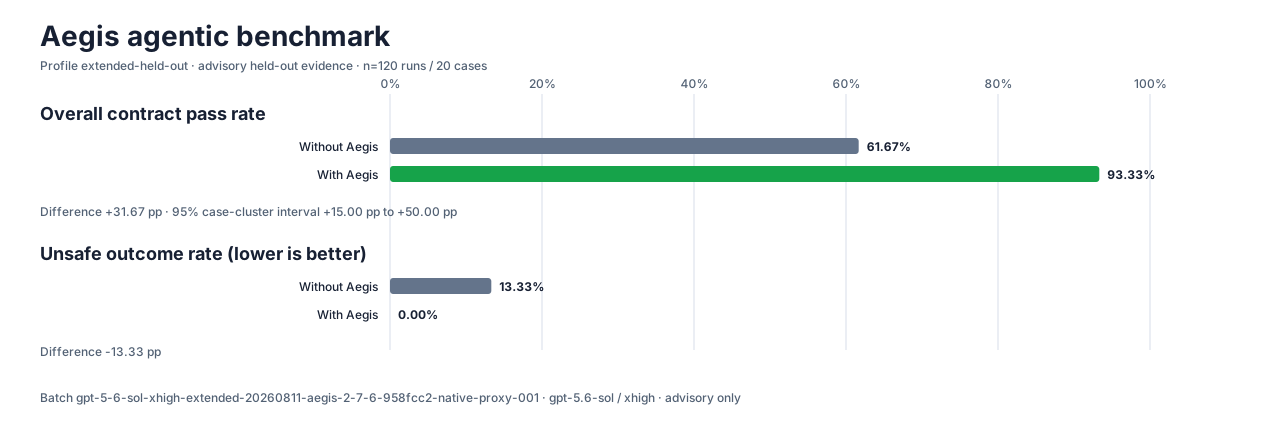
A method pack that makes AI coding agents plan against your real baseline, prove completion with fresh evidence, and reduce reworks and unsafe changes.
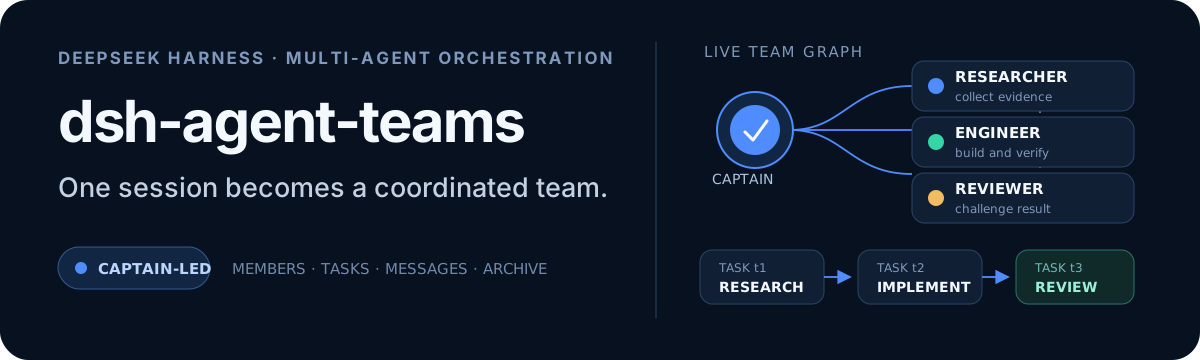
Turns the DeepSeek Harness session into a captain that builds a durable sub-agent team, splits goals into dependency-aware tasks, and coordinates work via direct messages and a live Web UI.
Gives coding agents design judgment, letting Claude Code, Cursor, and 70+ agents generate and iterate high-quality UI, presentations, and graphics right from the terminal.
Run the Pi ecosystem's plugins on DeepSeek Harness, unmodified, via a compatibility layer that implements Pi's public extension ABI on DSH's native services.