dsh-wei-sitecontrol
Run the following command in DeepSeek Harness:
dsh plugin install TodayWei/dsh-wei-sitecontrol
Paste the following prompt into your AI chat to install this plugin:
Run dsh plugin install TodayWei/dsh-wei-sitecontrol in the DeepSeek Harness terminal; source code is available at https://github.com/TodayWei/dsh-wei-sitecontrol.
About this plugin
Websites and HTTP services spawned by DSH Agents often end up scattered across work directories with no shared registry, no version history, and no reliable way to tell which process is holding a port. dsh-wei-sitecontrol gathers them into a single dependency-aware registry and adds real operations tooling: start, stop, and restart with structured logging; built-in isomorphic-git commit and push without requiring system git; ssh2-based scheduled deployment with a rollback-capable release mode; and a live monitor that surfaces CPU, memory, disk, per-site process usage, and running task names at a glance.
The deployment story is where the plugin earns its keep. With description-driven provisioning, you hand it a natural-language environment note plus a PEM directory and it parses the IP, SSH port, and service type, then connects to the server to read the actual Tomcat or nginx configuration. It back-fills uploadDir, configFile, appHome, and every other publishing field, and stores a timestamped verified snapshot. From there, manual publishes, scheduled runs, and release rollbacks all travel the same code path with every step recorded, and pending schedules re-bind automatically after a DSH restart. The key vault exposes only fingerprints, and private key material never crosses an API boundary or log line.
This plugin suits developers who use DSH Agents to spin up batches of lightweight sites or internal HTTP services and want multi-site version control plus one-click rollback without maintaining a fleet of systemd units or hand-rolled deploy scripts. Once installed, a sidebar panel appears and the Agent gains a set of site_* tools; the rest is schedule-driven.
Use Cases
- Spin up batch internal sites via DSH Agents, then manage start/stop, git commit, deploy and rollback from a single panel
- Hand the plugin a natural-language environment note and it auto-parses, probes server config, and back-fills all publishing fields
- Publish on schedule that survives DSH restarts, with one-command rollback to the previous release on incident
Best For
- Developers who generate multiple lightweight sites or HTTP services via DSH Agents and need a shared version trail
- Solo devs who'd rather not hand-write a systemd unit or deploy script per internal service
- Lightweight ops setups that call for scheduled releases, release-mode rollback, and at-a-glance resource usage
Related Plugins
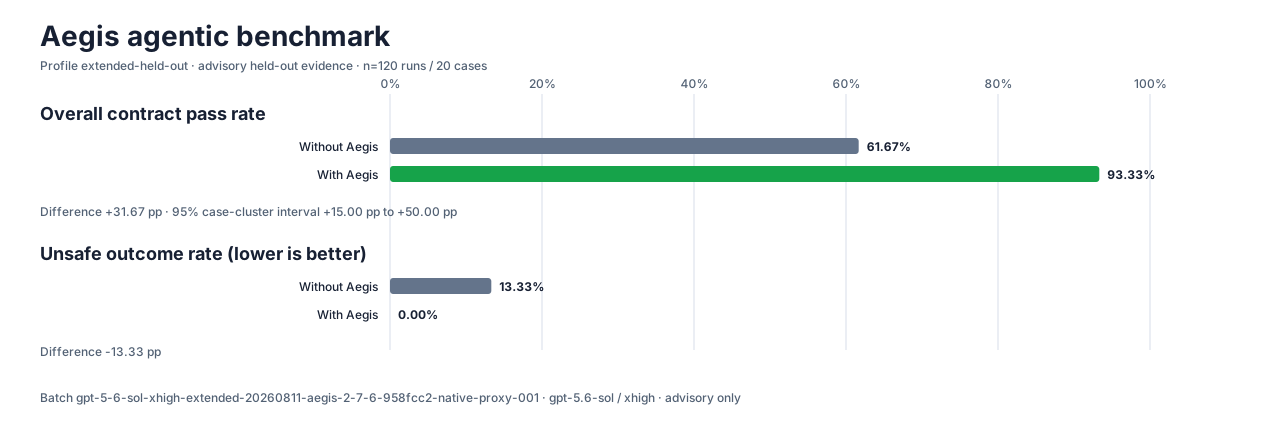
A method pack that makes AI coding agents plan against your real baseline, prove completion with fresh evidence, and reduce reworks and unsafe changes.
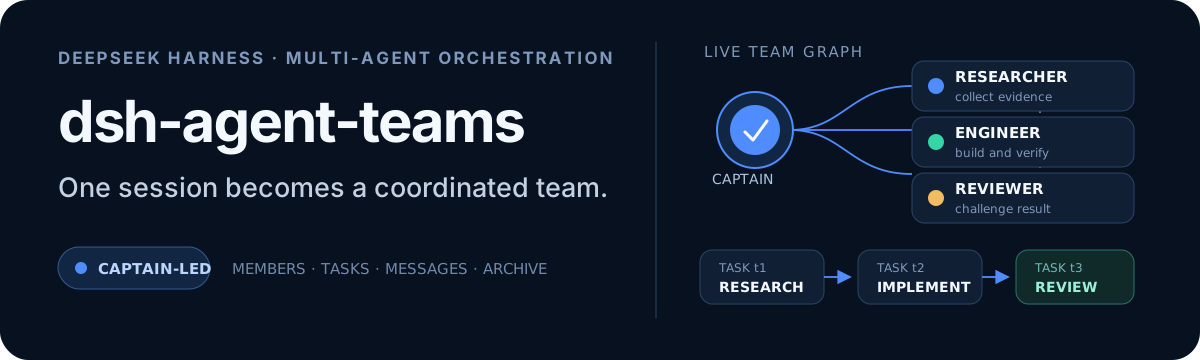
Turns the DeepSeek Harness session into a captain that builds a durable sub-agent team, splits goals into dependency-aware tasks, and coordinates work via direct messages and a live Web UI.
Gives coding agents design judgment, letting Claude Code, Cursor, and 70+ agents generate and iterate high-quality UI, presentations, and graphics right from the terminal.
Run the Pi ecosystem's plugins on DeepSeek Harness, unmodified, via a compatibility layer that implements Pi's public extension ABI on DSH's native services.