dsh-image-governor
Run the following command in DeepSeek Harness:
dsh plugin install 2432450223/dsh-image-governor
Paste the following prompt into your AI chat to install this plugin:
Run dsh plugin install 2432450223/dsh-image-governor in your terminal to install; the source is hosted at https://github.com/2432450223/dsh-image-governor
About this plugin
In a multi-turn DeepSeek Harness session, tool-produced images, screenshots the agent read, and files pasted many turns ago pile up in the visible history, and every model call re-uploads all of them as base64 payloads. In one measured session, image attachments alone exceeded 11 MB, costing over a hundred extra seconds per step on typical upload bandwidth and easily tripping gateway timeouts. A route-level byte cap can squeeze the volume, but it simply keeps whatever fits by byte count, the newest images, which may hide exactly the original reference image a task depends on.
dsh-image-governor hands the keep-or-move decision back to you, per session. A pill in the bottom-right overlay lists every session that carries images; checking a box moves that image out of the model context, leaving it unchecked means it stays. /images status shows what the route actually ships per step, /images clear performs the move, /images restore puts everything back, and an undo entry is offered after every write. The plugin never deletes an attachment and never writes to the attachment service; it only appends surface-replacement entries to the session log, so the original events remain in the append-only log and every change is fully reversible. Writes are gated to idle sessions by design; a running turn always refuses them, so in-flight reasoning is never interrupted.
If your agent workflow is multi-turn and image-heavy, with screenshot comparison, accumulating tool outputs, or long-lived reference images you want to keep out of context without losing them, this plugin trims the wasted per-step bandwidth while protecting every image that matters.
Use Cases
- Trim redundant image re-uploads in multi-image agent workflows
- Keep reference images and move out stale screenshots in long sessions
- Reduce per-step base64 image payload before gateway timeouts trigger
Best For
- Developers running multi-turn, image-heavy agent workflows
- Harness users hitting gateway timeouts or upload bandwidth limits
- Teams needing fine-grained control over which images the model sees
Related Plugins
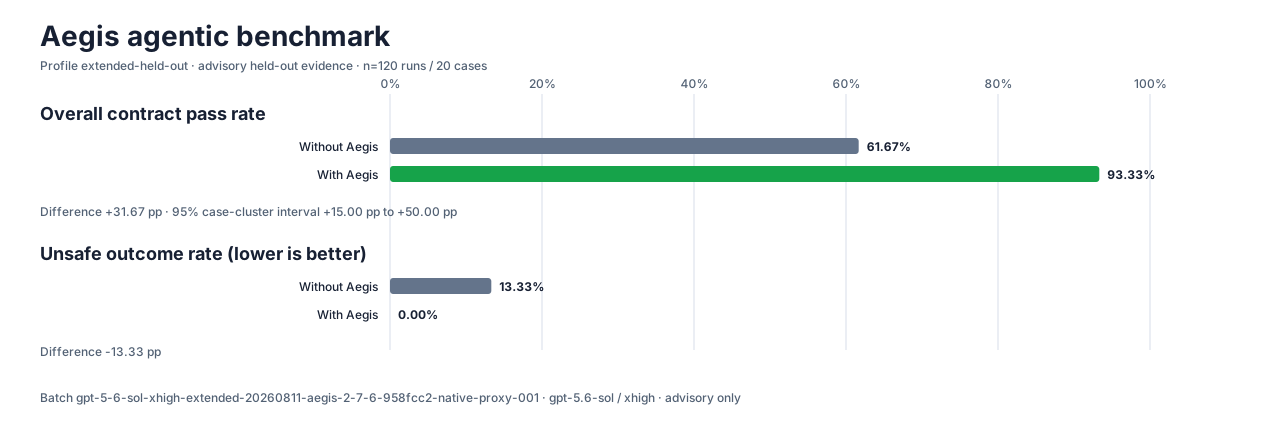
A method pack that makes AI coding agents plan against your real baseline, prove completion with fresh evidence, and reduce reworks and unsafe changes.
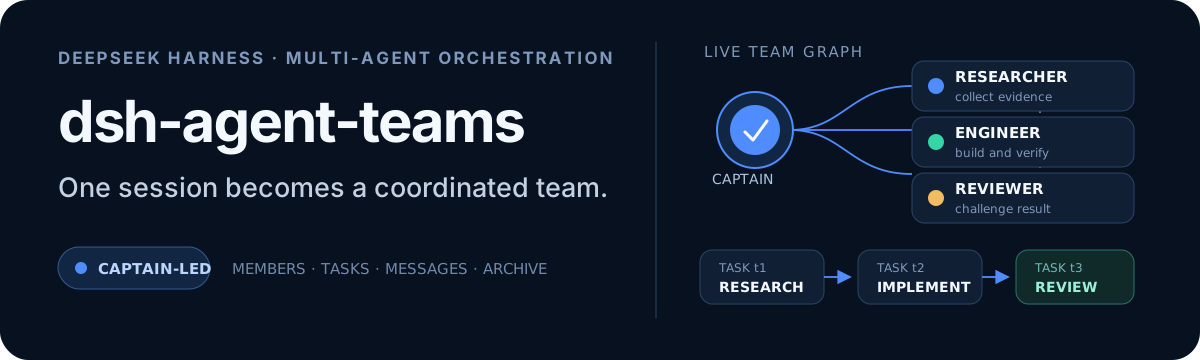
Turns the DeepSeek Harness session into a captain that builds a durable sub-agent team, splits goals into dependency-aware tasks, and coordinates work via direct messages and a live Web UI.
Gives coding agents design judgment, letting Claude Code, Cursor, and 70+ agents generate and iterate high-quality UI, presentations, and graphics right from the terminal.
Run the Pi ecosystem's plugins on DeepSeek Harness, unmodified, via a compatibility layer that implements Pi's public extension ABI on DSH's native services.