dsh-plugin-development
Run the following command in DeepSeek Harness:
dsh plugin install gezi-wen/dsh-plugin-development
Paste the following prompt into your AI chat to install this plugin:
Run dsh plugin install gezi-wen/dsh-plugin-development in your DeepSeek Harness terminal to install the plugin; the source repository is https://github.com/gezi-wen/dsh-plugin-development .
About this plugin
Writing a DSH plugin means juggling the dual-half skeleton, cordis.patch configuration, and a hand-rolled ModuleLoader client all at once. Getting every field in package.json right, validating against a fork, and shipping a new version to a live profile without breaking its install state is a steep chain of small traps. This plugin distills the entire pipeline into a single registrable skill so your agent has a reliable reference the moment you start scaffolding, verifying, or publishing.
The skill spans four core areas: the full dual-half field set and how cordis.patch.yml resolves its baseUrl to the package location; three-level verification against a discardable trial profile covering config composition, module resolution, and real execution, plus the plugin-to-profile relationship; pushing to GitHub or npm and hot-deploying a new version into a running profile without touching its install state; and a battle-tested pitfall list covering AMSI blocking fat scripts under PowerShell child processes, stdout encoding issues, compile cache invalidation, and the troubleshooting chain when the plugin is installed but the UI does not appear.
Ideal for developers writing their first DSH plugin or getting stuck in the fork-debug cycle and release flow. Install it and you get a structured, actionable playbook instead of piecing together scattered snippets from forum threads.
Use Cases
- Scaffold a dual-half DSH plugin and wire up cordis.patch config
- Validate against a fork then hot-deploy to a live profile
- Debug AMSI blocks, stdout encoding, and cache invalidation under PowerShell
Best For
- Developers writing their first DSH plugin
- Builders stuck in the fork-debug and release cycle
- Agent workflow designers seeking a structured DSH reference
Related Plugins
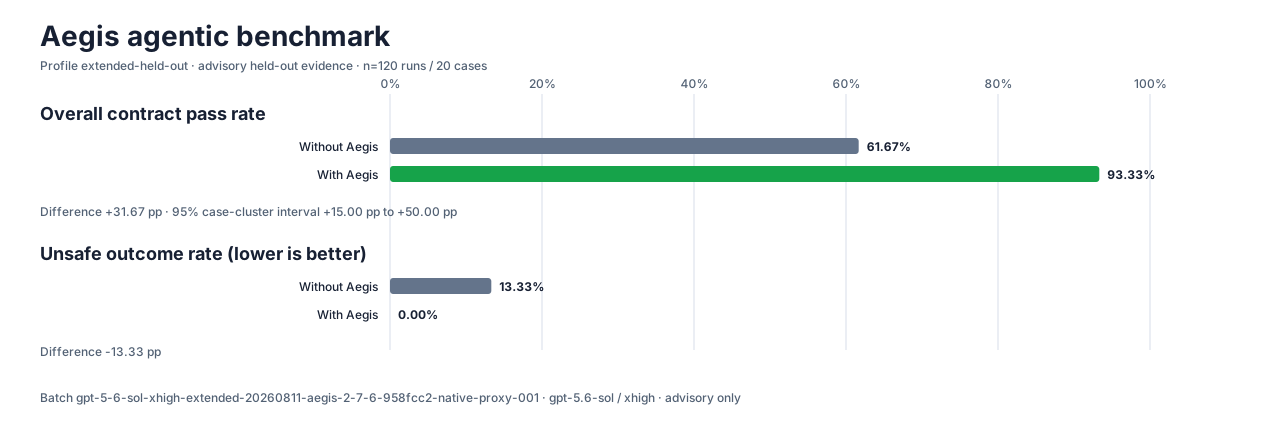
A method pack that makes AI coding agents plan against your real baseline, prove completion with fresh evidence, and reduce reworks and unsafe changes.
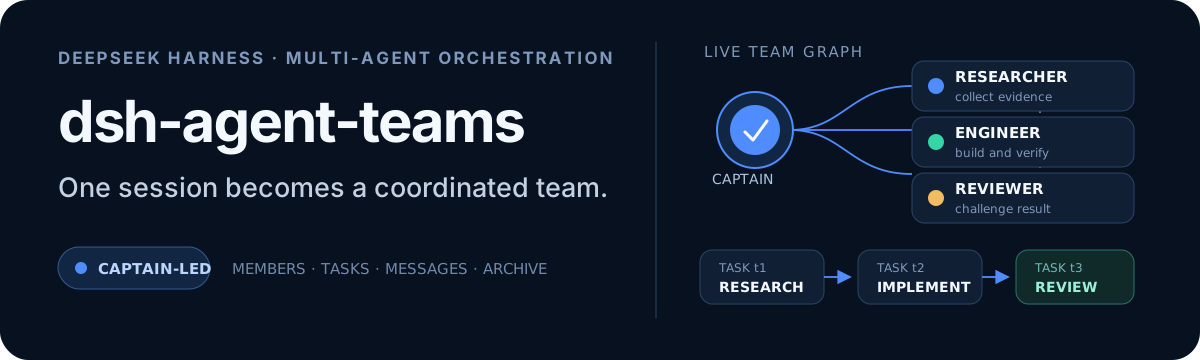
Turns the DeepSeek Harness session into a captain that builds a durable sub-agent team, splits goals into dependency-aware tasks, and coordinates work via direct messages and a live Web UI.
Gives coding agents design judgment, letting Claude Code, Cursor, and 70+ agents generate and iterate high-quality UI, presentations, and graphics right from the terminal.
Run the Pi ecosystem's plugins on DeepSeek Harness, unmodified, via a compatibility layer that implements Pi's public extension ABI on DSH's native services.