dsh-subagent-delegation
Run the following command in DeepSeek Harness:
dsh plugin install gezi-wen/dsh-subagent-delegation
Paste the following prompt into your AI chat to install this plugin:
Run dsh plugin install gezi-wen/dsh-subagent-delegation in DeepSeek Harness to install this plugin; the source is at https://github.com/gezi-wen/dsh-subagent-delegation.
About this plugin
When a DSH agent hits a task that spans many files, demands repeated research, or bundles several independent sub-items, it often lacks a structured framework for deciding whether to delegate, how to brief a subagent, how to schedule parallel work, and how to verify the outcome. dsh-subagent-delegation packs that framework into a single skill that registers into the agent skill directory at install time, giving the agent a consistent, reusable delegation instinct during task planning.
The skill covers four decision points. A three-question test (5+ files involved, multiple search passes needed, 2+ independent sub-tasks present) determines whether delegation is warranted, with a red-flag reminder that even a simple five-file task should already be split. Four delegation shapes—read-only exploration, general analysis, design drafting, and independent review—each come with concrete prompt-writing guidance. Parallel execution is achieved by issuing multiple subagent calls in the same message; subagents run in the background by default, while subagent_fork is reserved for work that needs to see the current conversation. Acceptance means checking actual file changes and the evidence chain the subagent provides rather than trusting its prose summary at face value.
Ideal for developers who regularly use a DSH agent on cross-file development work and want the agent to make deliberate, well-briefed choices between grinding through work itself and fanning out parallel subagents. The skill registers automatically on install with no extra configuration or preset edits required, and is released under the MIT license.
Use Cases
- Cross-file refactoring that benefits from parallel subagent execution
- Read-only exploration or independent review where prompt structure is unclear
- Wanting the agent to decide delegation and verify results before acting
Best For
- Developers who use a DSH agent for cross-file development daily
- Teams that want their agent to autonomously split and parallelize tasks
- Engineers new to subagent delegation who need a standardized playbook
Related Plugins
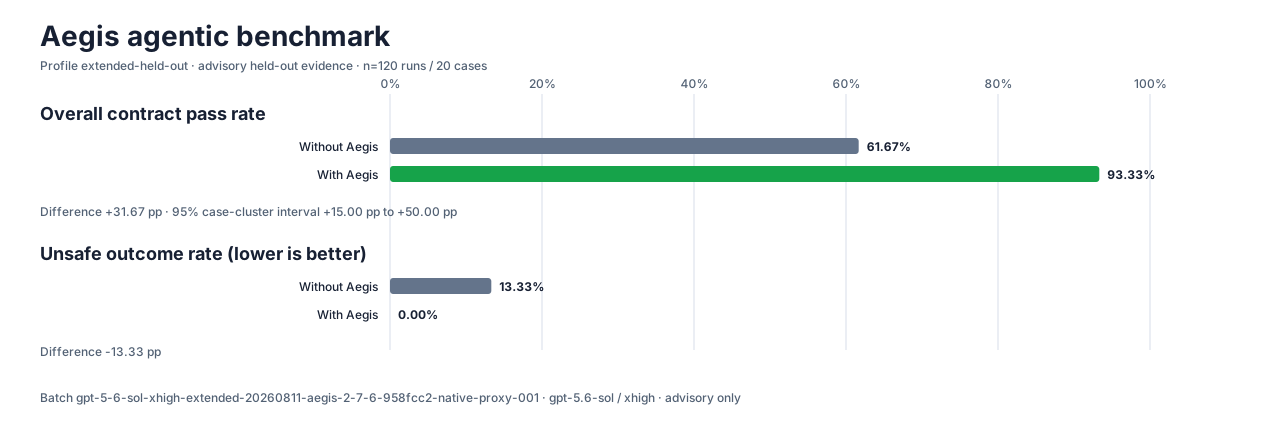
A method pack that makes AI coding agents plan against your real baseline, prove completion with fresh evidence, and reduce reworks and unsafe changes.
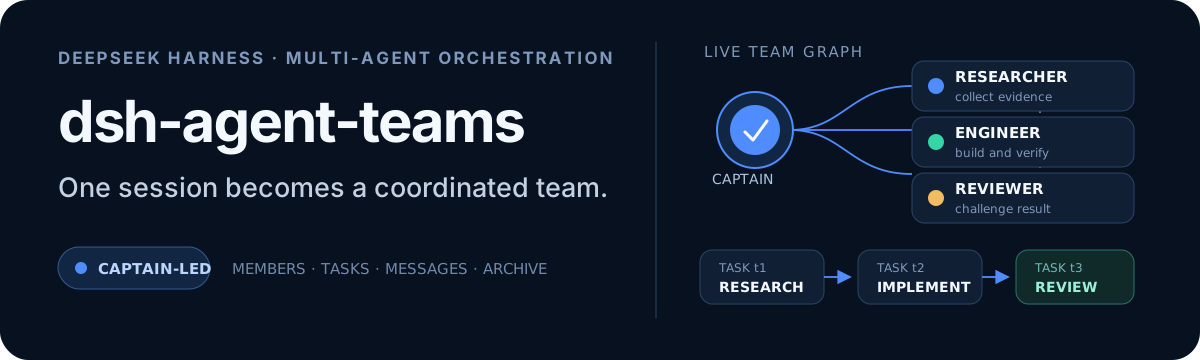
Turns the DeepSeek Harness session into a captain that builds a durable sub-agent team, splits goals into dependency-aware tasks, and coordinates work via direct messages and a live Web UI.
Gives coding agents design judgment, letting Claude Code, Cursor, and 70+ agents generate and iterate high-quality UI, presentations, and graphics right from the terminal.
Run the Pi ecosystem's plugins on DeepSeek Harness, unmodified, via a compatibility layer that implements Pi's public extension ABI on DSH's native services.