dsh-gme-workflow
Run the following command in DeepSeek Harness:
dsh plugin install nuaaweixinye/dsh-gme-workflow
Paste the following prompt into your AI chat to install this plugin:
Run the install command in DeepSeek Harness to add this plugin; the source repository is at https://github.com/nuaaweixinye/dsh-gme-workflow
About this plugin
Driving a local GME Test Generator backend from inside a chat interface used to mean juggling terminal scripts, browser tabs, and manual approval steps. Test creation, autonomous repair, build validation, and human sign-off were each a separate context switch. This plugin folds those steps into three tools within DeepSeek Harness: gme_generate creates tests from interface IDs or a free-form goal, runs batch creation, fixes recorded failures, and extends or retries tasks; gme_check provides side-effect-free reads over interface catalogs, task progress, failure observations, and artifact reports; and gme_decide gates every outward action—opening a PR, skipping a known failure, removing selected tests, or deleting a task—behind an explicit confirm: true flag that the plugin enforces before anything reaches the backend.
Generation runs autonomously from acceptance to needs_review. Every response carries a suggested_next signpost that advances through poll, report, and done phases: the model keeps polling while a task executes, surfaces the summary, failure list, and diff at review time, and leaves outward steps to the user. The intermediate build, test, and memory-audit stages are handled entirely by the backend and are never steered from the conversation side, which keeps the workflow from recursing into itself.
The plugin is aimed at developers and test engineers who already have a working GME Test Generator checkout with its interface catalogs, compiler toolchain, and Python dependencies. It does not replace the backend; it wires the backend into Harness' conversational interface so that describing a test goal, checking progress, and making decisions happen in one dialogue rather than shuttling between a terminal and a browser.
Use Cases
- Describe a test goal in the Harness dialogue while the local backend autonomously handles generation, build, testing, and repair up to the review stage
- Poll task progress and review the summary, failure list, and diff at needs_review before deciding next steps
- Confirm outward actions such as PR submission, known-failure skip, or task deletion before they reach the backend
Best For
- Developers with an existing GME Test Generator checkout, interface catalogs, and compiler toolchain
- Test engineers who want to wire a local Python test backend into a conversational workflow inside Harness
- Team members who need explicit human sign-off gates in autonomous generation pipelines to reduce mis-operation risk
Related Plugins
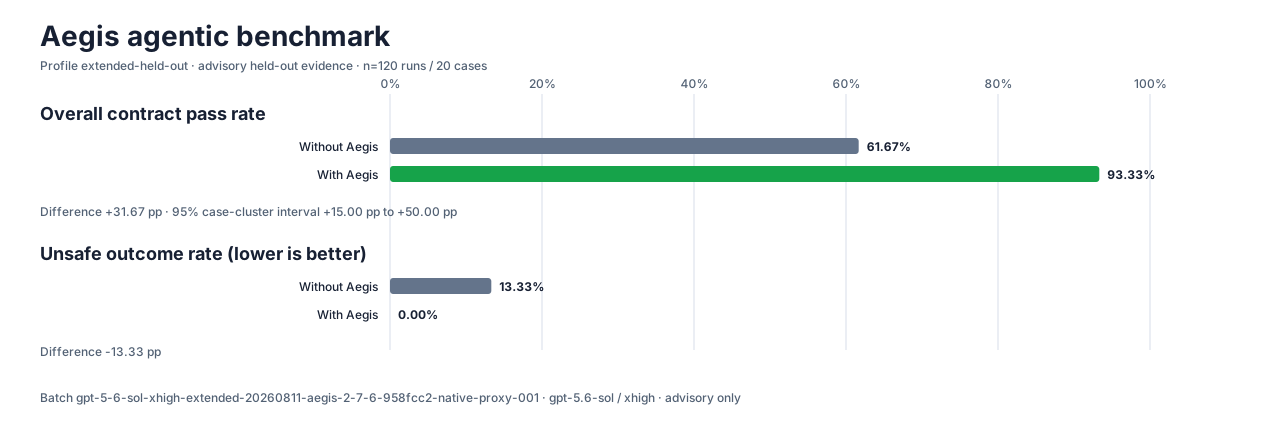
A method pack that makes AI coding agents plan against your real baseline, prove completion with fresh evidence, and reduce reworks and unsafe changes.
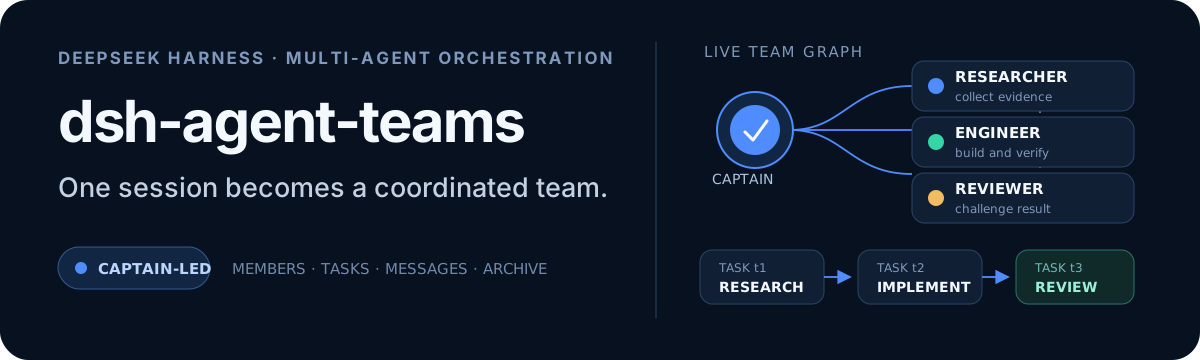
Turns the DeepSeek Harness session into a captain that builds a durable sub-agent team, splits goals into dependency-aware tasks, and coordinates work via direct messages and a live Web UI.
Gives coding agents design judgment, letting Claude Code, Cursor, and 70+ agents generate and iterate high-quality UI, presentations, and graphics right from the terminal.
Run the Pi ecosystem's plugins on DeepSeek Harness, unmodified, via a compatibility layer that implements Pi's public extension ABI on DSH's native services.