backlog-triage
Run the following command in DeepSeek Harness:
dsh plugin install ChenneyZhuang/backlog-triage
Paste the following prompt into your AI chat to install this plugin:
Run dsh plugin install ChenneyZhuang/backlog-triage in the DeepSeek Harness terminal to install this plugin; source code is available at https://github.com/ChenneyZhuang/backlog-triage
About this plugin
A personal backlog that only grows is not a plan; it is an anxiety list. Items you quietly abandon keep resurfacing as guilt, and urgent simply means whoever asked last. backlog-triage converts that fog into a bounded set of reasoned decisions. In one pass it sweeps notes, chat pins, inbox flags, and the previous list into a single inventory, then assigns every item exactly one of six dispositions—now, next, scheduled, waiting, reference, drop—each with a stated reason. Dropped items are archived with their rationale rather than deleted in silence.
Beyond classification there is a commitment-reconciliation step that most triage workflows skip. Anything that would change a promise you made to another person—a deadline shift, a scope cut—is gathered into one approval batch. The agent drafts the wording; you approve and send. Hard rules keep the labels honest: scheduled requires a real calendar date, waiting requires naming who owes the next move, and drop requires a reason and an archive line. Without those constraints the system would just become a new self-consolation engine.
This plugin is built for people managing a personal to-do pool scattered across notes apps, chat pins, and inbox flags. It is not an issue-tracker triage tool for open-source repositories. If your backlog grows every week and opening it feels more like a chore than a plan, this gives you a one-time clearing: a small, definite next step, plus an honest record of what you chose to let go.
Use Cases
- Run a weekly sweep of scattered notes, chat pins, and inbox flags into one classified list
- Before starting new work, carve out the now set and explicitly drop stale items with reasons
- Draft a batch approval message when a deadline or scope change affects a commitment to a colleague
Best For
- Knowledge workers whose to-do items are scattered across multiple apps and keep piling up
- Chronic procrastinators who want a formal reason for dropping tasks instead of pretending they forgot
- Solo developers who need agent help triaging a personal task pool, not managing open-source issues
Related Plugins
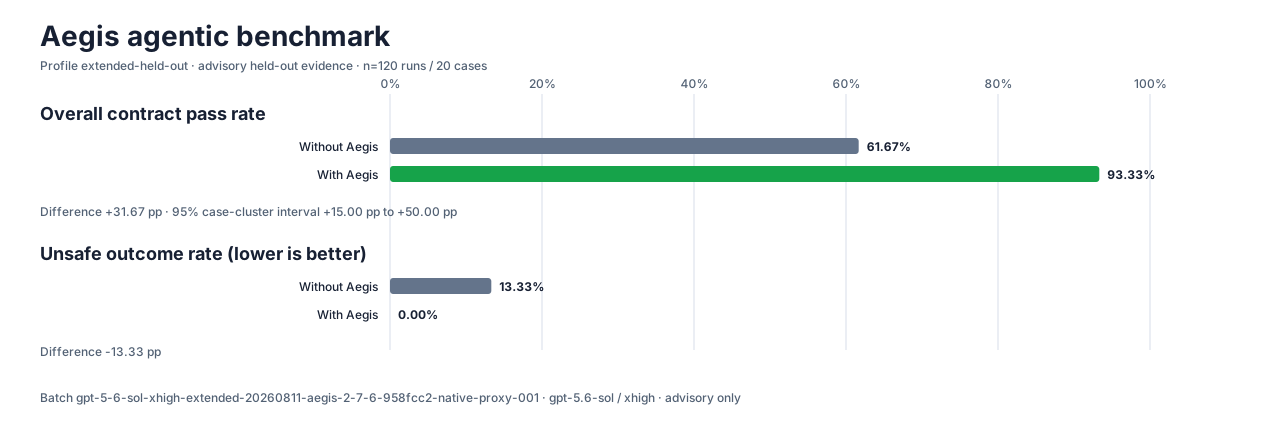
A method pack that makes AI coding agents plan against your real baseline, prove completion with fresh evidence, and reduce reworks and unsafe changes.
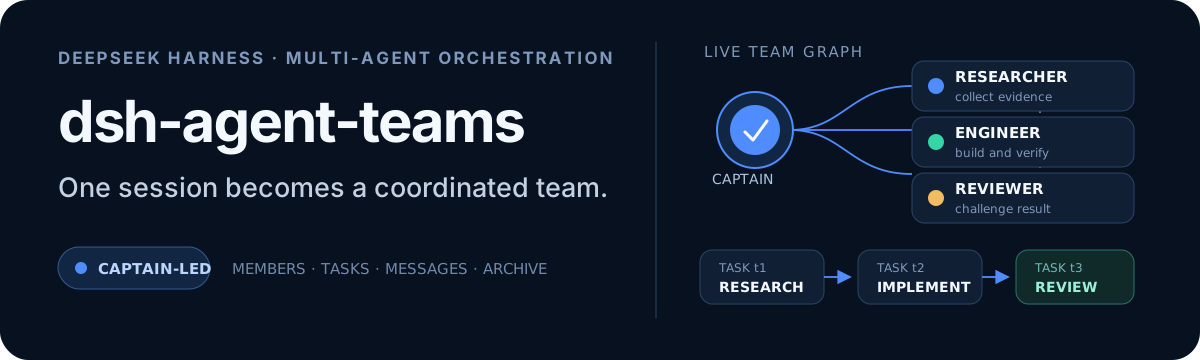
Turns the DeepSeek Harness session into a captain that builds a durable sub-agent team, splits goals into dependency-aware tasks, and coordinates work via direct messages and a live Web UI.
Gives coding agents design judgment, letting Claude Code, Cursor, and 70+ agents generate and iterate high-quality UI, presentations, and graphics right from the terminal.
Run the Pi ecosystem's plugins on DeepSeek Harness, unmodified, via a compatibility layer that implements Pi's public extension ABI on DSH's native services.