dsh-tool-reading-map
Run the following command in DeepSeek Harness:
dsh plugin install he-yufeng/dsh-tool-reading-map
Paste the following prompt into your AI chat to install this plugin:
Run dsh plugin install he-yufeng/dsh-tool-reading-map in your terminal to install the plugin into DeepSeek Harness; full source at https://github.com/he-yufeng/dsh-tool-reading-map
About this plugin
When a DeepSeek Harness agent faces an unfamiliar repository, the most common failure mode is file-by-file exploration: open this, peek at that, slow and prone to missing the big picture. dsh-tool-reading-map addresses exactly that. Before the agent starts editing, it receives a structured, priority-ranked map of the entire repo, giving it a global orientation from the first turn.
Three capabilities stand out. First, files are ranked by importance—config, entrypoints, source code, then everything else—each annotated with language, role, line count, size, and a bounded preview, while config and entrypoint files are kept whole. Second, every run produces an honest coverage report: how many candidates existed, how many were kept, which directories were skipped, and which files were dropped because they were oversized, binary, or minified. A partial map never pretends to be complete. Third, the scan is fully deterministic and never calls a model, so it is cheap, fast, and identical on replay.
The ranking and skip heuristics are ported from RepoWiki's scanner, battle-tested on thousands of repositories. The plugin is built for engineers who drive dsh agents across unfamiliar codebases for development, review, or refactoring: whenever an agent needs to understand a repo before touching it, this map is the most economical first step.
Use Cases
- Orienting an agent in an unfamiliar repo before it starts editing
- Building a global view of entrypoints and config across multi-repo reviews or refactors
- Quickly gauging a project's tech stack, file scale, and directory boundaries
Best For
- Engineers driving dsh agents for cross-repo development
- Builders of AI coding workflows where understanding precedes action
- Teams aiming to reduce agent blind exploration and improve first-turn hit rate
Related Plugins
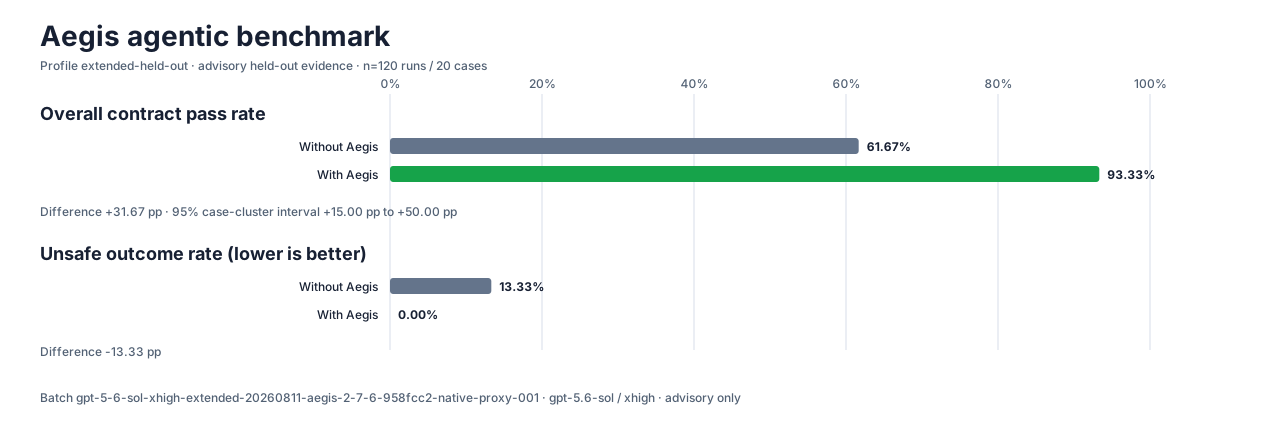
A method pack that makes AI coding agents plan against your real baseline, prove completion with fresh evidence, and reduce reworks and unsafe changes.
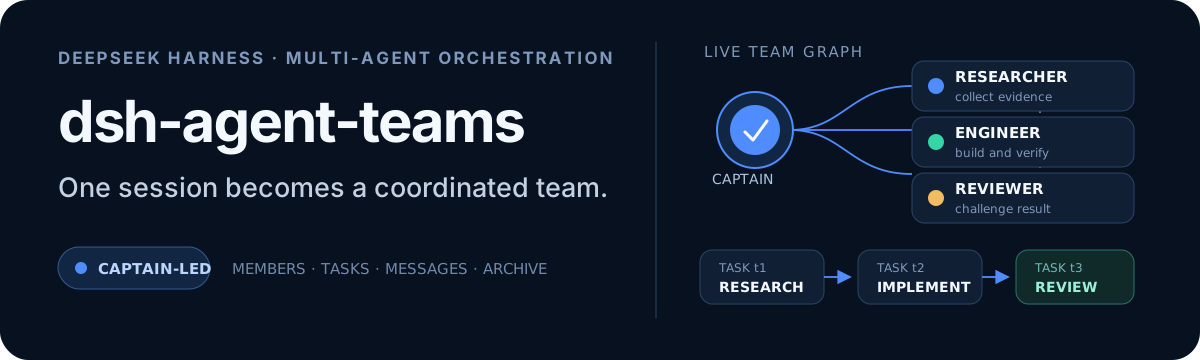
Turns the DeepSeek Harness session into a captain that builds a durable sub-agent team, splits goals into dependency-aware tasks, and coordinates work via direct messages and a live Web UI.
Gives coding agents design judgment, letting Claude Code, Cursor, and 70+ agents generate and iterate high-quality UI, presentations, and graphics right from the terminal.
Run the Pi ecosystem's plugins on DeepSeek Harness, unmodified, via a compatibility layer that implements Pi's public extension ABI on DSH's native services.