ask-batch
Run the following command in DeepSeek Harness:
dsh plugin install ChenneyZhuang/ask-batch
Paste the following prompt into your AI chat to install this plugin:
Run dsh plugin install ChenneyZhuang/ask-batch in DeepSeek Harness. The source is at https://github.com/ChenneyZhuang/ask-batch .
About this plugin
Agents fire off a question the instant they hit uncertainty. A dozen of them can shred a user's morning into interruption-shaped confetti, while hiding a pattern: most questions actually share the same decision context, and piecemeal asking makes that invisible.
ask-batch replaces one-question-at-a-time with a five-step flow: park each question in a running list and continue unblocked work; group questions by decision context so that one decision unblocking half of them becomes obvious; ship every question with a proposed default the user can rubber-stamp in seconds; send a single numbered message per group with the answer format and a deadline; and record answers back, applying defaults at the stated deadline for any group left unanswered, always visibly, never silently. The key boundary is clear: a true blocker (cannot proceed without the answer) asks immediately and alone; everything else waits for the batch.
Built for developers and teams who work alongside AI agents for extended sessions and are tired of their flow being broken by a drip of micro-questions. It is especially useful when the agent keeps chasing the same family of decisions, such as field definitions, formatting preferences, or tech-stack choices, because batching turns a dozen context switches into one calm sitting.
Use Cases
- Agent keeps chasing the same family of field definitions or formatting preferences, ideal for a single numbered reply
- Several uncertain questions share one decision context, so grouping them lets one answer unblock half of them
- You want fewer context switches by parking all non-blocking questions into one calm sitting
Best For
- Developers who work alongside AI agents for extended sessions and are tired of micro-interruptions
- Prompt engineers who want more structure and fewer unnecessary round-trips in agent questioning
- Project leads running multiple concurrent agent sessions who need a consistent questioning rhythm
Related Plugins
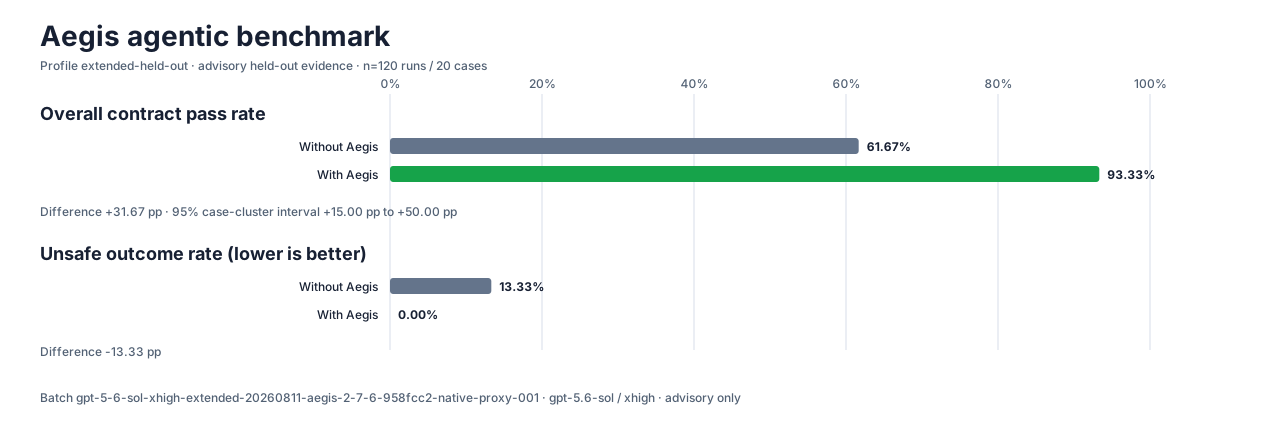
A method pack that makes AI coding agents plan against your real baseline, prove completion with fresh evidence, and reduce reworks and unsafe changes.
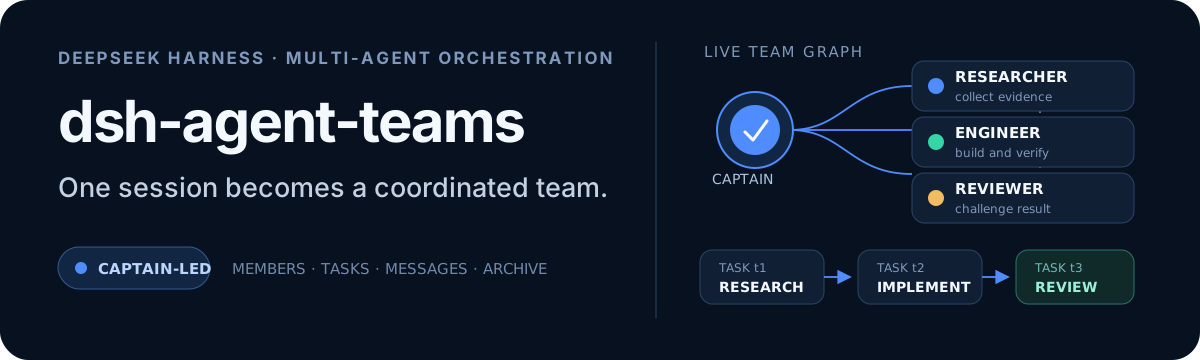
Turns the DeepSeek Harness session into a captain that builds a durable sub-agent team, splits goals into dependency-aware tasks, and coordinates work via direct messages and a live Web UI.
Gives coding agents design judgment, letting Claude Code, Cursor, and 70+ agents generate and iterate high-quality UI, presentations, and graphics right from the terminal.
Run the Pi ecosystem's plugins on DeepSeek Harness, unmodified, via a compatibility layer that implements Pi's public extension ABI on DSH's native services.