
dsh-mcp-lazy
Run the following command in DeepSeek Harness:
dsh plugin install wings1848/dsh-mcp-lazy
Paste the following prompt into your AI chat to install this plugin:
Run dsh plugin install wings1848/dsh-mcp-lazy to install the plugin; source code is available at https://github.com/wings1848/dsh-mcp-lazy . After installation, configure your servers in the profile's cordis.patch.yml and restart.
About this plugin
By default, the DeepSeek Harness MCP client registers every tool from every configured server at startup, and those descriptions and parameter schemas ride along in every single request. A handful of servers means thousands of extra tokens per conversation whether or not the model ever calls them. dsh-mcp-lazy collapses the model-facing surface into one fixed tool entry point: servers spawn only on first use, idle out automatically, and their tool metadata is cached on disk so search and describe never fork a process. In a measured comparison, a 29-tool server drops from roughly 5,313 tokens under native registration to 381 tokens through the gateway—a 93 percent saving that stays constant no matter how many servers you add. The plugin also ships an adopt command that safely migrates servers from dsh-mcp-client, preserving comments and blank lines byte-for-byte and reporting unsupported fields as hard errors rather than silently dropping them. Ideal for DSH developers running multiple MCP servers who want to claw back the per-request token baseline.
Screenshots

Use Cases
- Running several MCP servers whose tool schemas bloat every request
- Preferring on-demand server spawning over eager registration to cut idle processes
- Migrating from dsh-mcp-client native registration to a lazy gateway while preserving file structure
Best For
- Developers running multiple MCP servers inside DeepSeek Harness
- Engineers who track per-request token baselines and optimize inference cost
- Teams building high-frequency DSH workflows that need granular control over MCP tool exposure and lifecycle
Related Plugins
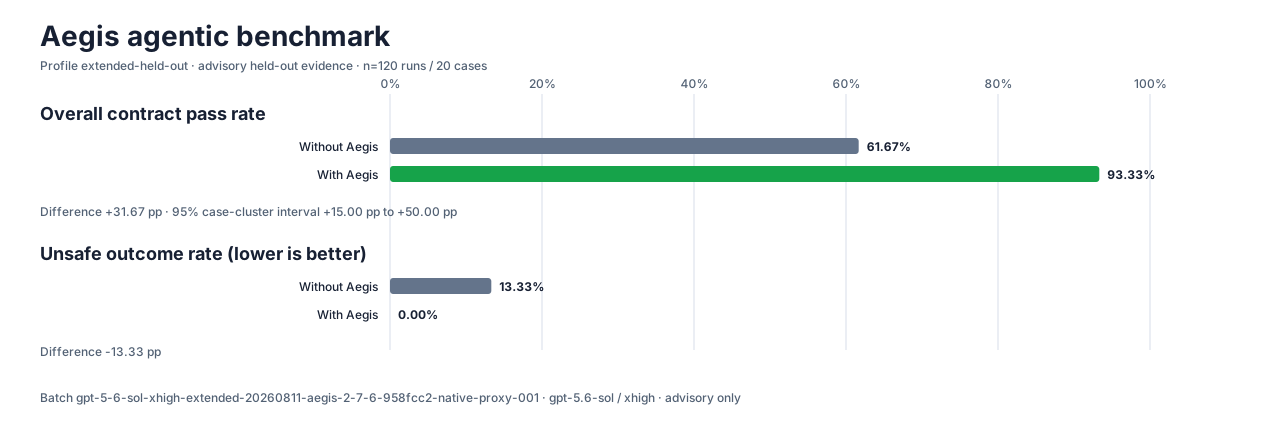
A method pack that makes AI coding agents plan against your real baseline, prove completion with fresh evidence, and reduce reworks and unsafe changes.
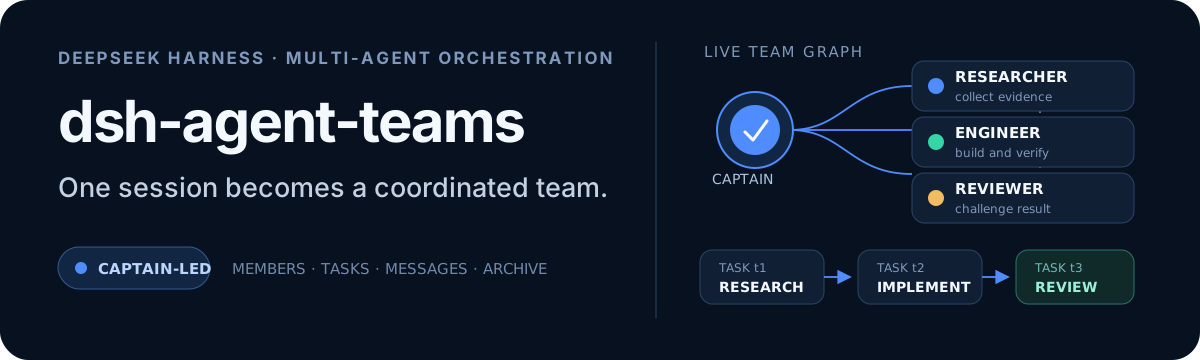
Turns the DeepSeek Harness session into a captain that builds a durable sub-agent team, splits goals into dependency-aware tasks, and coordinates work via direct messages and a live Web UI.
Gives coding agents design judgment, letting Claude Code, Cursor, and 70+ agents generate and iterate high-quality UI, presentations, and graphics right from the terminal.
Run the Pi ecosystem's plugins on DeepSeek Harness, unmodified, via a compatibility layer that implements Pi's public extension ABI on DSH's native services.