dsh-normify
Run the following command in DeepSeek Harness:
dsh plugin install yan-mc/dsh-normify
Paste the following prompt into your AI chat to install this plugin:
Run dsh plugin install yan-mc/dsh-normify in the DeepSeek Harness terminal to install this plugin; the source code is available at https://github.com/yan-mc/dsh-normify .
About this plugin
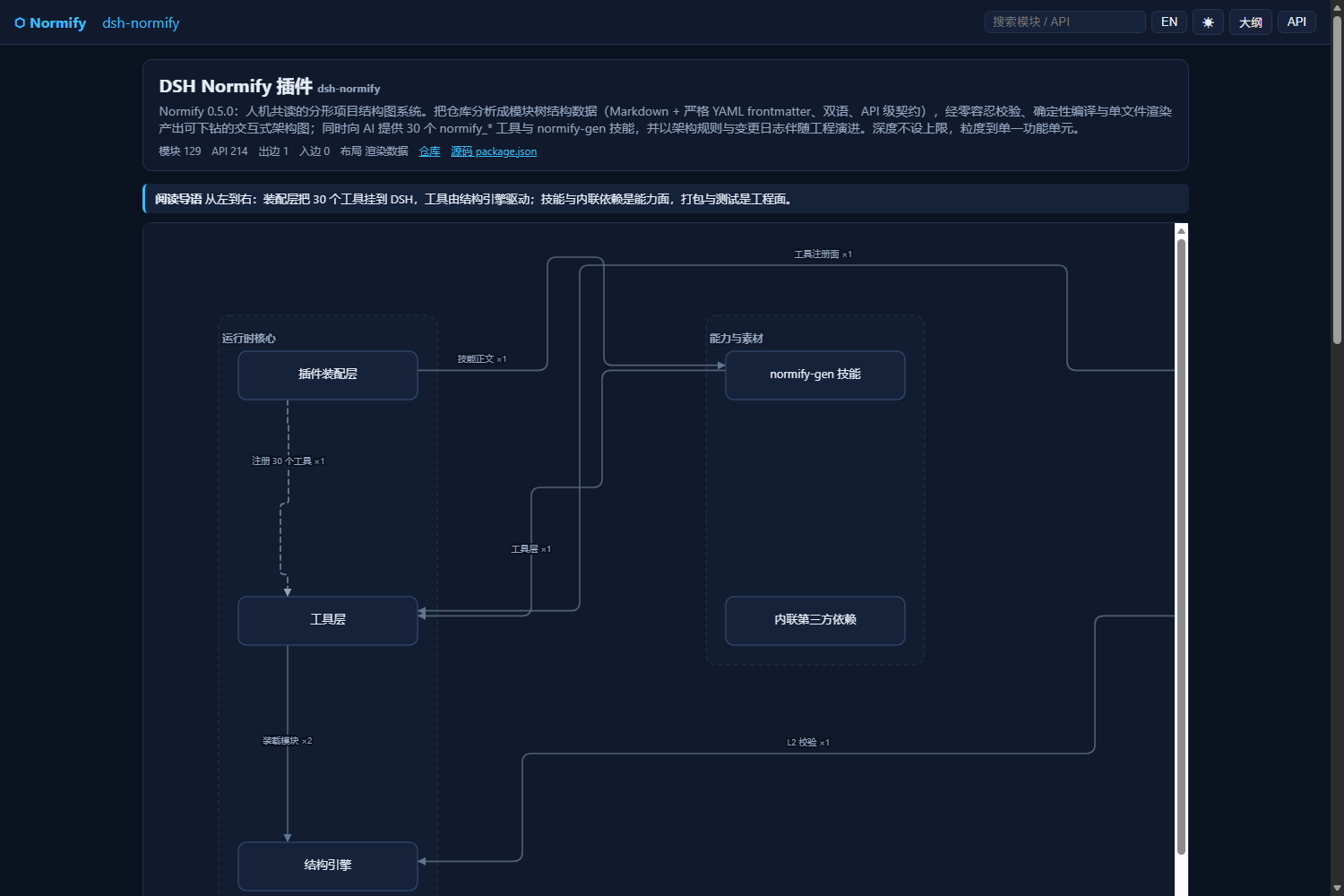
Architecture diagrams rot the moment they are drawn — too coarse to expose interface contracts, invisible to AI mid-refactor, and governed by tribal knowledge. Normify reframes the entire project as a fractal module tree that both humans and AI can read and write, turning structure data into a verifiable source of truth. Every change is detected by normify_sync and must pass a zero-error close before the tree is allowed to advance, keeping the diagram and the code permanently in sync.
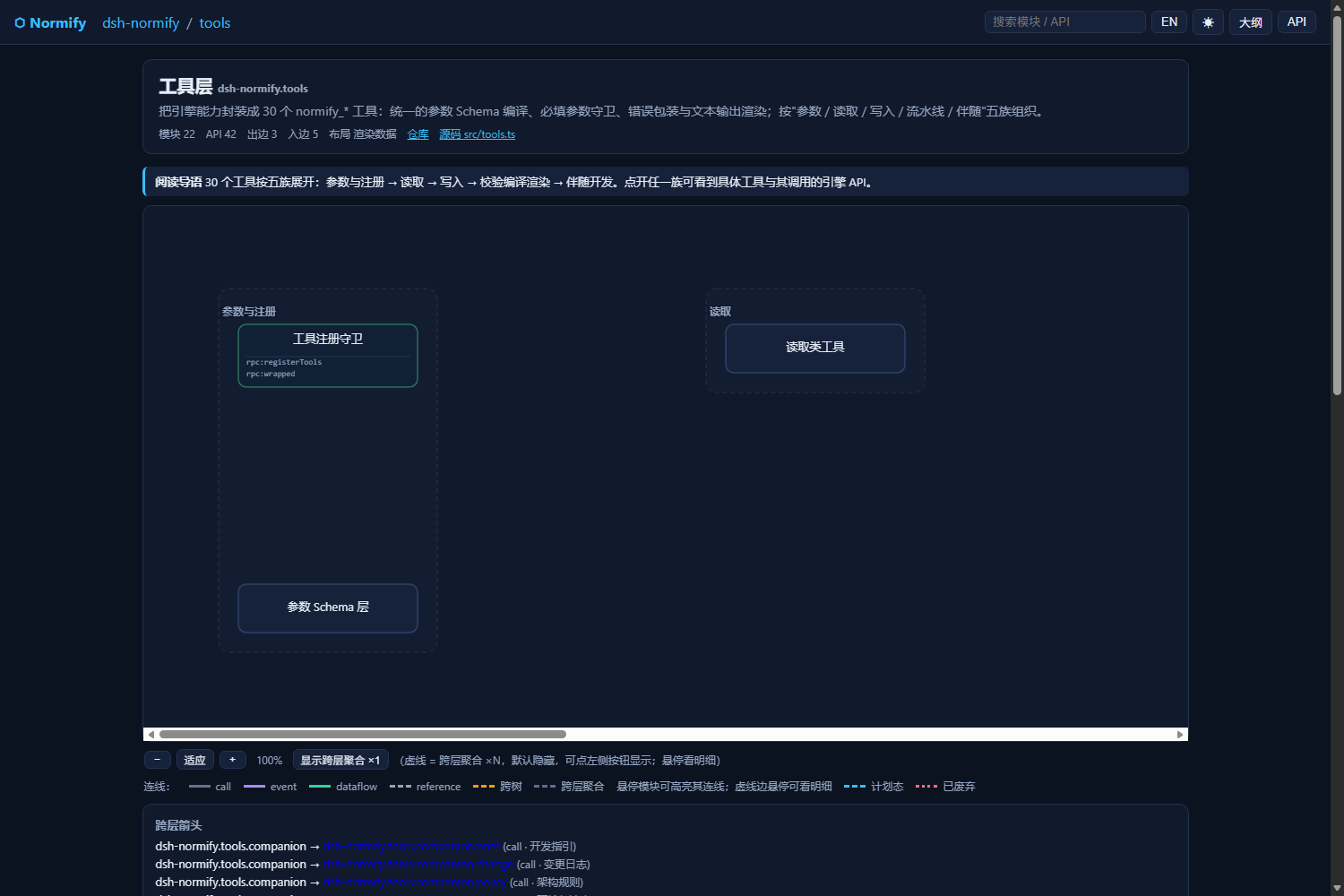
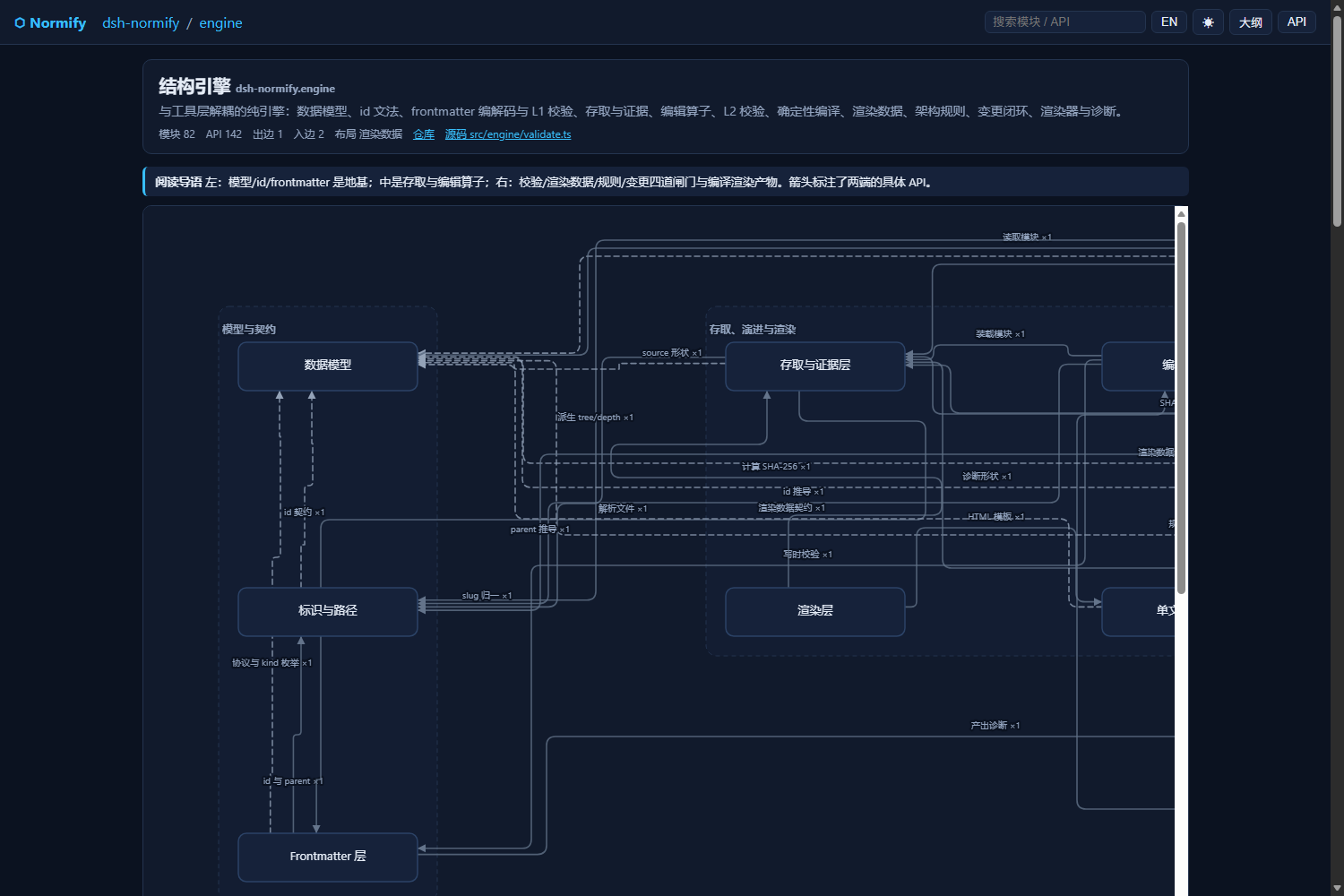
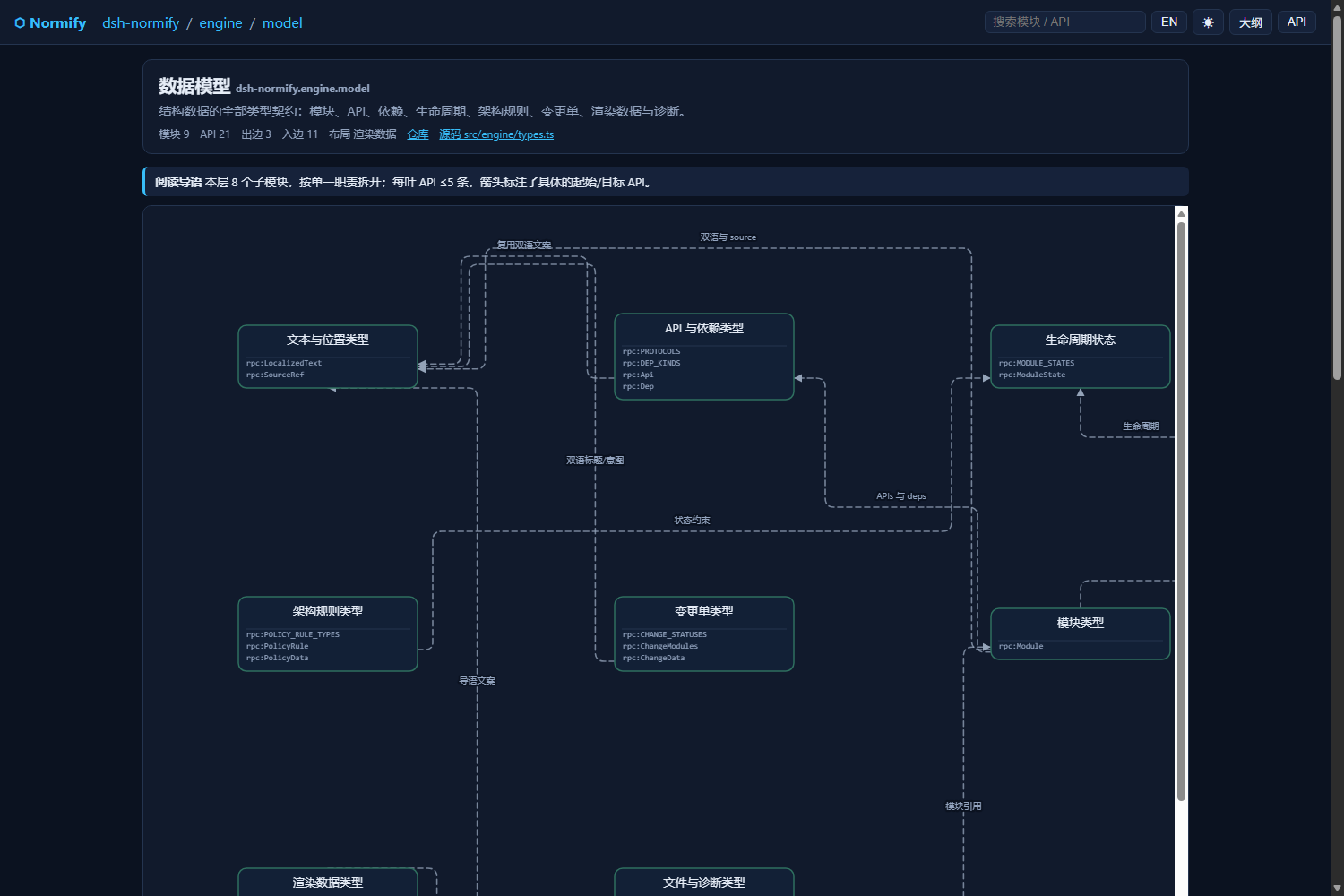
On the AI side, a generation skill and 31 tools support a design-first companion workflow: plan the tree, implement module by module, then close with a strict gate. The deterministic engine enforces three layers of fail-closed validation and produces SHA-256-frozen compiled artifacts. For humans, a zero-dependency single-file interactive diagram offers drill-down, API-anchored arrows, bilingual toggle, deep links, and zoom — open by double-click, archive or share as-is. Architecture rules live in policy.yml and are hard-enforced by validation; large repositories can be regenerated incrementally, rebuilding only the affected subtrees.
Built for engineers and teams using DeepSeek Harness who work in deeply layered, multi-module projects and want architecture documentation that never drifts from the code. No manual diagram upkeep: AI draws as it codes, the engine enforces the contract, and the tree grows as fine-grained as a single functional unit.
Screenshots
Use Cases
- Large project architecture docs go stale and need real-time code sync
- AI lacks global context during coding and needs structured impact analysis
- Team architecture rules are tribal and need enforced zero-error validation gates
Best For
- Engineers using DeepSeek Harness on deeply layered projects
- Teams with multi-module codebases where docs drift from code
- Practitioners who prefer design-first AI-assisted development
Related Plugins
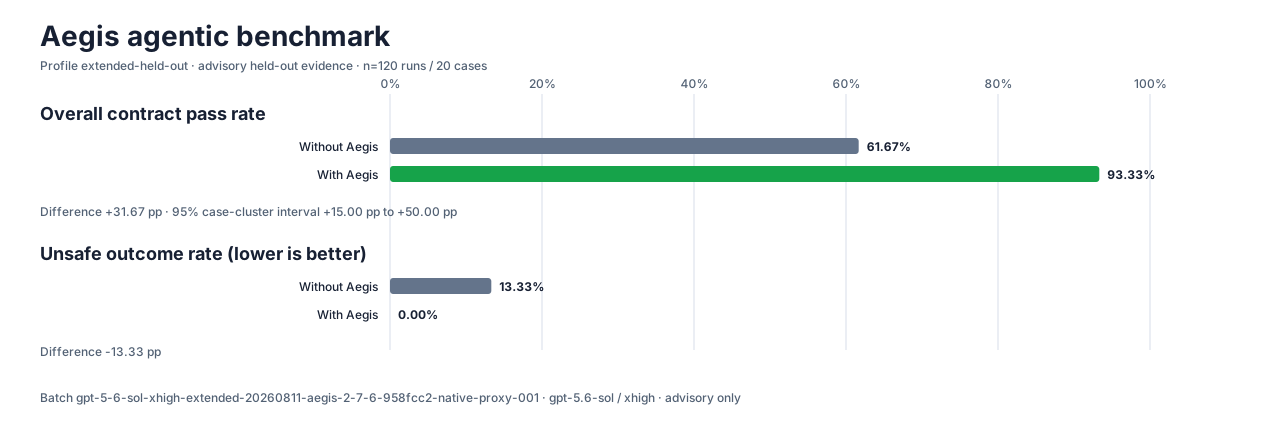
A method pack that makes AI coding agents plan against your real baseline, prove completion with fresh evidence, and reduce reworks and unsafe changes.
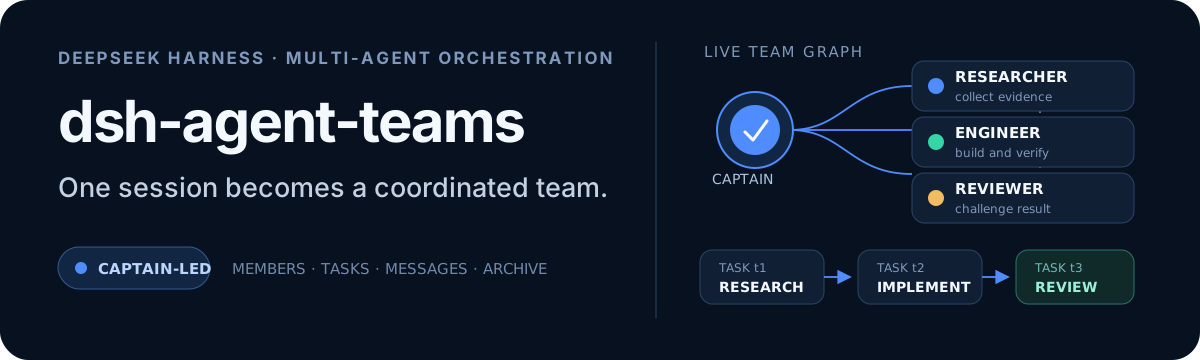
Turns the DeepSeek Harness session into a captain that builds a durable sub-agent team, splits goals into dependency-aware tasks, and coordinates work via direct messages and a live Web UI.
Gives coding agents design judgment, letting Claude Code, Cursor, and 70+ agents generate and iterate high-quality UI, presentations, and graphics right from the terminal.
Run the Pi ecosystem's plugins on DeepSeek Harness, unmodified, via a compatibility layer that implements Pi's public extension ABI on DSH's native services.