dsh-mcp-hub
Run the following command in DeepSeek Harness:
dsh plugin install xlin20021/dsh-mcp-hub
Paste the following prompt into your AI chat to install this plugin:
Run dsh plugin install xlin20021/dsh-mcp-hub in DeepSeek Harness to install this plugin; the full source repository is at https://github.com/xlin20021/dsh-mcp-hub.
About this plugin
In DeepSeek Harness, MCP server configurations are scattered across cordis.patch.yml and per-bundle patch files, making manual edits tedious and error-prone. Worse, there is no immediate way to see which servers are actually connected in the current process. dsh-mcp-hub adds an "MCP" tab to the conversation view ring, consolidating every server into a single card-based panel where you can add, edit, and remove entries with a few clicks.
The panel reads the live tool registry of the running process and reverse-maps each connected MCP server by its mcp__ prefix, showing the number of exposed tools at a glance. Servers that are configured but not yet connected are clearly flagged, which makes troubleshooting unreachable endpoints or missed stdio arguments far less painful. Saving any change rewrites cordis.patch.yml immediately; newly added servers typically hot-connect without a restart. The whole plugin ships with zero runtime dependencies and no build step, reusing the host React runtime natively.
If you run DeepSeek Harness with multiple MCP services—whether over streamable-http, SSE, or stdio—and find yourself constantly digging into YAML files to tweak a URL or an environment variable, this is the plugin you need. It turns configuration management into an open-the-tab, click, and save workflow while preserving read-only visibility into bundle-level patches, giving you both flexibility and traceability without ever leaving the conversation interface.
Use Cases
- Add, edit, or remove MCP servers from a card-based tab in the conversation view; changes save straight to the config file
- Instantly see which MCP servers are connected, how many tools they expose, and which remain unreachable
- Manage profile-level and bundle-level MCP patches in one place instead of hand-editing YAML files
Best For
- Developers running multiple MCP services (stdio, SSE, or HTTP) on DeepSeek Harness
- Everyday Harness users who want to stop hand-editing cordis.patch.yml repeatedly
- Debuggers who need to verify MCP connectivity and troubleshoot stdio or endpoint issues quickly
Related Plugins
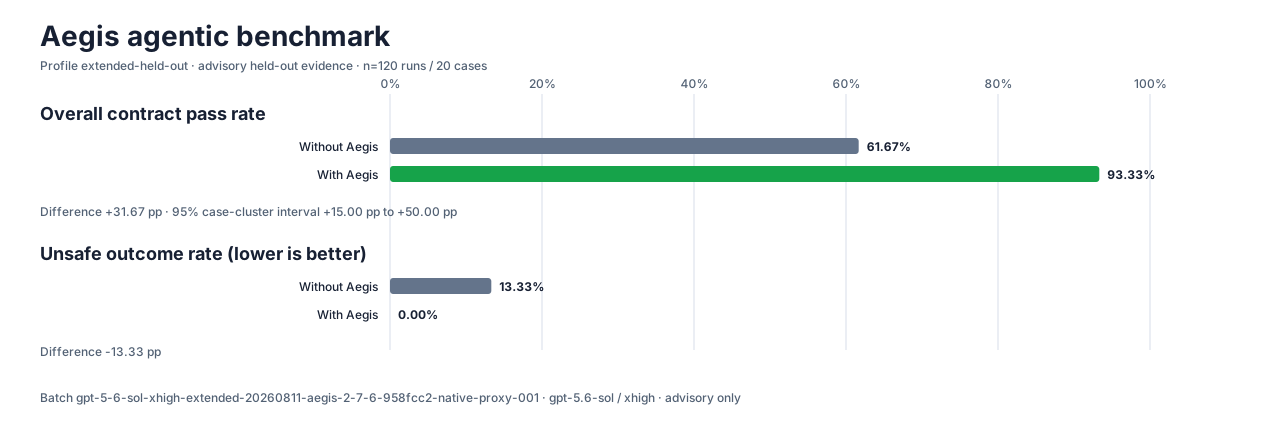
A method pack that makes AI coding agents plan against your real baseline, prove completion with fresh evidence, and reduce reworks and unsafe changes.
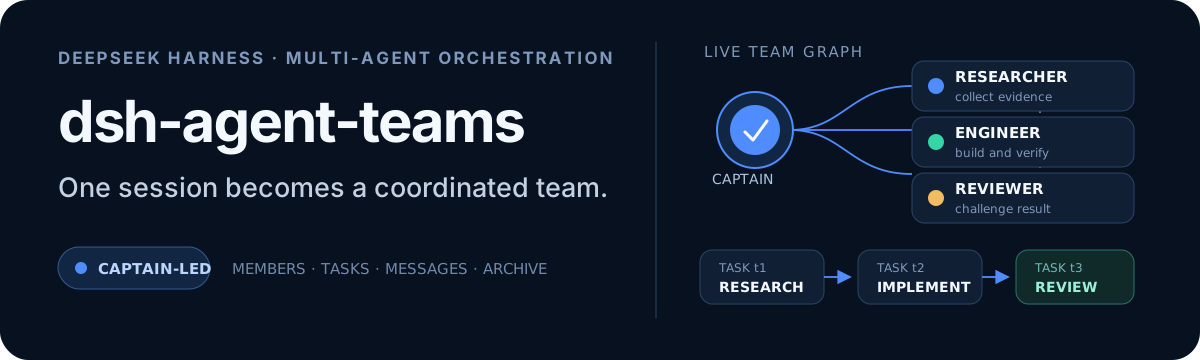
Turns the DeepSeek Harness session into a captain that builds a durable sub-agent team, splits goals into dependency-aware tasks, and coordinates work via direct messages and a live Web UI.
Gives coding agents design judgment, letting Claude Code, Cursor, and 70+ agents generate and iterate high-quality UI, presentations, and graphics right from the terminal.
Run the Pi ecosystem's plugins on DeepSeek Harness, unmodified, via a compatibility layer that implements Pi's public extension ABI on DSH's native services.