dsh-deploy-master
Run the following command in DeepSeek Harness:
dsh plugin install Olympianz/dsh-deploy-master
Paste the following prompt into your AI chat to install this plugin:
Run dsh plugin install Olympianz/dsh-deploy-master in your DeepSeek Harness shell to install the plugin, source at https://github.com/Olympianz/dsh-deploy-master , then restart dsh to activate it.
About this plugin
Independent developers who ship a plugin or a small utility often face the same repetitive release ritual: init git, push to GitHub, create a release, update the corresponding Linear issue, run npm publish, and post a note in the community. dsh-deploy-master bundles that entire pipeline into a set of conversational tools so the agent can walk through every step in a single session, asking for any missing configuration on the fly before proceeding.
The plugin registers five core tools: GitHub publishing (repository creation, push, topic tags, version tag, and release), Linear sync (create or update an issue with status, priority, and description), npm release (automatically stamped with dsh-plugin and deepseek-harness community topics), a community announcement posted to the dedicated Discussions thread, and a configuration checker that reports what is set and what is still needed. All credentials are passed at runtime via parameters or Config, injected once for npm, and used in a one-time push URL so nothing sensitive is ever written to disk.
It is built for independent plugin developers and small teams on DeepSeek Harness who want to move from finished code to a public release with a single sentence, letting the agent handle the mechanical steps end to end.
Use Cases
- Push a finished plugin to GitHub and create a release in one step
- Sync deployment progress to Linear issue status and description
- Publish an npm package and post an announcement in the community Discussions
Best For
- Independent developers building plugins on DeepSeek Harness
- Developers who frequently ship small utility packages or UI themes
- Engineers who prefer natural-language, conversation-driven deployment workflows
Related Plugins
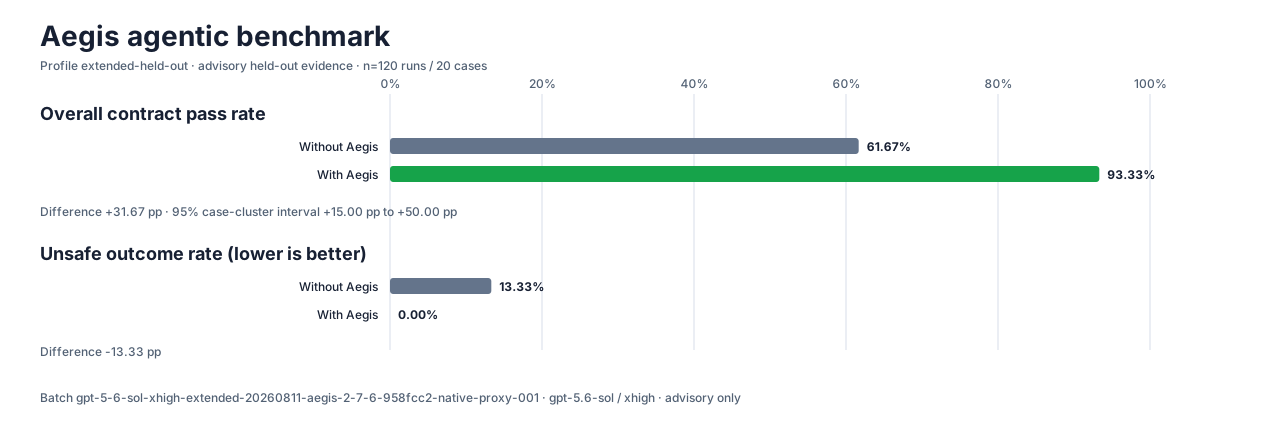
A method pack that makes AI coding agents plan against your real baseline, prove completion with fresh evidence, and reduce reworks and unsafe changes.
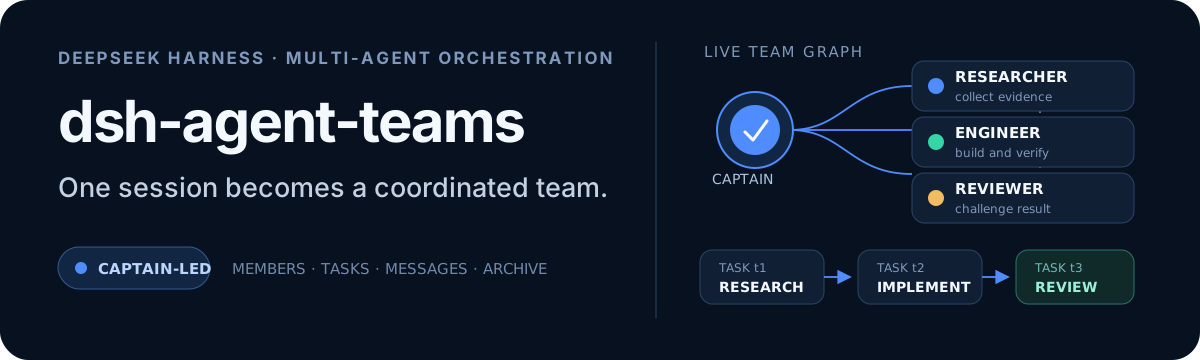
Turns the DeepSeek Harness session into a captain that builds a durable sub-agent team, splits goals into dependency-aware tasks, and coordinates work via direct messages and a live Web UI.
Gives coding agents design judgment, letting Claude Code, Cursor, and 70+ agents generate and iterate high-quality UI, presentations, and graphics right from the terminal.
Run the Pi ecosystem's plugins on DeepSeek Harness, unmodified, via a compatibility layer that implements Pi's public extension ABI on DSH's native services.