dsh-task-queue
Run the following command in DeepSeek Harness:
dsh plugin install nicecx/dsh-task-queue
Paste the following prompt into your AI chat to install this plugin:
Run dsh plugin install nicecx/dsh-task-queue in the DeepSeek Harness terminal to install this plugin; the source code is available at https://github.com/nicecx/dsh-task-queue.
About this plugin
In a DSH and Hermes collaboration system, multiple governance actions such as approval, review, and reset often compete for the same agent execution resources. Without a unified queue, concurrent writes, task starvation, and state drift are almost inevitable. dsh-task-queue fills exactly this coordination gap: it designates queue.json as the single source of truth that every plugin agrees on, giving each action a well-defined position in the pipeline and a deterministic dequeue order.
The core mechanism revolves around a three-tier priority ladder — reset (highest) > approve > review. A lease-and-claim model guarantees that only one consumer processes any given task at a time; a priority-aging scheme ensures lower-tier tasks are never starved indefinitely; and the .hermes-busy atomic mutex lock is shared across all tiers to eliminate race conditions. On the Hermes side, a per-minute cron job combined with a monitor gate drives dequeue and execution, routing results back by sessionId with fail-closed semantics throughout.
If you are maintaining a DSH governance workflow, using Hermes as the execution backend, and have multiple application-layer plugins — approval flows, review pipelines, agent resets — that must be serialized fairly and in order, dsh-task-queue is the queue hub you wire them into. It strips concurrency control, priority scheduling, and failure containment out of business logic so your plugins can focus on what they do best.
Use Cases
- Multiple DSH plugins competing for the same agent execution slot across approval, review, and reset flows
- Hermes consuming tasks on a fixed cadence while guaranteeing strict single-task serialization
- Multi-tier tasks requiring starvation prevention, priority-ordered dequeue, and sessionId-based result routing
Best For
- Architects maintaining a DSH governance system with Hermes as the execution backend
- Engineers building application-layer plugins such as approval pipelines, review flows, or agent reset
- Ops leads who need fair serialization and fail-closed fallback across multiple plugins
Related Plugins
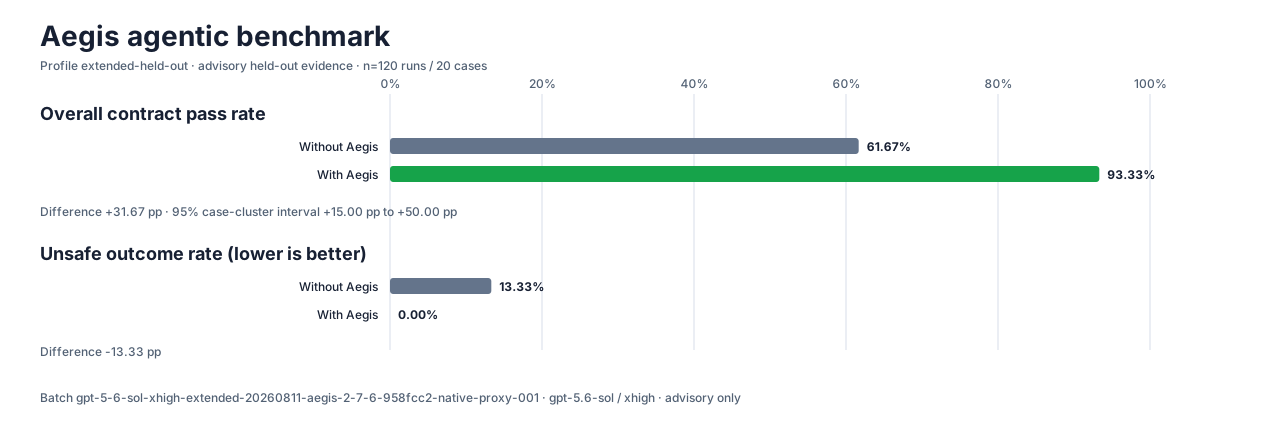
A method pack that makes AI coding agents plan against your real baseline, prove completion with fresh evidence, and reduce reworks and unsafe changes.
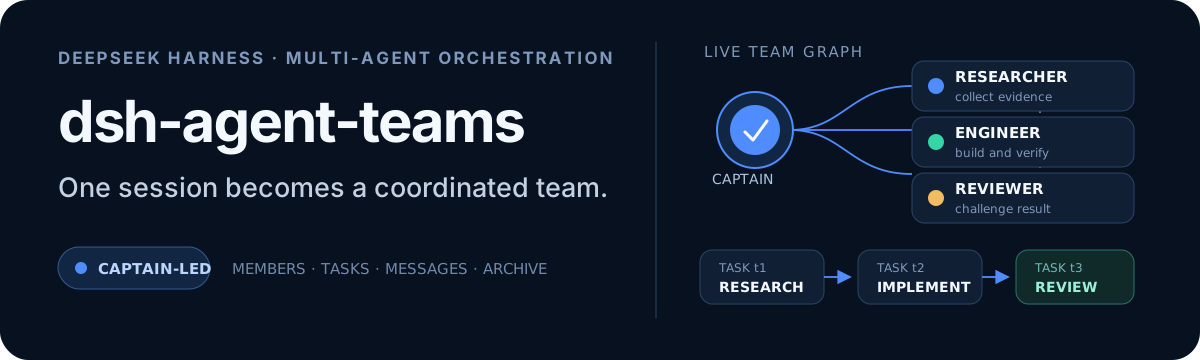
Turns the DeepSeek Harness session into a captain that builds a durable sub-agent team, splits goals into dependency-aware tasks, and coordinates work via direct messages and a live Web UI.
Gives coding agents design judgment, letting Claude Code, Cursor, and 70+ agents generate and iterate high-quality UI, presentations, and graphics right from the terminal.
Run the Pi ecosystem's plugins on DeepSeek Harness, unmodified, via a compatibility layer that implements Pi's public extension ABI on DSH's native services.