dsh-workspace-snapshot-fork
Run the following command in DeepSeek Harness:
dsh plugin install Yu-Zhuang1/dsh-workspace-snapshot-fork
Paste the following prompt into your AI chat to install this plugin:
Run dsh plugin install Yu-Zhuang1/dsh-workspace-snapshot-fork in the DeepSeek Harness Web profile to install this plugin; full source is available at https://github.com/Yu-Zhuang1/dsh-workspace-snapshot-fork
About this plugin
The built-in session forking in DeepSeek Harness copies conversation history but leaves your workspace files behind. If you have been iterating on code or documents across multiple turns and want to revisit an earlier point to try a different approach, the forked session loses all file context. dsh-workspace-snapshot-fork exists to fill that gap.
The plugin records an immutable, Git-backed workspace checkpoint for every completed turn. When you fork a turn in the Web UI, it materializes the checkpoint into an independent workspace: a Git worktree and branch if the source is a repo root, private-snapshot materialization for plain directories, and snapshot-based fallback for nested directories or repositories without an initial commit. The source workspace is never modified, and Git history, remotes, and hooks remain fully accessible. A native mode lets you hand forking back to DSH defaults without losing existing checkpoint cleanup.
It is a good fit for developers working file-heavy in the DSH Web profile: those who want to branch-and-explore safely without polluting the current workspace, compare file states across turns, or maintain a precise exclusion list for sensitive projects. The plugin currently targets the DSH Web profile only; Linux and macOS support are not yet verified.
Use Cases
- Fork a conversation turn and retain the complete file state captured at that point
- Experiment with alternative implementations in a Git repo without polluting the current branch or main directory
- Fine-grain control of snapshot exclusion lists to keep credentials out of local Git objects
Best For
- Developers using the DSH Web profile who work primarily with files
- Engineers who need safe branch-and-explore workflows without disturbing the current workspace
- Security-conscious users who must control what ends up in local snapshot objects
Related Plugins
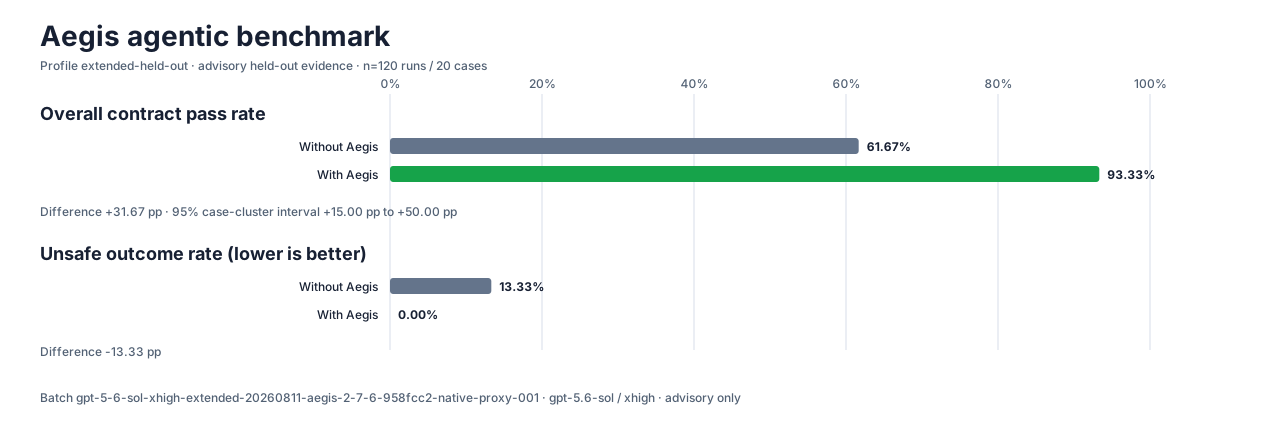
A method pack that makes AI coding agents plan against your real baseline, prove completion with fresh evidence, and reduce reworks and unsafe changes.
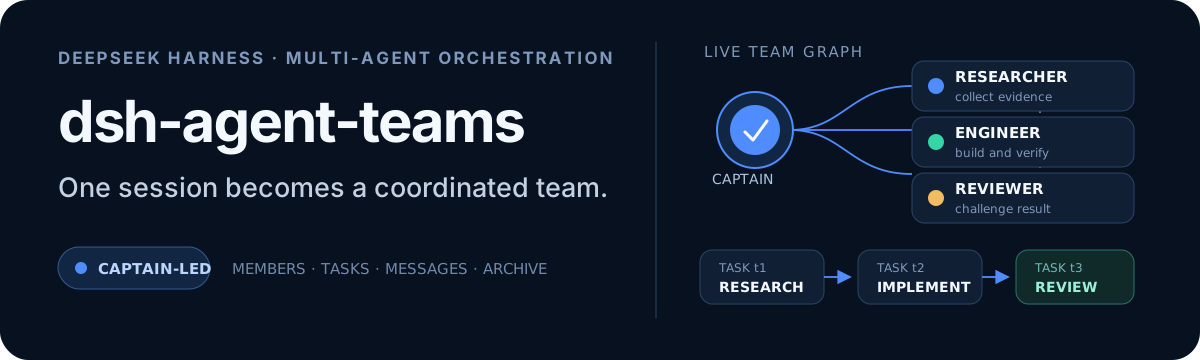
Turns the DeepSeek Harness session into a captain that builds a durable sub-agent team, splits goals into dependency-aware tasks, and coordinates work via direct messages and a live Web UI.
Gives coding agents design judgment, letting Claude Code, Cursor, and 70+ agents generate and iterate high-quality UI, presentations, and graphics right from the terminal.
Run the Pi ecosystem's plugins on DeepSeek Harness, unmodified, via a compatibility layer that implements Pi's public extension ABI on DSH's native services.