dsh-plumb-identity
Run the following command in DeepSeek Harness:
dsh plugin install plumbkit/dsh-plumb-identity
Paste the following prompt into your AI chat to install this plugin:
Run dsh plugin install plumbkit/dsh-plumb-identity to install the plugin; the source is available at https://github.com/plumbkit/dsh-plumb-identity.
About this plugin
DeepSeek Harness multiplexes every conversation over a single plumb connection per process, yet DSH's MCP client sends no identity with its requests—no per-conversation session id, no _meta tag. Plumb's isolation layer (workspace shards, read tracking, mail addressing) arms on a declared identity, so unidentified conversations silently force-re-pin each other's workspaces. The usual workaround is an AGENTS.md instruction asking each conversation to declare a session_id, but DSH's in-process subagents carry no parent context and are structurally anonymous, so an instruction alone cannot cover them.
dsh-plumb-identity solves this at the transport layer. It listens on DSH's tools/execute waterfall, extracts the caller's session UUID and workspace from exec.agent, and mints a stable logical-agent id for every plumb tool invocation. A narrow patch on the MCP SDK request path then stamps _meta identity onto each plumb-bound call, and the plugin proactively issues a session_start declaration on each agent's first plumb request to pin its workspace shard and record the session linkage. The entire chain fails open: if the SDK is missing, the patch is refused, or the declaration is rejected, the call proceeds as-is and the AGENTS.md instruction surface remains as the fallback.
If you run multiple workspaces and conversations under DSH, rely on plumb's per-agent sharding for isolation, or frequently delegate work to in-process subagents that make tool calls, this plugin turns identity from a model-behaviour expectation into a transport-layer guarantee—eliminating pin-contests and cross-workspace overwrites. It is equally useful for a developer juggling parallel windows or a team orchestrating multi-agent pipelines.
Use Cases
- Multiple DSH conversations share one plumb connection and need distinct stable identities to prevent workspace pin contests
- In-process subagents make plumb tool calls with automatic _meta stamping and a proactive session_start declaration
- Team multi-agent pipelines where each agent workspace is locked at the transport layer, eliminating cross-workspace overwrites
Best For
- Engineers running multi-workspace DSH development with plumb per-agent isolation
- Developers who frequently delegate plumb tool execution to in-process subagents
- Teams building multi-agent pipelines that require stable session identity and reliable workspace locking
Related Plugins
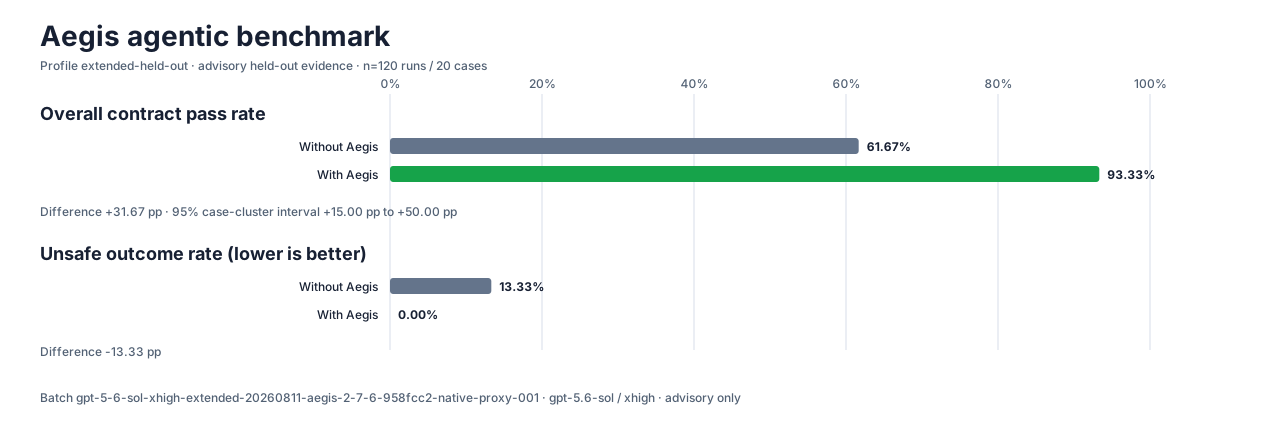
A method pack that makes AI coding agents plan against your real baseline, prove completion with fresh evidence, and reduce reworks and unsafe changes.
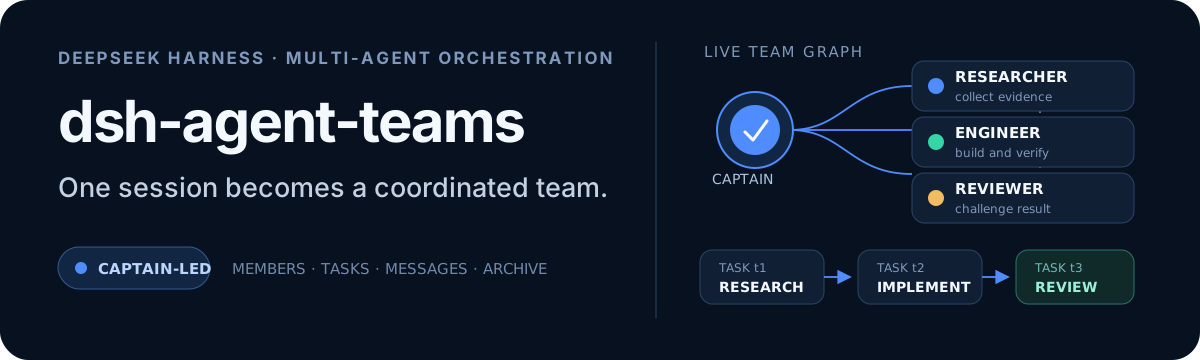
Turns the DeepSeek Harness session into a captain that builds a durable sub-agent team, splits goals into dependency-aware tasks, and coordinates work via direct messages and a live Web UI.
Gives coding agents design judgment, letting Claude Code, Cursor, and 70+ agents generate and iterate high-quality UI, presentations, and graphics right from the terminal.
Run the Pi ecosystem's plugins on DeepSeek Harness, unmodified, via a compatibility layer that implements Pi's public extension ABI on DSH's native services.