dsh-mcp-oauth-client
Run the following command in DeepSeek Harness:
dsh plugin install fangzaozao/dsh-mcp-oauth-client
Paste the following prompt into your AI chat to install this plugin:
Run dsh plugin install fangzaozao/dsh-mcp-oauth-client in your terminal to install; the source code is available at https://github.com/fangzaozao/dsh-mcp-oauth-client .
About this plugin
Connecting multiple MCP services in DeepSeek Harness often means juggling different authentication flows, transport protocols, and local process configurations—manually editing YAML files is error-prone and lacks visibility. dsh-mcp-oauth-client tackles exactly this: it provides a unified visual panel inside DSH where you can add, disable, reconnect, and inspect every service at a glance, without constantly editing configuration files.
The plugin covers two primary transport types. For Streamable HTTP services it supports four authentication modes: no auth, OAuth 2.1 with PKCE, Bearer token, and custom headers. For local stdio services you can configure the executable command, arguments, environment variables, and working directory. The OAuth flow automatically opens your browser and completes authorization via a local callback, while token refresh is handled by the official MCP SDK. Added services persist to the current profile's cordis.patch.yml; OAuth access and refresh tokens stay in process memory only and are never written to disk by the plugin.
It is best suited for DSH developers who need to integrate several MCP toolchains with heterogeneous authentication requirements. The plugin acts purely as a management bridge—it ships no default service endpoints or credentials, and every configuration is defined by you through the interface, keeping the deployment as minimal as possible.
Use Cases
- Managing multiple HTTP and stdio MCP services with different auth methods inside DSH
- Configuring stdio-type MCP connections for local CLI tools with flexible launch parameters
- Completing OAuth 2.1 plus PKCE authorization via browser and auto-refreshing access tokens
Best For
- Developers integrating multiple MCP toolchains in DeepSeek Harness
- DSH users who need unified management of HTTP and local-process MCP services
- DSH developers who prefer a visual interface over manual YAML editing
Related Plugins
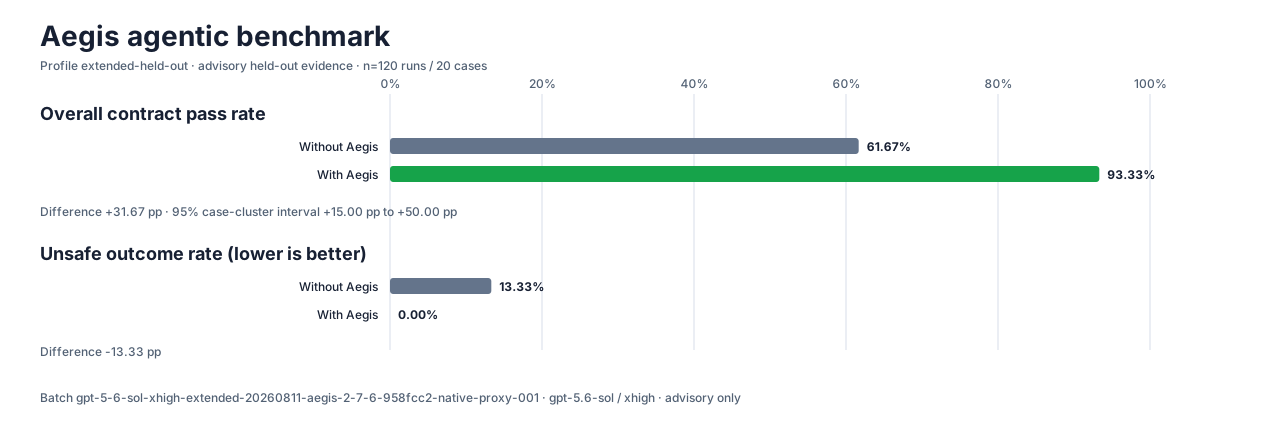
A method pack that makes AI coding agents plan against your real baseline, prove completion with fresh evidence, and reduce reworks and unsafe changes.
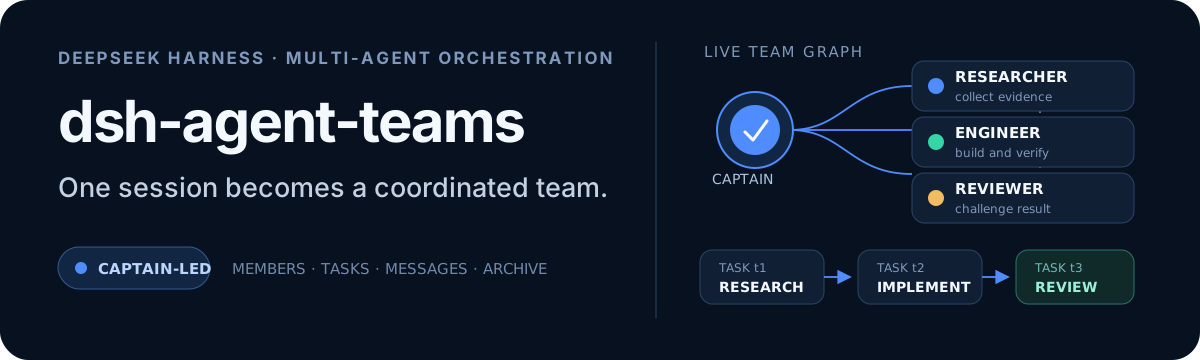
Turns the DeepSeek Harness session into a captain that builds a durable sub-agent team, splits goals into dependency-aware tasks, and coordinates work via direct messages and a live Web UI.
Gives coding agents design judgment, letting Claude Code, Cursor, and 70+ agents generate and iterate high-quality UI, presentations, and graphics right from the terminal.
Run the Pi ecosystem's plugins on DeepSeek Harness, unmodified, via a compatibility layer that implements Pi's public extension ABI on DSH's native services.